How the oldest resort on the French Riviera earned its remarkable reputation.
There is a particular kind of place that does not need to announce its history because the history announces itself - in the shape of a medieval gate, in the foundations of a Greek wall visible beneath a beach, in the Belle Époque facades of a promenade built for English aristocrats who arrived before anyone else thought to come. Hyères is that kind of place. It is the oldest resort on the French Riviera, a designation it holds not as a marketing claim but as a straightforward historical fact. It was receiving visitors - kings, queens, writers, soldiers, merchants and pilgrims - when the rest of the Côte d'Azur was a coastline of fishing villages and scrubland. What follows is not a visitor guide. It is the story of how Hyères became what it is: a town shaped by Greeks, Romans, Crusaders, Templars, English aristocrats, avant-garde artists and naval aviators, all of whom recognised something remarkable in this particular stretch of the Var coast.
325 BC: the Greeks who called it 'the blessed'
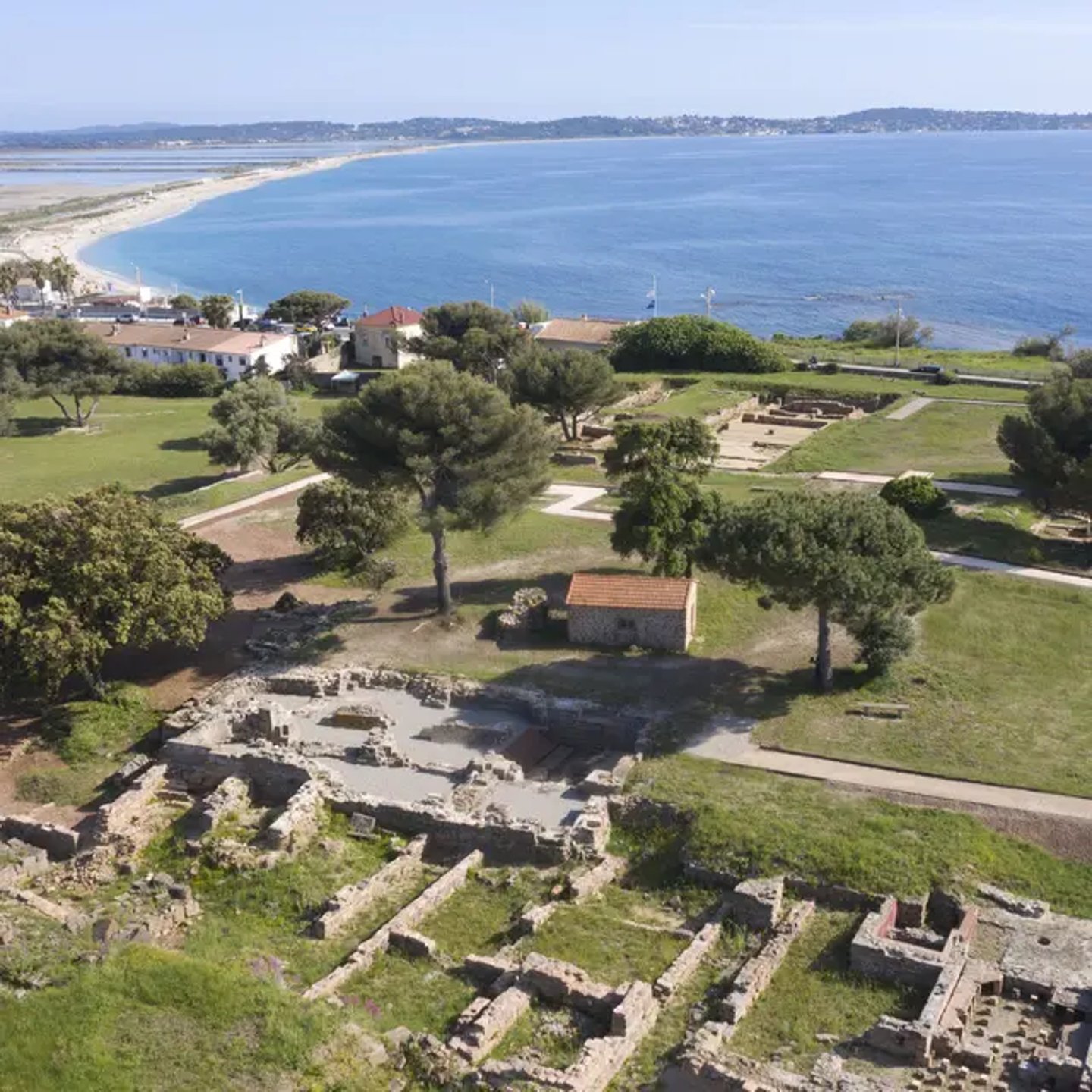
The story of Hyères begins not with the medieval town on the hill but with a fortified city on the coast, founded by Greek settlers from Massalia - present-day Marseille - around 325 BC. They called it Olbia, meaning 'the blessed'. It was conceived as a military and commercial outpost along the maritime trade routes connecting the western Mediterranean to Italy and the Iberian Peninsula: a place where soldiers, fishermen and farmers settled with the primary mission of securing trade for Massalia's merchant fleet.
Olbia was built with considerable precision. Its plan was geometric - square, divided into four equal quarters, opening to the port through a single gate. The remains that survive today include fortifications, streets equipped with sewers and paved footways, collective wells, blocks of houses, shops, bath complexes and shrines. It is, remarkably, the only example on the entire French coast of a Greek colonial settlement preserved in the complete entirety of its original plan. The site at the Almanarre beach near Hyères remains open to visitors and is still the subject of active archaeological investigation, including ongoing underwater excavation of the ancient port structure.
Following Julius Caesar's conquest of Massalia in 49 BC, Olbia passed under Roman authority. The Romans expanded the settlement significantly, adding a port facility, thermal baths, residential housing beyond the original Greek walls and artisanal production areas. A Roman necropolis discovered near the site in recent years contained at least 160 cremation tombs dating from the 1st to the 3rd centuries AD - many fashioned from reused amphorae, reflecting the site's enduring maritime trade connections. The city remained occupied for approximately a thousand years before declining as regional trade routes shifted and neighbouring ports grew in importance.
The medieval town: Templars, Crusaders & a king returning from the east
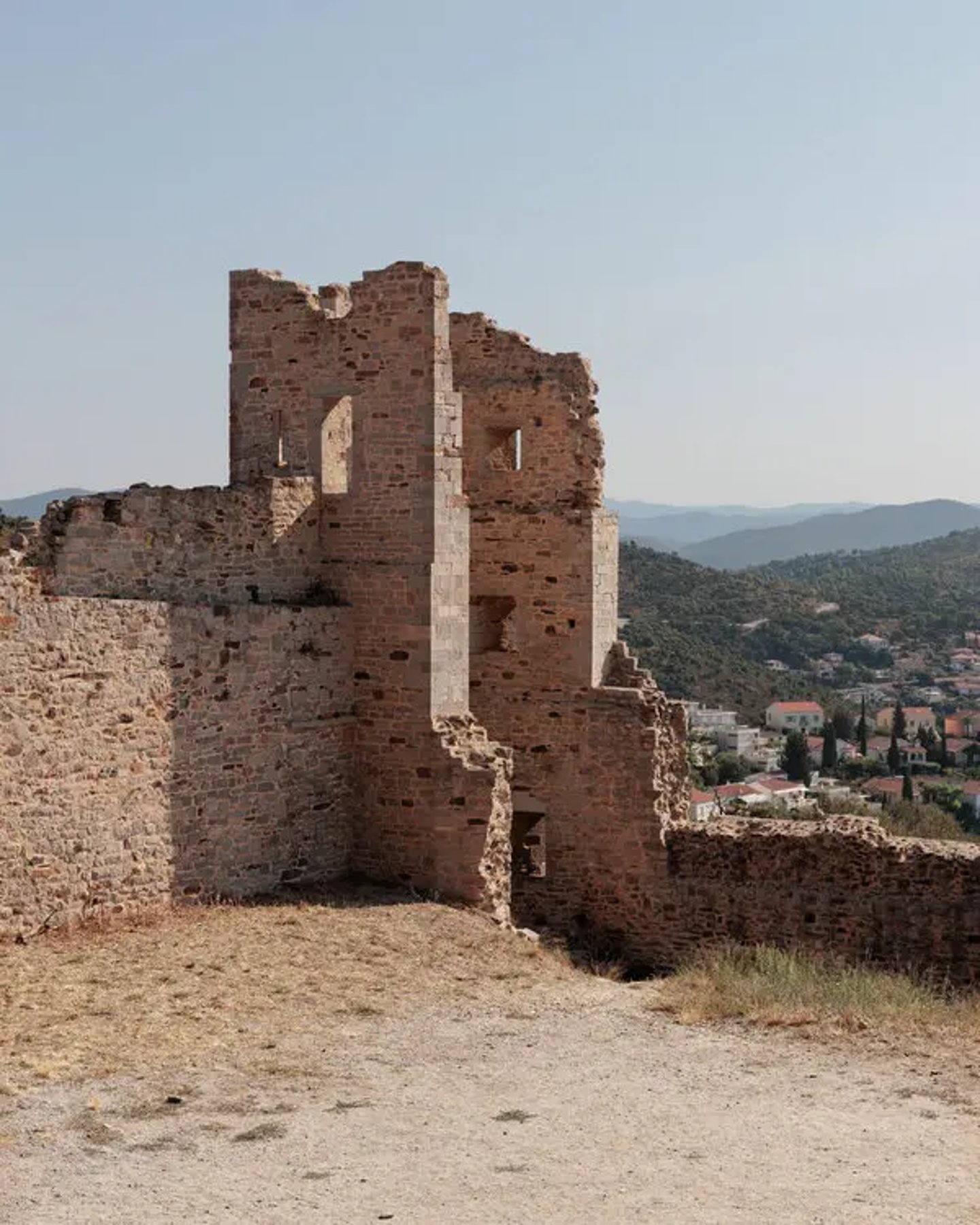
The first written reference to Hyères as a medieval settlement dates to 963. The town that developed on the hill above the coastal plain was built around the Castle of Saint-Bernard, with a fortified urban fabric that still defines the character of the old town today. In the 12th century, alongside the existing hillside settlement, the Knights Templar established a commanderie - a fortified administrative and agricultural base from which the Templar order managed estates and supplied Crusader forces in the east. The square tower of Saint-Blaise is the principal surviving remnant of this establishment and remains one of the most significant Templar structures on the Var coast.
By 1254, Hyères had acquired a connection of considerable historical significance. Louis IX of France - Saint Louis - landed at Hyères on his return from the Seventh Crusade, having spent years in the Holy Land. The encounter between the returning Crusader king and the local authorities was, by contemporary accounts, an occasion of some ceremony. The town was already well established enough to receive a king, which speaks to its status on the Mediterranean coast in the 13th century.
The medieval town expanded steadily, with new ramparts constructed in the 14th century - the Massillon and Fenouillet gates survive from this period. It was also during the Renaissance that the first hints of Hyères's long relationship with distinguished visitors emerged. Catherine de Medici stayed here in 1564, and, struck by the mildness of the climate, subsequently had orange and other exotic trees planted in a garden in the town - a detail that prefigures the horticultural character for which Hyères would later become celebrated.
The 18th & 19th centuries: England arrives, and Hyères becomes the Riviera
The transformation of Hyères into the first resort on the French Riviera began not with the French but with the English. Lord Albemarle, the British ambassador, spent the winter of 1767 to 1768 in Hyères. Prince Augustus, the sixth son of George III, came in 1788 for reasons of health. The English agronomist Arthur Young, visiting in 1789 on the advice of Lady Craven, noted in his published account the considerable number of British residents already established in the town. Long before Nice or Cannes had been discovered by the aristocratic class, Hyères was already functioning as a winter resort for those who could afford to travel south in search of mild air and medicinal climate.
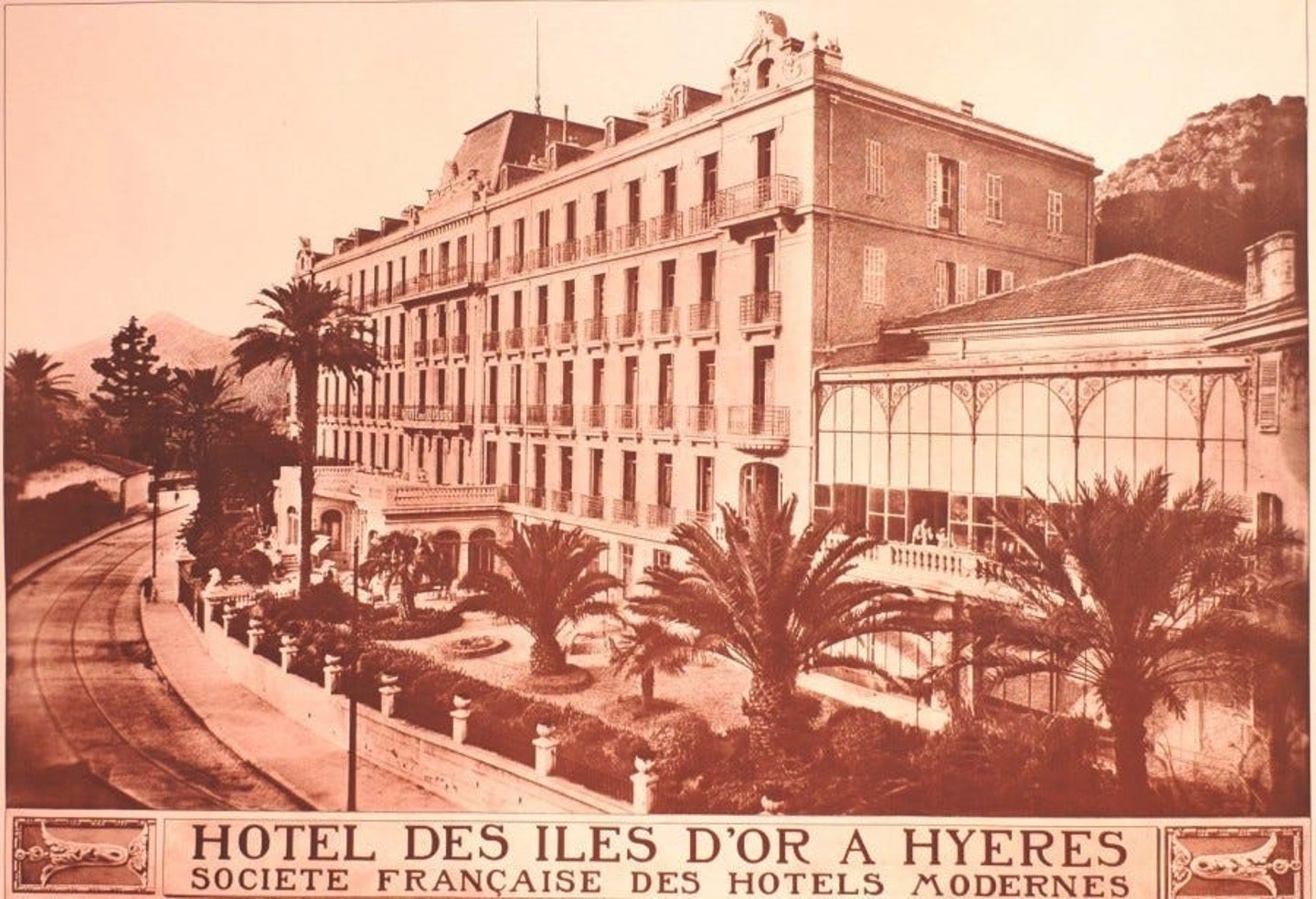
By the 19th century, the English presence had become substantial enough to reshape the town physically. Grand hotels and wealthy villas rose across the new quarter south of the medieval hill. Two English churches were built - All Saints' Church at Costebelle and Saint Paul's English Church on the Avenue Beauregard, both of which still exist. There was an English butcher, an English chemist, two English banks and two golf courses. Shop signs were displayed in both French and English. The cemetery contained more than a hundred English graves. Hyères had become, in effect, a British winter colony on the Mediterranean - comfortable, well-appointed, and deeply convinced of the therapeutic superiority of its climate over anything available at home.
The literary community arrived in the wake of the aristocracy. Robert Louis Stevenson came to Hyères in 1883 and stayed for approximately 16 months, living first at the Grand Hotel on the Avenue des Îles d'Or and then at a chalet he called La Solitude. He wrote of the town: 'This spot, our garden and our view are sub-celestial.' In later years, writing from his final home in Samoa, he reflected: 'I was only happy once; that was at Hyères.' Leo Tolstoy, Victor Hugo, Edith Wharton and Joseph Conrad - who set his novel The Rover in the town - all spent time here. Hyères was, for a sustained period, one of the most intellectually and artistically distinguished addresses on the European coast.
The apotheosis of the English connection came in the winter of 1892, when Queen Victoria arrived for a stay of three weeks at the Albion Hotel, between 21 March and 25 April. She returned the following year. The visits drew considerable attention - a reigning British monarch choosing Hyères over the more fashionable Cannes or Nice was a statement of preference that the town's established English community would have understood entirely.
The 1920s: the avant-garde arrives in the old Crusader walls
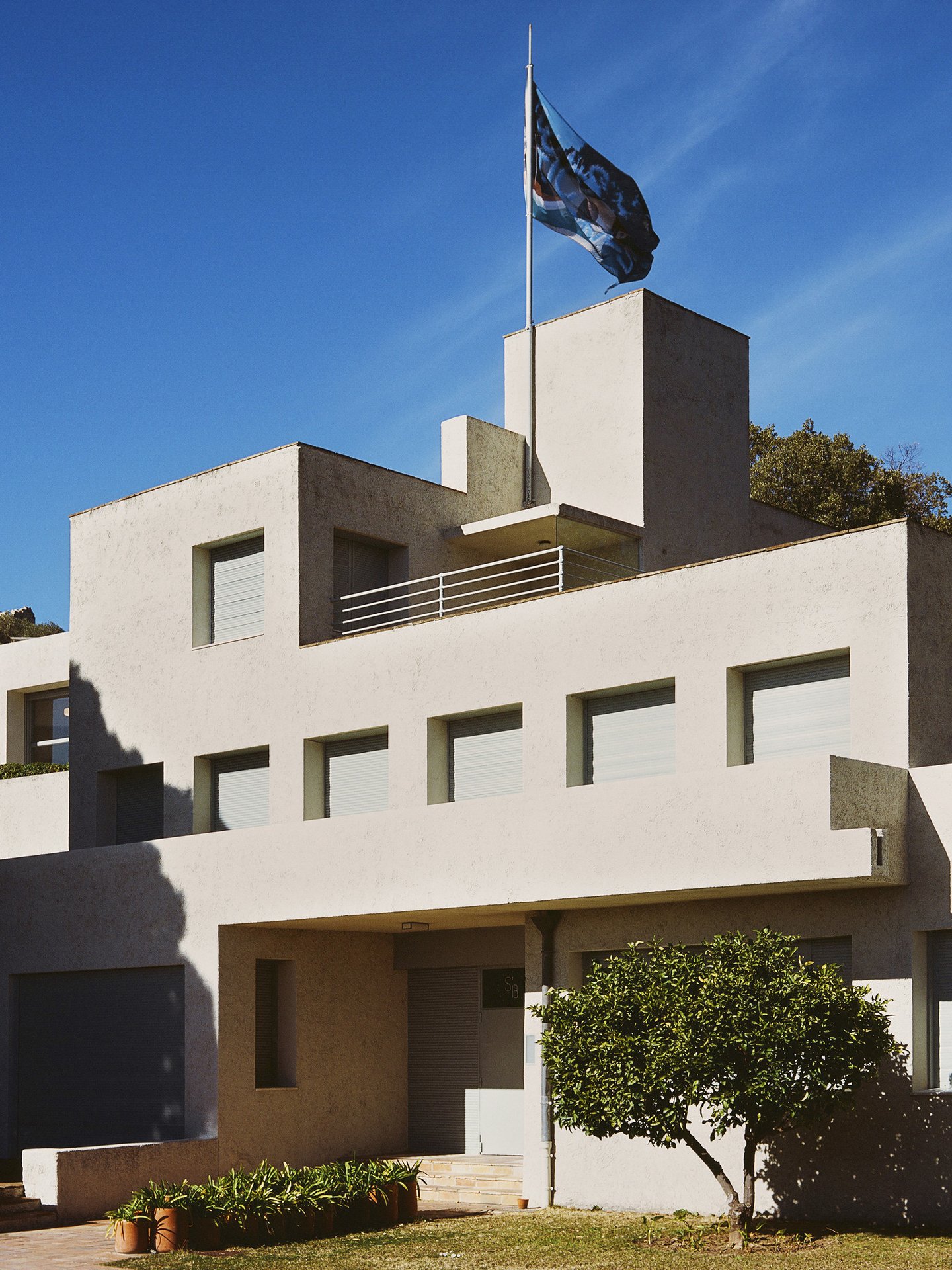
The shift from Victorian resort to modernist hotspot happened rapidly, and it happened because of one building. In 1923, Charles de Noailles and his wife Marie-Laure - she was among the wealthiest heiresses in France - commissioned the architect Robert Mallet-Stevens to design a villa for them in the hills above Hyères, within the ancient walls of a former Cistercian monastery. Construction took three years. The resulting Villa Noailles was one of the first examples of modernist architecture in France: a composition of cubes, rectangles and prisms in reinforced concrete, with a cubist triangular garden designed by Gabriel Guévrékian.
What the villa became was as significant as what it looked like. The de Noailles were major patrons of the European avant-garde, and they used their new building accordingly. Man Ray filmed Les Mystères du Château de Dé there in 1929. They financed Luis Buñuel's L'Âge d'Or and Jean Cocteau's Le Sang d'un Poète. Dalí, Giacometti, Brâncuși, Miró, Dora Maar and Poulenc all spent time within its walls. The Villa Noailles was, for a period in the late 1920s and early 1930s, one of the most concentrated points of artistic and cinematic avant-garde activity in Europe - situated, improbably, within medieval Crusader ramparts above a Victorian resort town in the Var. It was purchased by the city of Hyères in 1973 and now functions as a centre for contemporary art, fashion and design.
Find your perfect villa rental in Provence near Hyères
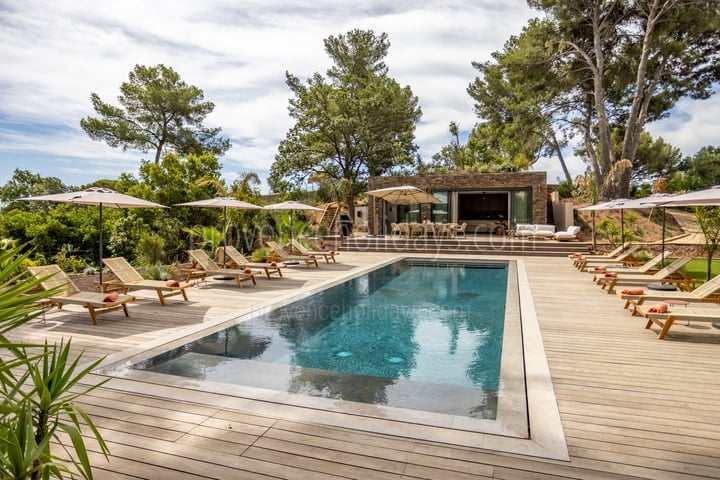
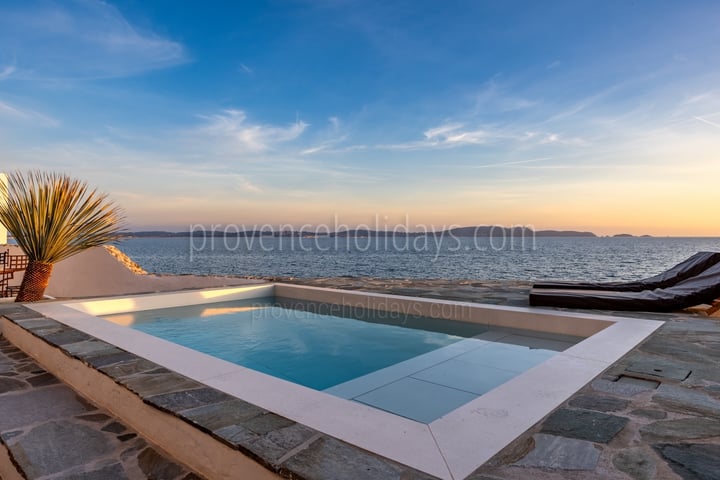
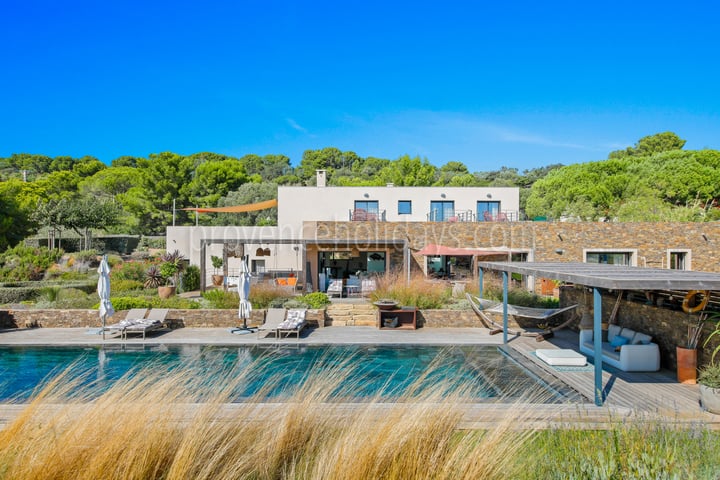
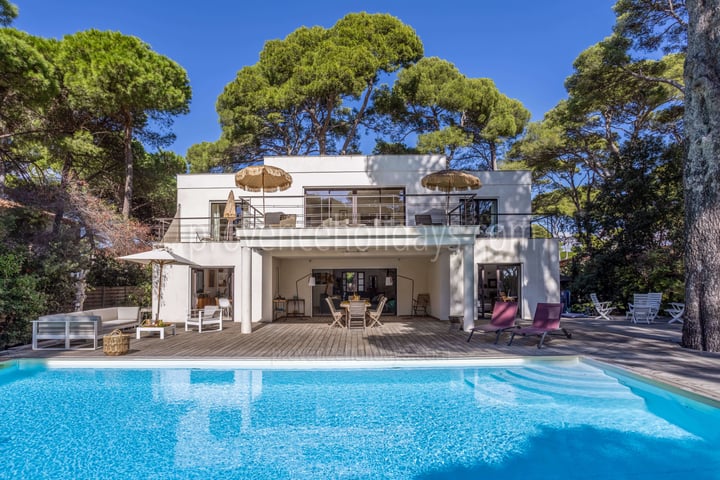
A private villa near Hyères places you at the intersection of Provençal history and the finest coastline in the Var - with the Giens peninsula, the Îles d'Or and the medieval old town all within easy reach. Our team at Provence Holidays has spent years exploring this part of the Var and we are well placed to help you find the right property.
The Giens peninsula & the geography that makes Hyères singular
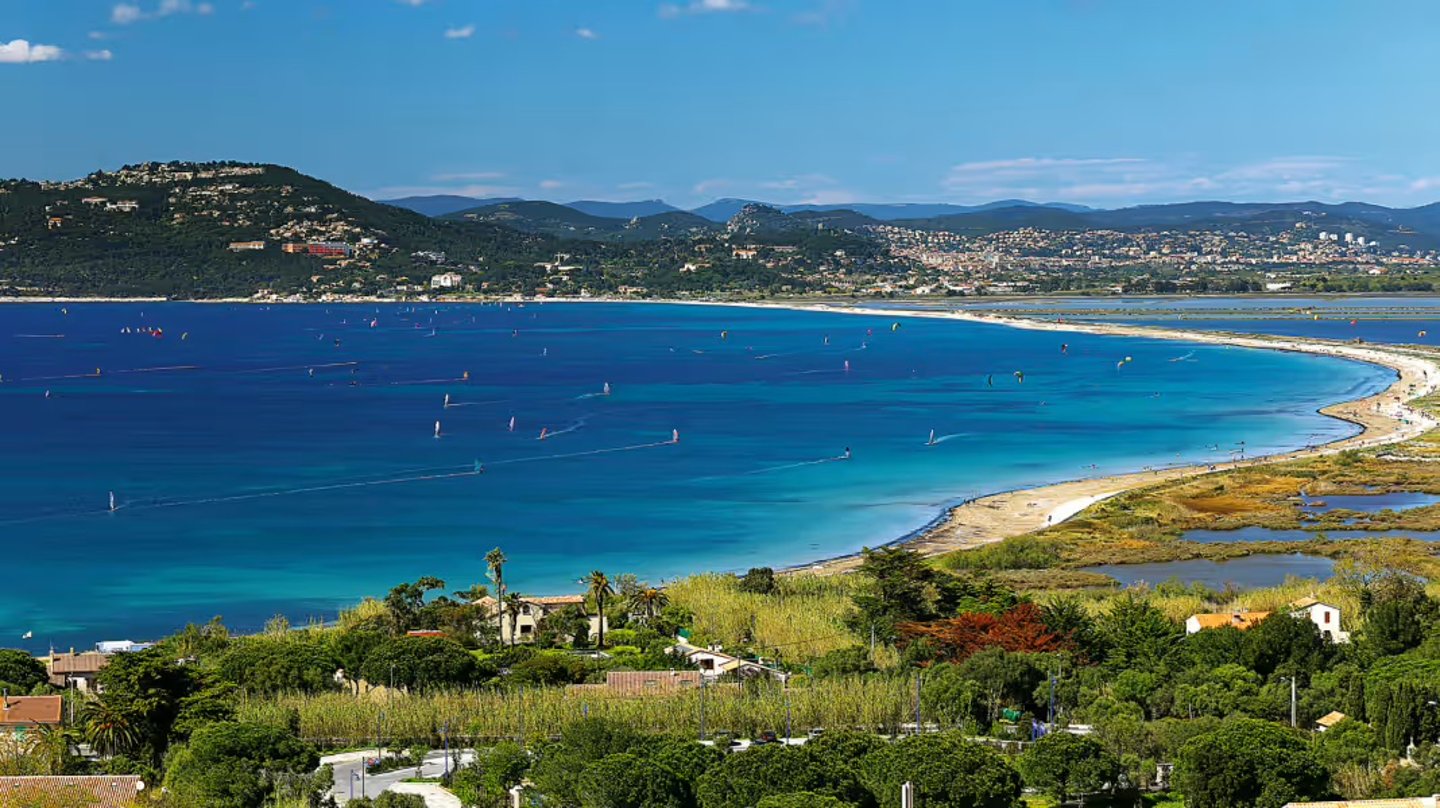
No account of Hyères is complete without the land that extends from it into the sea. The Giens peninsula connects to the mainland via a double tombolo - two parallel sand bars, each approximately four kilometres long, enclosing a lagoon of salt marshes between them. This geological formation is exceptionally rare on the European Mediterranean coast: essentially, what was once an island has been joined to the mainland by two separate accumulations of sand deposited over geological time by wave action and coastal currents, producing a structure found almost nowhere else in this part of the world.
The salt marshes enclosed by the tombolo have been harvested for centuries. They now form an ornithological reserve home to over 260 species of migratory and resident birds, including flamingos, black-winged stilts and various egret species. The area surrounding the peninsula and the offshore islands - Porquerolles, Port-Cros and the Île du Levant - forms part of the Port-Cros National Park, the oldest marine national park in Europe. The airport that sits on the coastal plain near Hyères - officially the Toulon-Hyères International Airport - occupies an area first used for aviation in the early 20th century. French naval aircraft were operating from the site by 1920, and it became an official base of the French Fleet Air Arm in 1925.
Hyères is the oldest resort on the French Riviera. That is not a casual boast - it is a statement supported by two and a half millennia of documented use by people who understood what this corner of the Var coast offered: reliable climate, strategic geography, and a quality of light that has been drawing visitors since before the concept of tourism existed. The Greeks came for trade, the Romans for commerce and leisure, the medieval church for pilgrimage and agriculture, the English aristocracy for their health, the writers for peace and inspiration, the avant-garde for the walls of a villa no one else had yet discovered. Each group left something behind. The town that results from all of this is, quietly, one of the most remarkable addresses in southern France.
À bientôt,