A peninsula with a beach for every kind of day
Most coastal destinations in the south of France have a beach. The Presqu'île de Giens has three coastlines and they are completely different from each other. The west tombolo faces the open sea and the winds that come with it. The east tombolo is sheltered, shallow and calm. The southern tip has clifftops, hidden coves and a coastal path that rewards the effort of getting there. On any given day, the best beach on the peninsula depends entirely on what kind of day you want to have. We have spent time on all of them. Here is what you need to know.
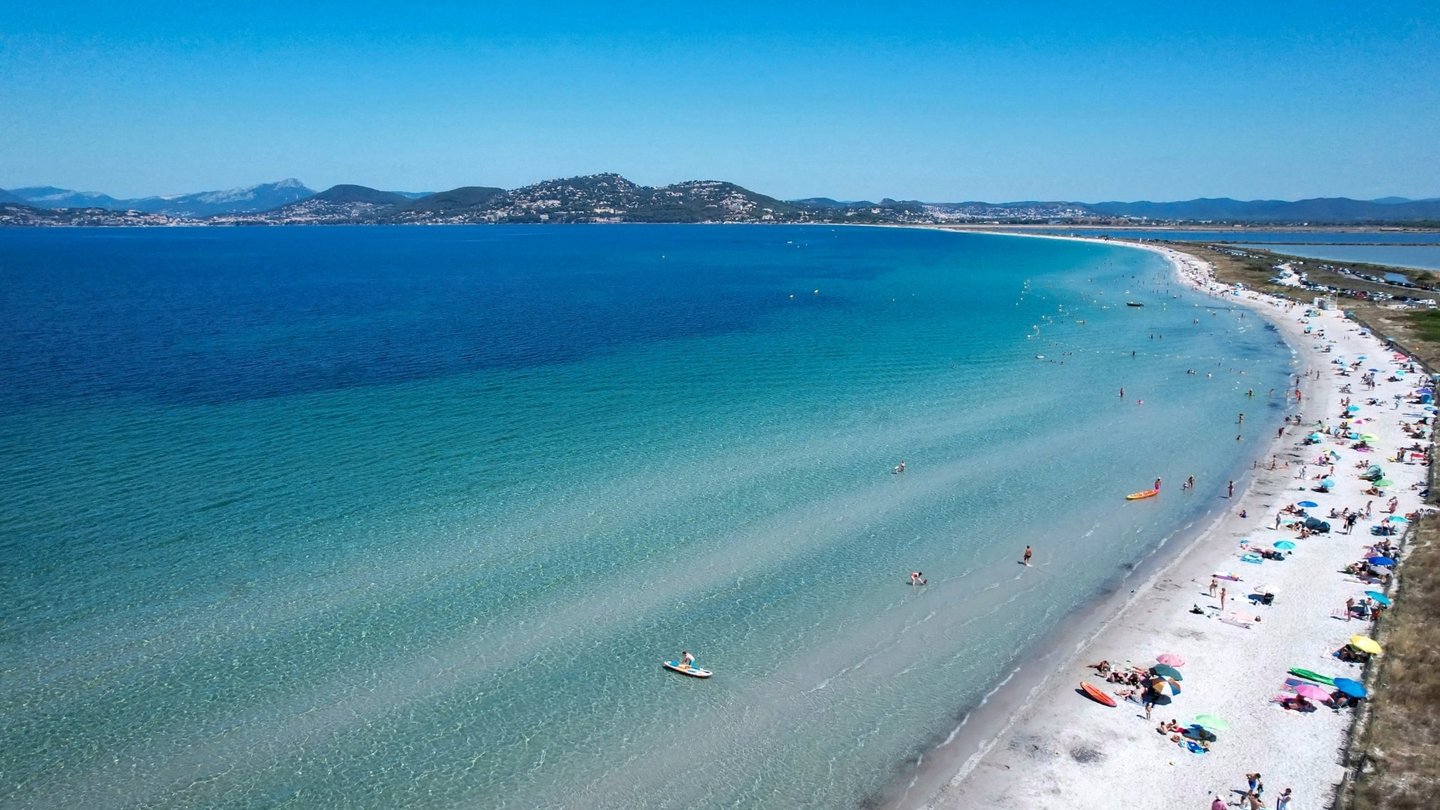
Plage de l'Almanarre | Our pick for a sandy experience
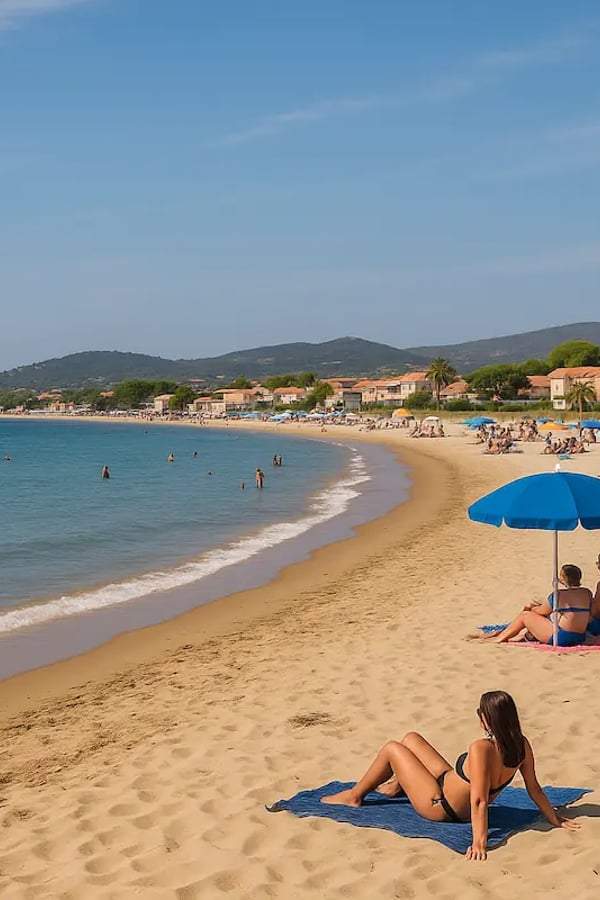
Why we chose it: Almanarre is the most expansive beach on the peninsula and the one that best captures the particular light and scale of the Giens coast. At five kilometres long with white sand, views south towards the Îles d'Or and the ruins of the ancient Greek settlement of Olbia at its northern end, it earns its place at the top of this list not because it is the most exclusive beach on the peninsula but because it is the most complete. There is always something to look at, somewhere to walk to, and at either end of the day, early morning or evening, it is genuinely beautiful.
Character: Almanarre sits on the western tombolo and faces south-west, which means it receives the full force of the Mistral and the prevailing coastal winds when they are blowing. On those days it is the kitesurfing and windsurfing capital of the Var, with boards and kites in the water from morning, and a particular atmosphere - focused, athletic, slightly addictive to watch. On calmer days it is an excellent family beach, with shallow water on the Giens side and long flat stretches of sand ideal for children.
Facilities: Public toilets and showers are available at the main access points. There are several beach restaurants and snack bars along the tombolo, with a handful of larger establishments towards the northern end. Sun lounger hire is available in high season. There is paid parking along the route de l'Almanarre, and several free car parks a short walk back from the beach. The beach is lifeguarded in July and August.
What not to miss: Walk north along the beach to the Olbia archaeological site. The remains of the Greco-Roman settlement are directly accessible from the sand and are among the most significant classical ruins in the Var. A guided tour takes approximately 90 minutes and requires booking through the Hyères tourist office.
Honest note: When the Mistral is blowing strongly, which it does several days a week in spring and early summer, Almanarre is not a lounging beach. It is spectacular to watch and to participate in if you are a kitesurfer, but sand in your food and difficulty holding a towel down are reasonable expectations on those days. The east tombolo beaches are the shelter answer on Mistral days.
Plage de la Capte | The best family beach on the peninsula, full stop
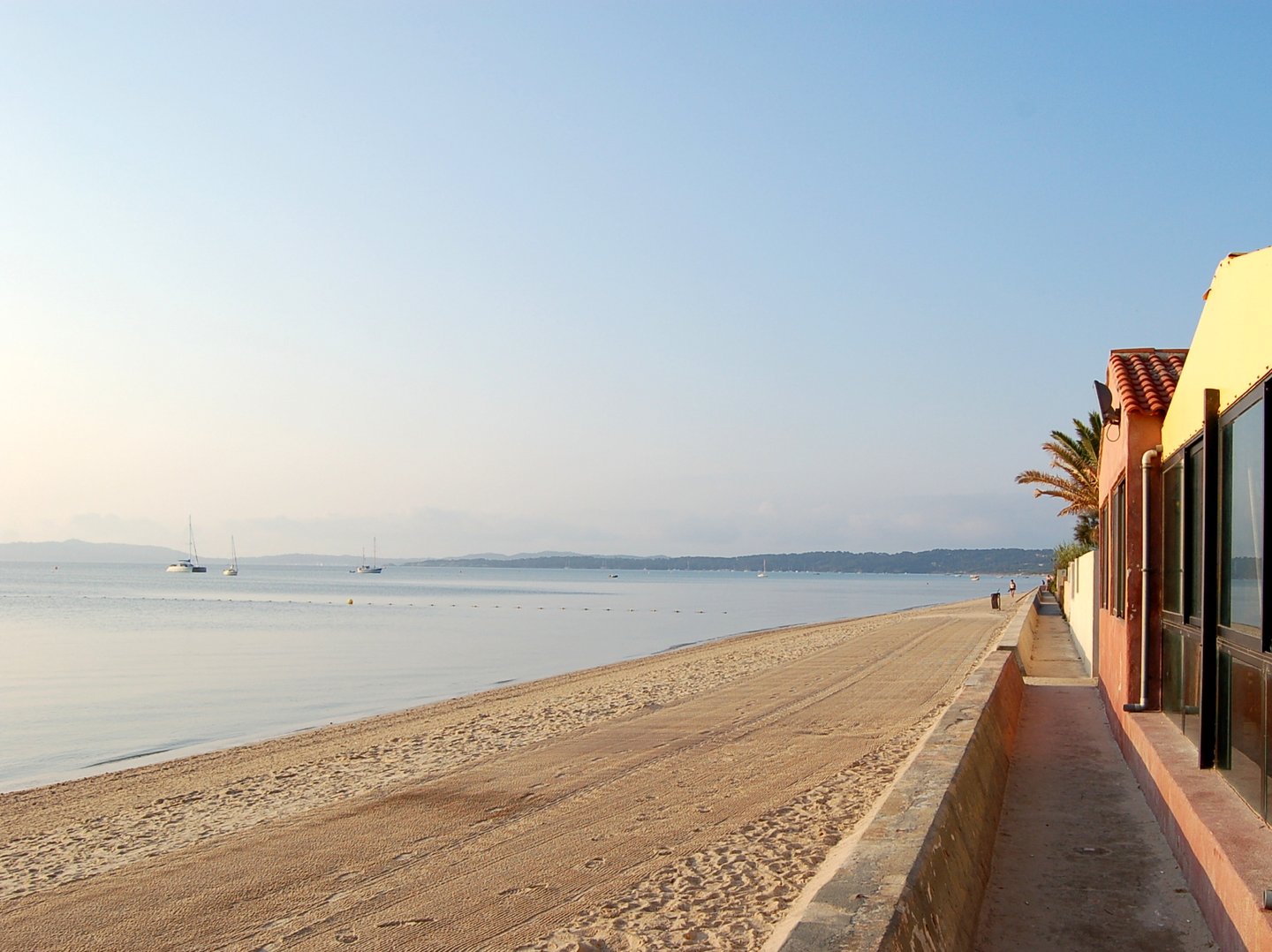
Why we chose it: La Capte is the beach we recommend without hesitation to anyone travelling with young children. Sheltered from the Mistral by the eastern tombolo, it has consistently calm, shallow water, fine sand and a gentle slope into the sea that allows children to paddle and swim with confidence. It is not the most scenically dramatic beach on the Giens peninsula, but for families it is the right choice and consistently delivers exactly what it promises.
Character: La Capte beach runs along the eastern tombolo with views east across the Rade d'Hyères. The water is shallow for a considerable distance, warm in summer and calm on all but the windiest days. The small community of La Capte sits just behind the beach and has hotels, restaurants, ice cream shops and a handful of small supermarkets, which makes it practical as well as pleasant.
Facilities: Public toilets and showers are available at multiple points along the beach. There are restaurants and snack bars directly on the beachfront. Sun lounger and parasol hire is available in season. Paid parking is available in La Capte village and along the beach road, with some free spaces available in the quieter months. The beach is lifeguarded in July and August.
Sunday market: The Port d'Hyères market runs on Sunday mornings from Easter to the end of September, a short distance north of La Capte. It is a good complement to a morning at the beach: browse the market, then walk south to the water.
Honest note: La Capte is a popular beach precisely because it is sheltered and easy to access, which means it fills up quickly on summer weekends. Arriving before 10am in July and August is strongly recommended if you want a good spot and a parking space.
Plage de la Bergerie | The calm, convenient beach that families keep coming back to
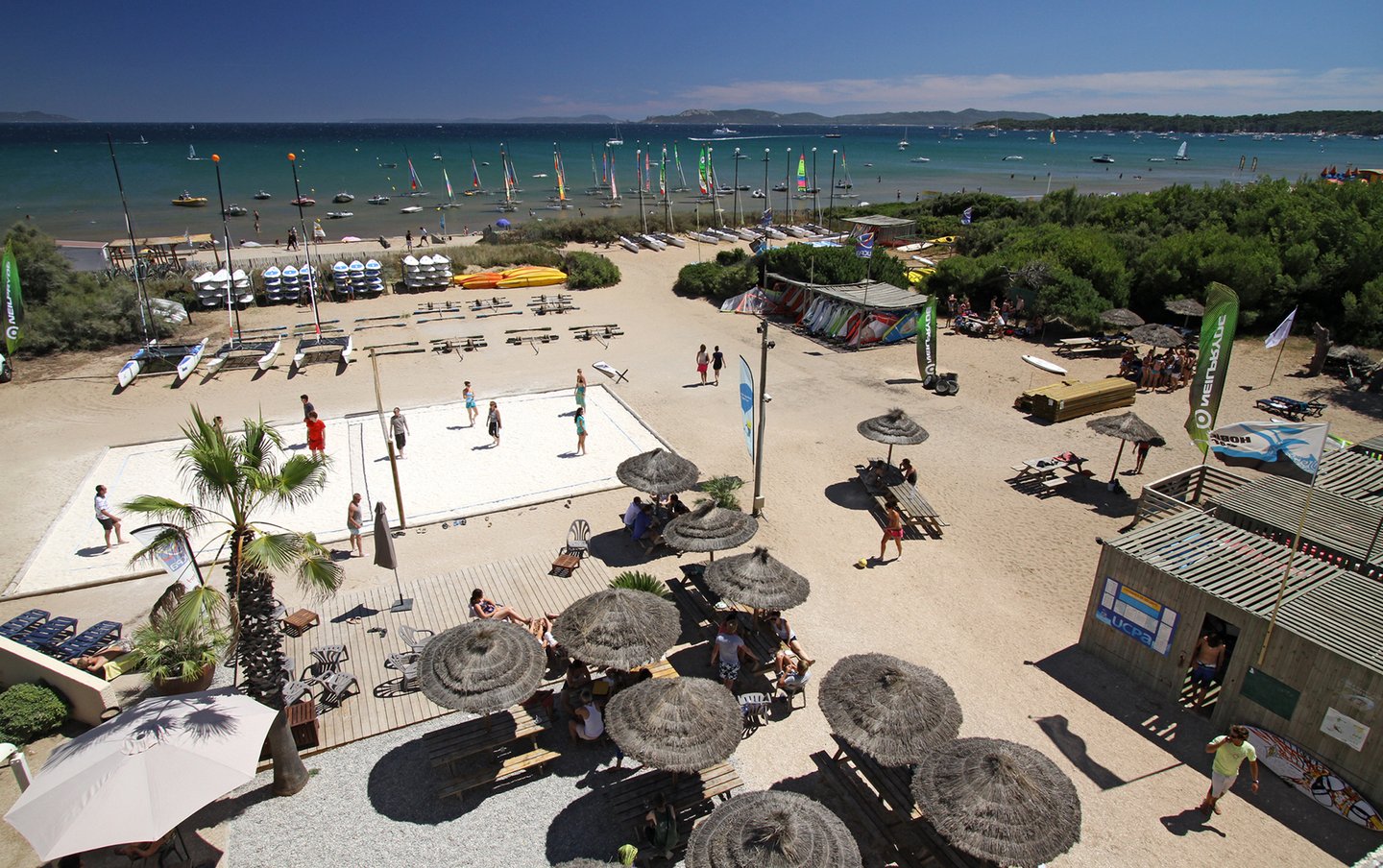
Why we chose it: La Bergerie sits close to the Tour Fondue ferry port at the eastern end of the peninsula and is one of the most accessible beaches on the southern coast. It is not as sheltered as La Capte but it shares the same calm, gentle character, and its position near the ferry port makes it particularly well suited to a day that combines a morning on the beach with an afternoon on Porquerolles - one of the most rewarding combinations the peninsula has to offer.
Character: A sandy beach with a gradual slope into clear, shallow water. The setting is pleasant without being dramatic: pine trees behind the beach provide shade, and the view south looks directly towards Porquerolles. It is the kind of beach that is very easy to spend several hours on without noticing time passing.
Facilities: Toilets and showers are available. There is a beach bar and restaurant in season. Paid parking is available nearby at the Tour Fondue car park, though this fills quickly in summer. The beach is supervised in season.
Because of its proximity to the Porquerolles ferry, the area around La Tour Fondue and La Bergerie is one of the busiest parts of the eastern peninsula in July and August. Arriving early is important if you are planning to combine the beach with the ferry.
Plage du Pradeau and Port du Niel | The beach with the best lunch on the peninsula
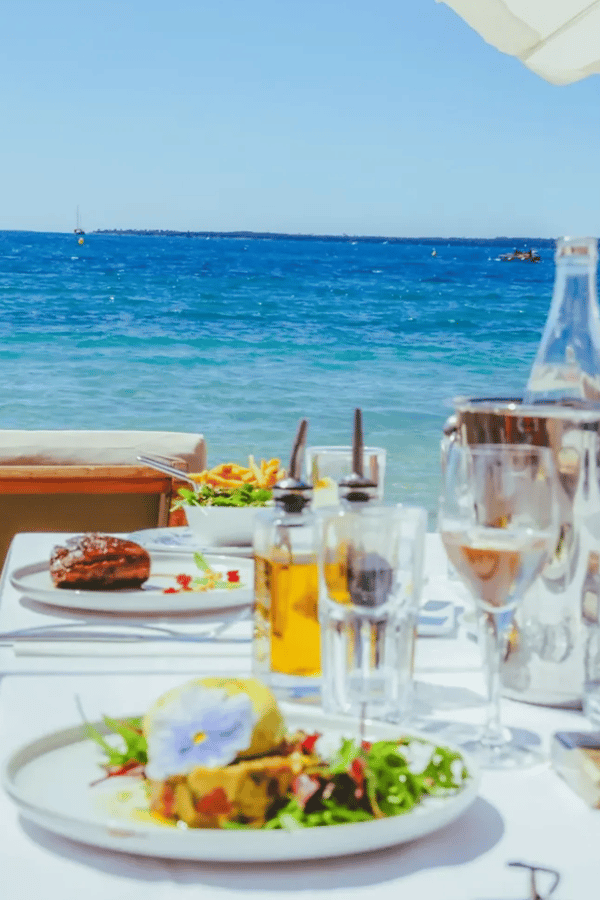
Why we chose it: Le Pradeau is a small cove on the south-eastern tip of the peninsula, accessible by a short walk along the coastal path from the Tour Fondue or by boat. Its beach is unremarkable in isolation, a small strip of sand with good water clarity, but it earns its place on this list because of what is next to it: one of the finest lunch settings on the entire peninsula. Le Pradeau Plage restaurant sits directly above the water and is accessible by boat, making a late morning swim followed by lunch looking out towards Porquerolles one of those experiences that is impossible to replicate elsewhere.
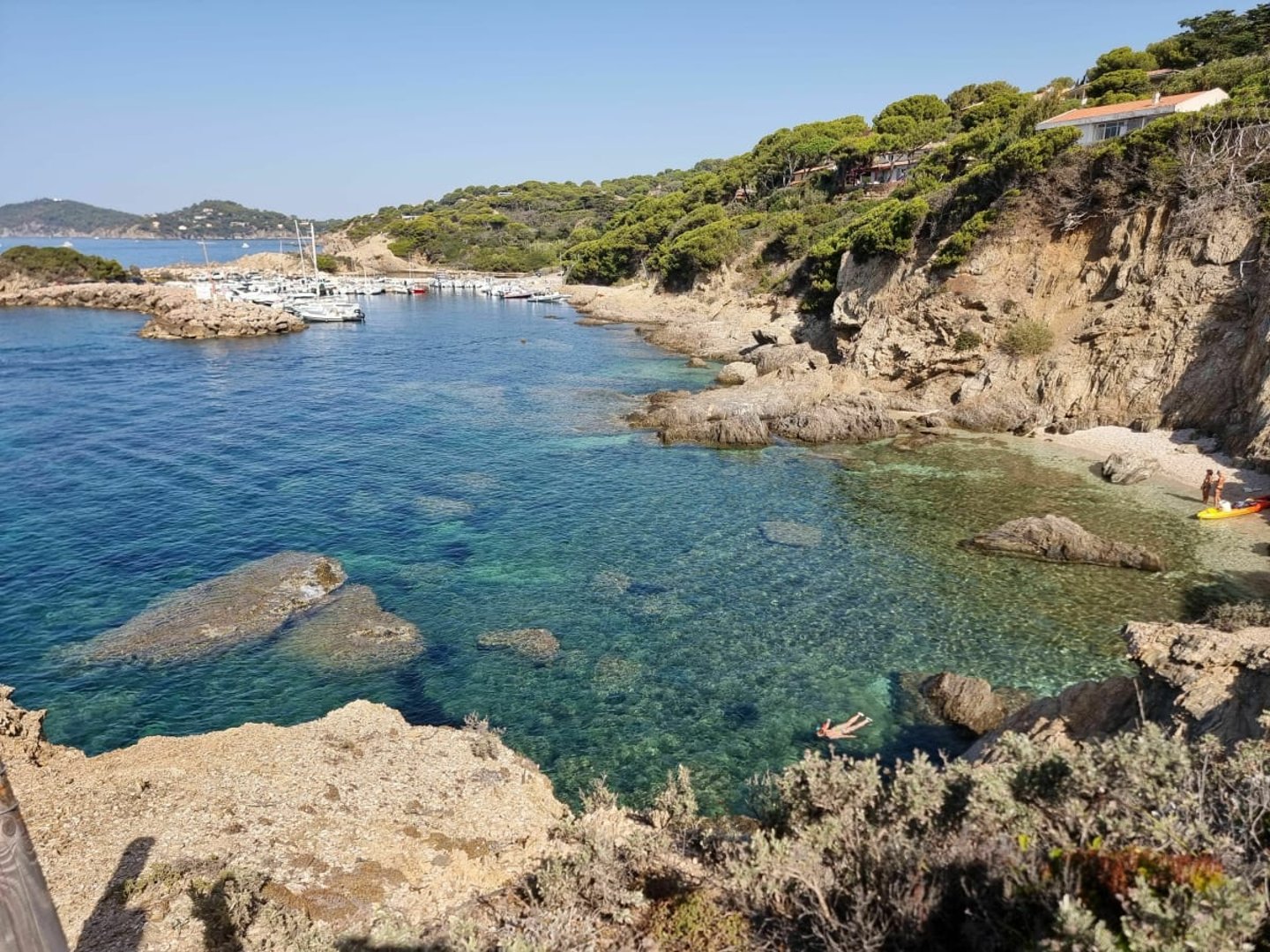
A short walk further along the coastal path brings you to Port du Niel, the most picturesque of the small fishing ports on the peninsula. The water in the crique is exceptionally clear and the port itself holds perhaps a dozen fishing boats. It is not a swimming beach in the conventional sense but it is somewhere to sit, watch the boats and understand why people who discover the southern tip of Giens rarely talk about it to strangers.
Facilities: No public facilities directly at the Pradeau cove. The restaurant has toilets for diners. Port du Niel has no formal facilities but is a ten-minute walk from the village of Giens. Parking at the Tour Fondue is the most practical starting point for both locations.
This section of the coastal path requires some effort and is not suitable for pushchairs or anyone with limited mobility. The path is rocky and uneven in places. The reward is proportionate to the effort.
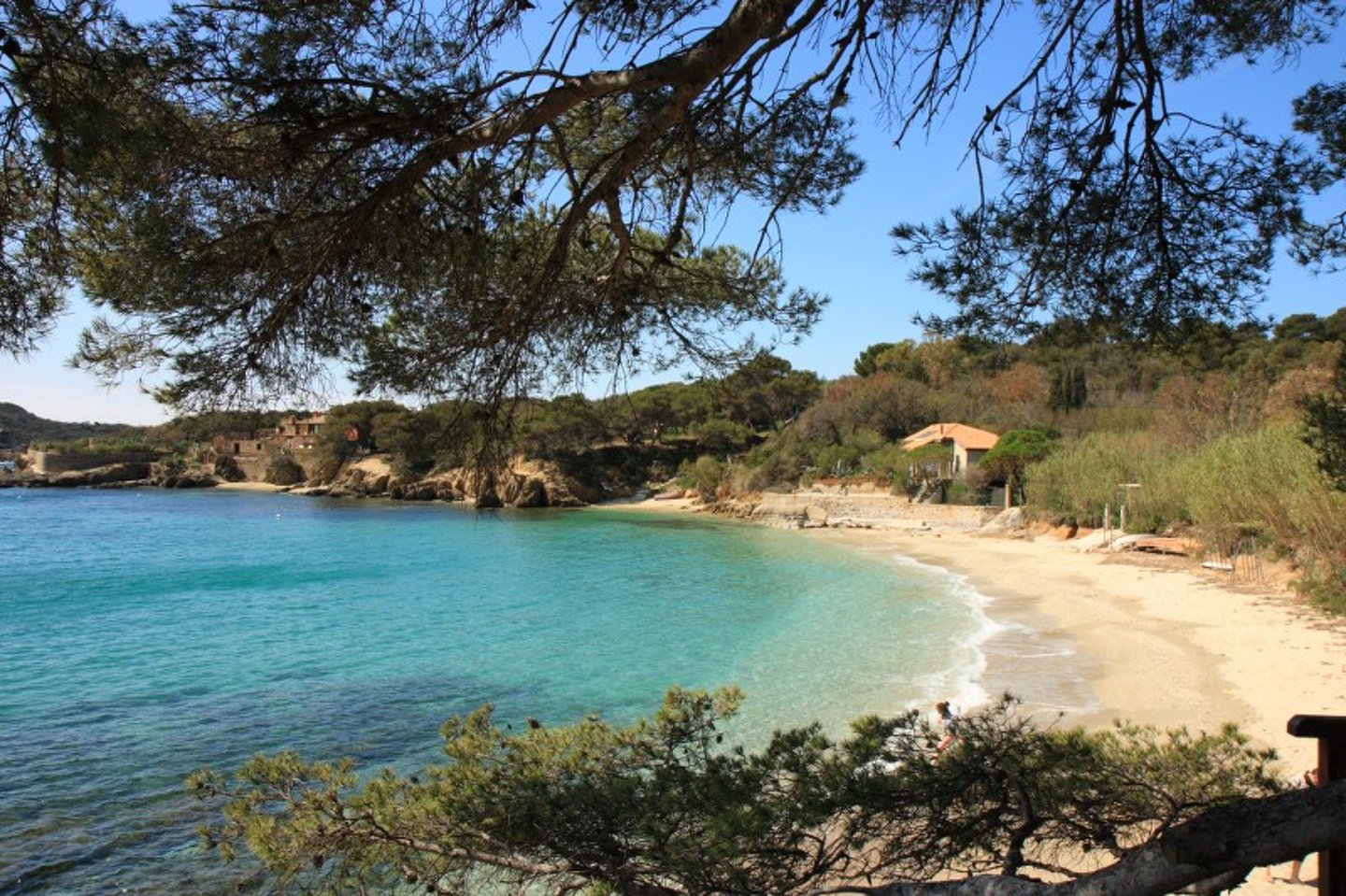
Plage de la Badine and the southern coves | For those who want the peninsula at its most wild
Why we chose it: The beaches on the south-western coast of the peninsula - La Badine, Les Darboussières and the smaller coves accessible only on foot - represent a completely different experience from anything on the tombolos. The coastal path from Port de la Madrague takes you along clifftops through dense Mediterranean scrubland, with views across to the Îles d'Or and the open sea. The beaches you descend to are small, sheltered and, outside of July and August, genuinely quiet. This is the Giens peninsula at its most uncompromised.
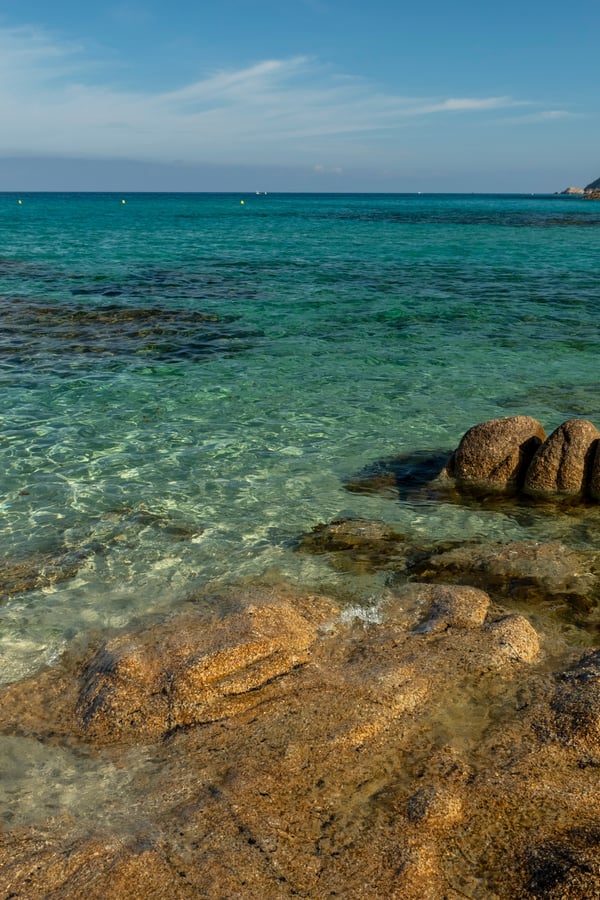
Character: The southern coast has steep cliffs broken by small coves and inlets. La Badine is the most accessible of these, with a small sandy beach and exceptionally clear water. Les Darboussières is further along the path and more remote. The coastline between the two offers some of the best snorkelling on the peninsula. The walk from La Madrague to cover the western loop of the coastal path is approximately seven kilometres and takes around three hours with stops.
Facilities: There are no facilities on any of the southern coves. Bring everything you need: water, food, sun protection and appropriate footwear for rocky paths. There are no toilets, no lifeguards, no beach restaurants and no shade beyond what the pine trees and cliff faces provide. The nearest car park is at Port de la Madrague, and the walk to the first beach takes 20 to 30 minutes.
The southern coastal path passes through classified forest land and is subject to closure when fire risk is high. In summer, sections of the path can be closed by prefectoral decree, sometimes with very little notice. Check the Var forest closure map before setting out - it is updated every evening during fire season and is available on the Var département website. Access to Les Darboussières in particular requires crossing part of the massif and is among the first paths to be closed. These are not beaches you visit for convenience. They are beaches you visit because you want to feel like you have found something. The effort is the point.
Every beach on the peninsula is at its best before 10am and after 5pm in July and August, when the light is lower, the temperature is more forgiving and the car parks have begun to empty. For the southern coves in particular, starting early is essential - both to beat the heat on the walk and to secure parking at La Madrague. May, June and September are the months we recommend most strongly. The water is warm, the beaches are quiet by comparison with the height of summer, and the coastal path through the scrubland is fragrant with flowering thyme and cistus in spring.
À bientôt