Two towns facing the same gulf, sharing the same Mediterranean light and horizon yet offering entirely different experiences. Sainte-Maxime and Saint-Tropez may sit opposite each other across the water, but the way they feel, move, and live could not be more distinct.
In this article, you will get a clear read on the day-to-day reality of both towns, where the friction points are in peak season (traffic, parking, crowds), and how to plan your stay so you can enjoy Saint-Tropez without letting it run your entire week. You will also get practical tips on beaches, market rhythm, and how to move between the two without wasting holiday time.
Sainte-Maxime vs Saint-Tropez: which is better to stay in?
The answer depends less on which is “better” and more on what you want your days to look like. Sainte-Maxime offers a practical, easy rhythm. It has a walkable centre, a marina, sandy beaches within reach, and a year-round local population that keeps the town active beyond peak season. You can settle into a routine here without needing to structure every outing in advance. Restaurants are varied, the seafront promenade is accessible, and moving around town is straightforward.
Saint-Tropez operates differently. It is compact, historic, and internationally recognised. Staying here means you are already inside the atmosphere many visitors come to experience for a day. The port, designer boutiques, beach clubs, and cultural sites are on your doorstep. In high season, that energy can be exciting and immersive. It also means the town becomes busy, and reservations, traffic, and parking require more forward planning.
From a logistics perspective, Sainte-Maxime can feel simpler as a base, particularly in summer when road traffic into Saint-Tropez builds quickly. From a location perspective, Saint-Tropez places you at the centre of the action, which some travellers actively seek. Many guests choose to stay in Sainte-Maxime and visit Saint-Tropez by boat or for specific experiences such as market mornings or beach club lunches. Others prefer to stay in Saint-Tropez itself so that evenings unfold naturally without returning across the gulf.
Neither option is inherently superior. Sainte-Maxime provides space and ease. Saint-Tropez delivers proximity and atmosphere. The best choice depends on whether you prioritise convenience and flow, or immersion and immediacy.
Sainte-Maxime in a sentence
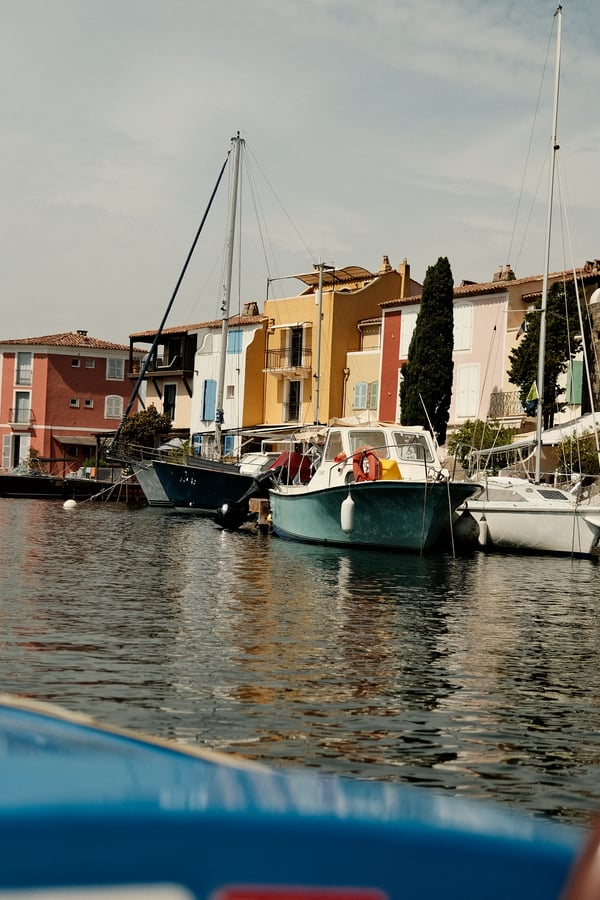
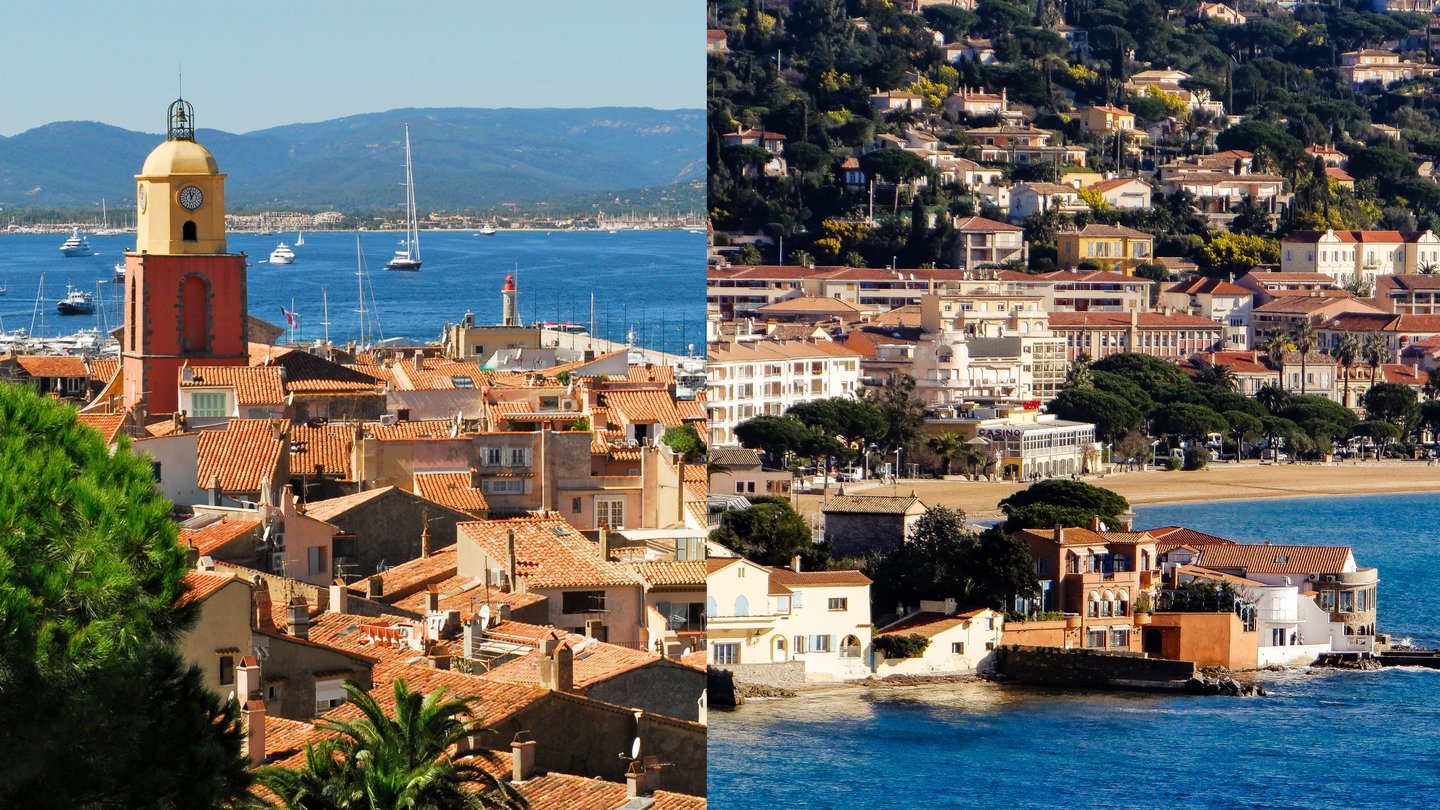
Sainte-Maxime is a Riviera town that still functions for locals, not just visitors. It is a place where you can buy bread, pick up market produce, and walk the seafront without feeling like you are part of an organised crowd. The harbour is active, the promenade is used properly, and the overall pace is calmer than most people expect when they first hear “Gulf of Saint-Tropez”. Its marina is also a clue to its identity. Sainte-Maxime’s port is a major pleasure harbour with around 800 berths, right in the centre of town. This is why it feels connected to the water in a practical way, not just a scenic one.
Saint-Tropez in a sentence
Saint-Tropez is high-energy and high-profile, especially from late June through August. Even if you come for history and atmosphere, you will share the streets with people who came to be seen. That mix is part of what makes it Saint-Tropez. The port is a theatre, the lanes behind it are busy, and timing matters. If you like a lively scene, it delivers quickly. If you are hoping for a quiet coastal break, it can feel like hard work in peak season. Saint-Tropez can still be a brilliant day trip, though, and for many people that is the best way to do it.
Market rhythm and the feel of daily life
Markets are often the clearest expression of how a town lives. In Sainte-Maxime, the main weekly market takes place every Friday morning at Place Jean Mermoz. It runs year-round and is practical in nature. This is where you stock up for villa lunches, beach picnics, and relaxed dinners at home. The layout is manageable, the pace is steady, and you can move through it without urgency. If you are staying for several days, the Friday market becomes part of your routine.
Saint-Tropez market day unfolds at Place des Lices on Tuesday and Saturday mornings, typically from around 08:00 to 13:00. It is one of the most recognisable markets on the Riviera. Under the plane trees, food stalls sit alongside textiles, homeware, and fashion. Arrive early and it feels purposeful. Arrive late and it becomes atmospheric but crowded. Both experiences are valid; they simply offer different moods.
In Sainte-Maxime, the market feels integrated into local life. In Saint-Tropez, it feels like an event within it.
Beaches: what you can actually expect
Beach access is one of the most practical differences between Sainte-Maxime and Saint-Tropez, and it is worth looking at it clearly rather than through reputation.
In Sainte-Maxime, swimming is integrated into the town itself. There are central beaches within walking distance of the marina and old town, which makes short swims between other plans simple. If you want a longer stretch of sand, Plage de la Nartelle sits just outside the centre and offers a broader, more open shoreline. It is one of the area’s most established sandy beaches and provides space for both public access and structured beach set-ups. La Nartelle also carries historical markers linked to the Allied landings of 15 August 1944. Remains of military equipment have surfaced here over the years, including a Sherman tank uncovered after storms. It is not something that dominates the beach experience, but it does underline that this coastline has a layered history beyond tourism. Sainte-Maxime’s beaches tend to be practical and accessible. Parking is generally more straightforward than on the Saint-Tropez side, and the town’s layout makes combining beach time with lunch or an evening walk easy.
In Saint-Tropez, the beach focus shifts towards Pampelonne, which stretches for several kilometres near Ramatuelle. Pampelonne is expansive and varied, with a mix of public beach and well-known private beach clubs. The appeal is not only the sand itself, but the atmosphere built around it. In peak season, Pampelonne requires planning. Reservations are advisable if you want a specific beach club, and arrival time makes a difference if you are using the public sections. Early morning and later afternoon typically feel calmer than the middle of the day. Outside of July and August, the experience is noticeably more relaxed. It is also worth noting that Saint-Tropez has smaller, less publicised beaches closer to the town centre, such as Canoubiers and Les Salins. These can offer a different atmosphere to Pampelonne and are often preferred by those looking for a quieter setting without leaving the commune.
In practical terms, Sainte-Maxime lends itself to spontaneous beach visits, with options embedded directly into town life. Saint-Tropez offers larger, more iconic beach stretches, but timing and organisation shape the experience more significantly in summer. Both deliver clear water, wide horizons across the gulf, and a coastline that defines this part of the Riviera. The difference lies less in quality and more in scale, structure, and seasonality.


How to get from Sainte-Maxime to Saint-Tropez
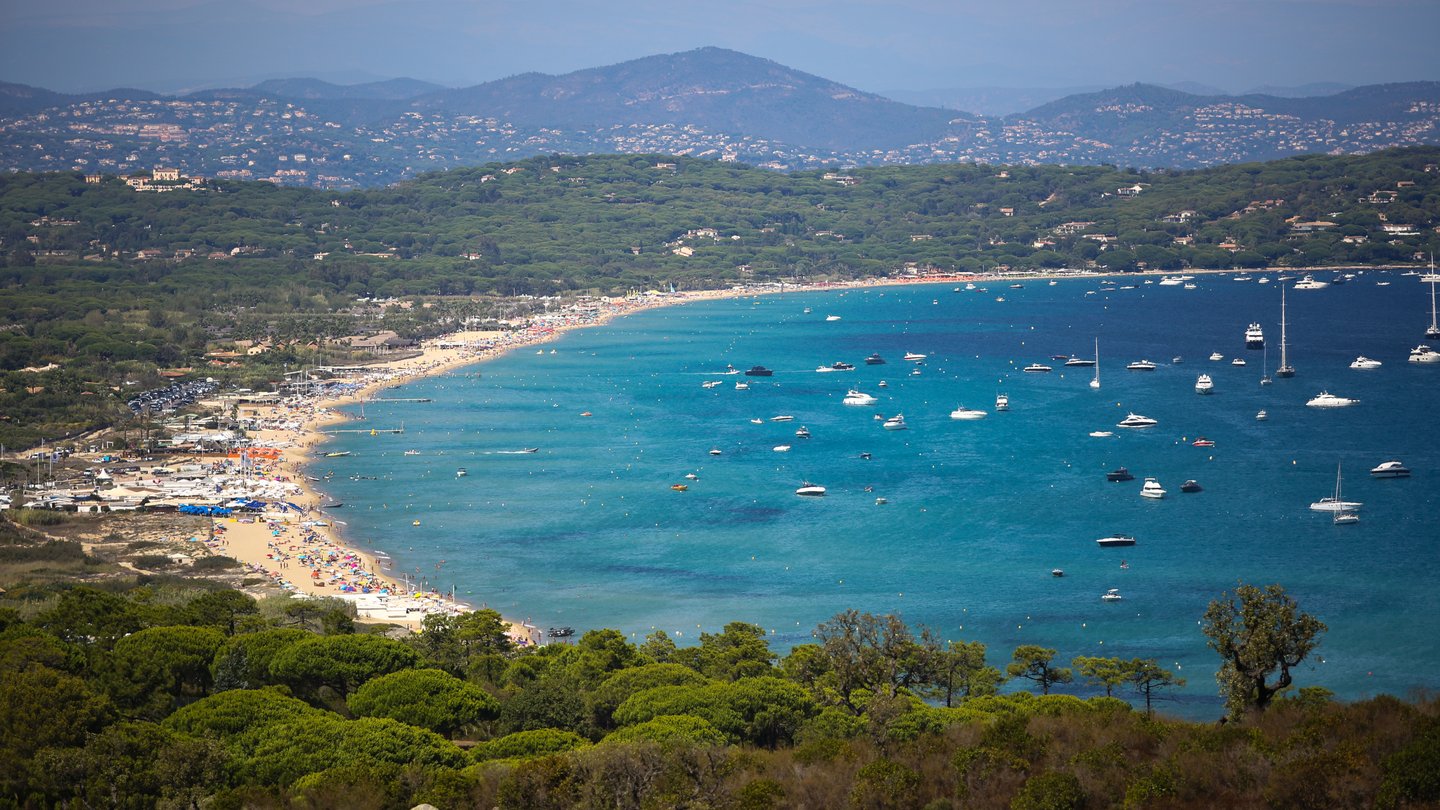
Distance on a map does not always reflect the reality of moving around the Gulf of Saint-Tropez, particularly in summer. The most straightforward route between Sainte-Maxime and Saint-Tropez is by sea. Les Bateaux Verts operates regular shuttle crossings between the two ports, with a crossing time of approximately 15 minutes. The service runs frequently during the season, making it a reliable option for day trips, market mornings, or dinner plans.
The key advantage is not only the speed. It is consistency. The sea crossing removes the main unpredictable factor on the gulf during peak months: road congestion. Once you are on board, the schedule is largely fixed. You arrive directly into the heart of Saint-Tropez’s port without thinking about parking or navigating narrow streets.
Driving remains an option, and outside of high season it can be efficient. In spring, early summer, or autumn, the coastal road is scenic and relatively manageable. However, during July and August, especially on Saturdays, traffic around the gulf can build quickly. What appears geographically close may require significantly more time than expected.
For travellers staying in Saint-Tropez and heading to Sainte-Maxime, the same principle applies in reverse. The boat can offer a calmer and more predictable experience, particularly if your day is built around specific timings. Cycling is another alternative for confident riders, with parts of the coastline offering scenic routes, although this option is better suited to quieter periods rather than peak traffic weeks.
In practical terms, the sea link gives both towns flexibility. It allows you to stay in one and experience the other without committing to the road each time. That flexibility is often what shapes the rhythm of a successful stay on the gulf.
The choice ultimately comes down to the rhythm you want for your holiday. For families, Sainte-Maxime can feel more flexible. Beaches are easier to access, evenings tend to be calmer, and the town layout allows for spontaneous plans without too much coordination. Groups often appreciate that steadier base as well, particularly when different people want different things from the day.
Saint-Tropez suits travellers who want immersion. If you prefer stepping out each morning directly into the port atmosphere, boutiques, beach clubs, and late dinners, staying in town keeps you at the centre of it. For some, that energy is exactly the point. There is no universal answer. Both towns sit on the same stretch of water, share the same light, and connect easily by sea. What differs is tempo, scale, and how much structure your days require.
Some travellers prefer a quieter base with the option to cross the gulf when they choose. Others prefer to stay within the movement of Saint-Tropez itself. The right decision is the one that aligns with how you want your time to unfold.
À bientôt,