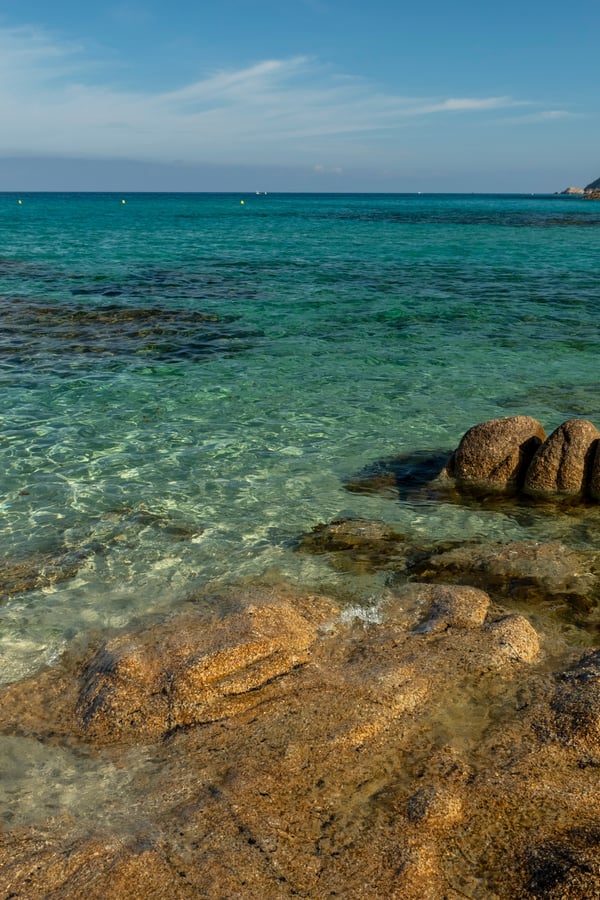
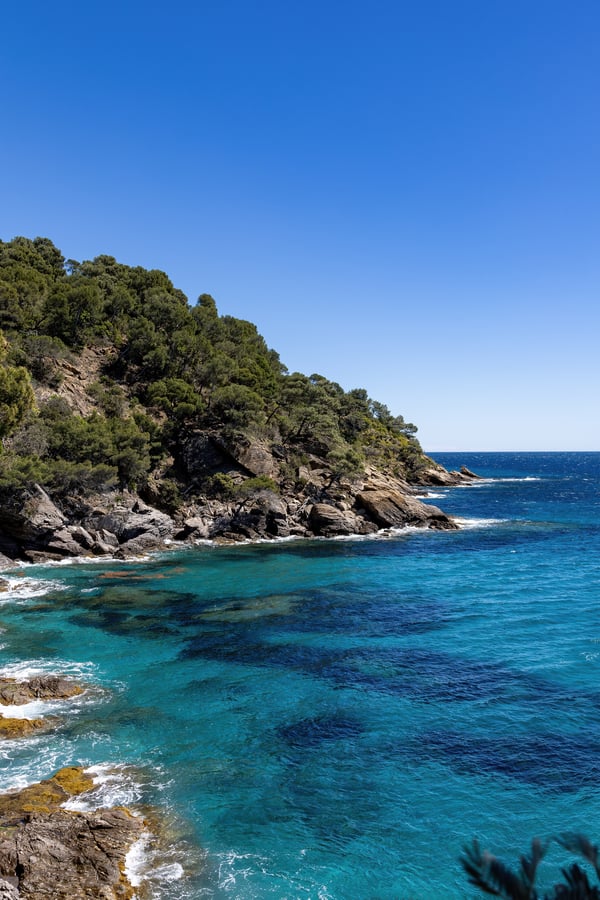
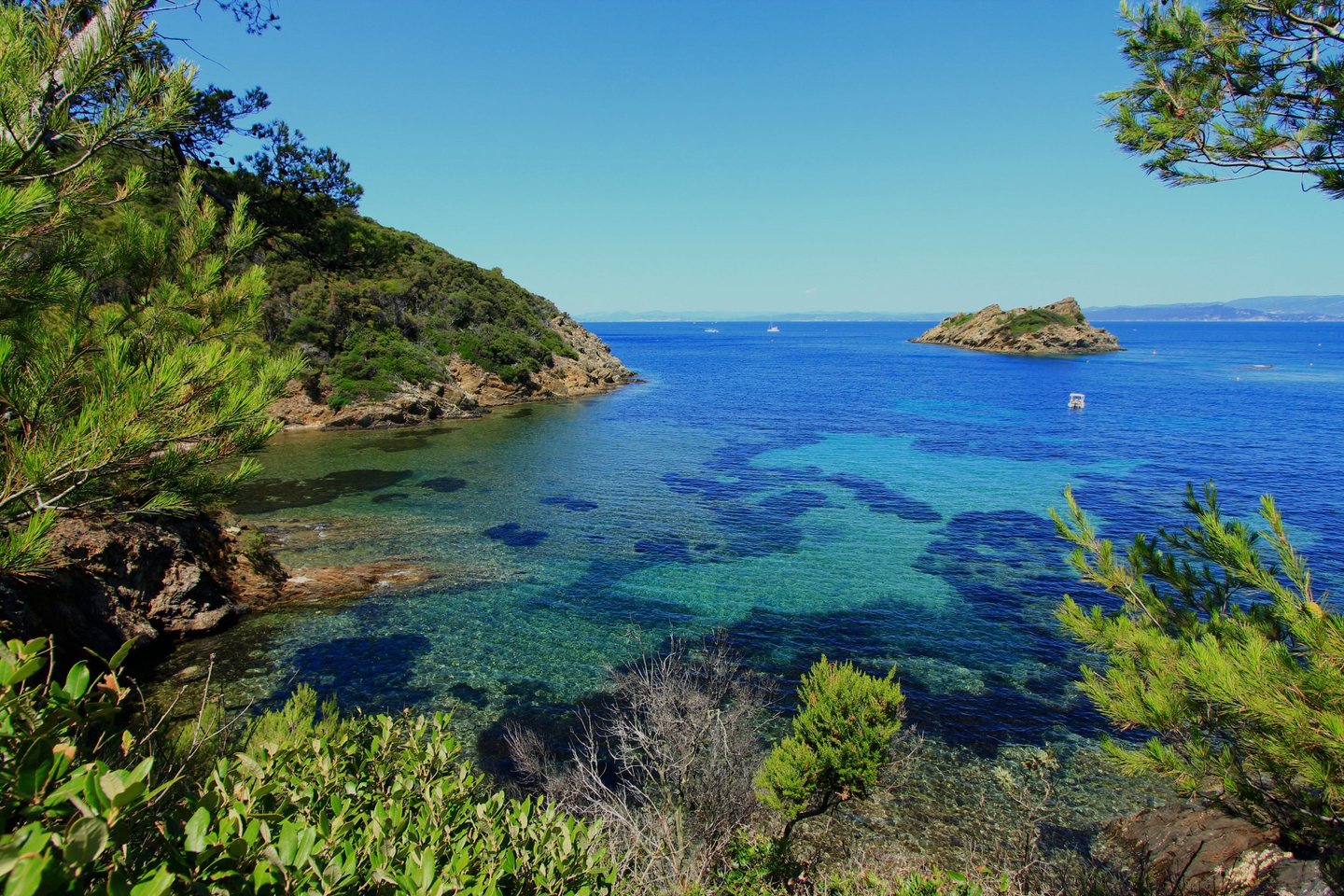
The water around Porquerolles is a particular shade of blue - not quite Mediterranean, not quite Caribbean, but somewhere suspended between the two.
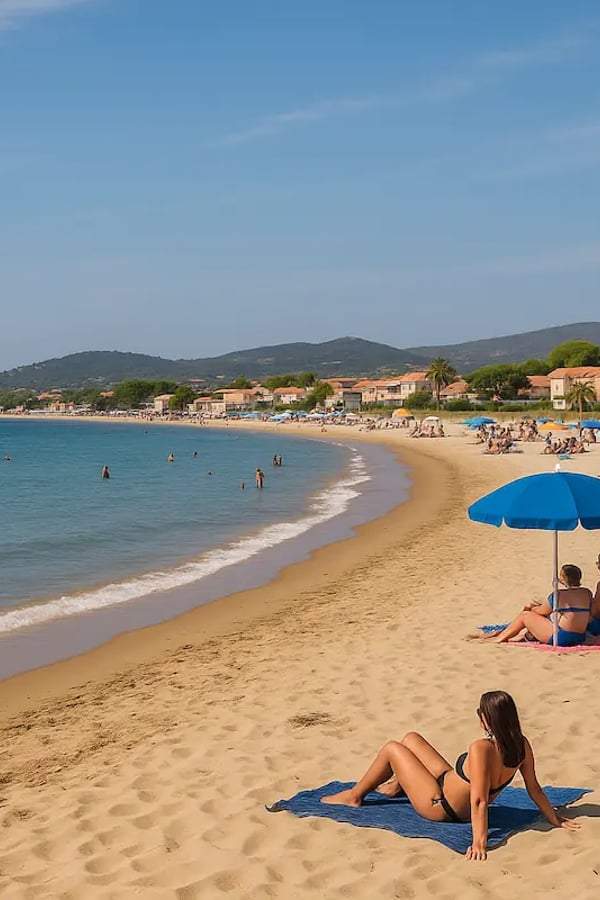
On a clear day in July, you can see the seabed from the surface of Plage d’Argent, the pale sand rippling ten metres below as if the water above it is barely there. Porquerolles sits within the Port-Cros National Park, France’s oldest marine protected area, where anchoring restrictions, fishing limits, and decades of active conservation have allowed the underwater world to recover and thrive. For those who take the time to look beneath the surface, the island offers some of the most rewarding snorkelling and diving in the western Mediterranean.
A sea protected by law - and by time
The waters surrounding the Îles d’Or - the golden islands of which Porquerolles is the largest - have been under some form of protection since 1963, when Port-Cros became France’s first marine national park. Today the park encompasses some 1,300 hectares of marine reserve, and the effect is visible the moment you enter the water. Much of the seabed around the island is carpeted in posidonia, a slow-growing seagrass endemic to the Mediterranean that produces oxygen, filters sediment, and provides a nursery habitat for juvenile fish. Scientists sometimes call it the lungs of the Mediterranean. It grows at a rate of just a few centimetres a year, meaning the meadows around Porquerolles are ancient, irreplaceable, and, in the clarity of the shallows, extraordinarily beautiful to swim above.


Where to snorkel - and what to look for
Porquerolles rewards snorkellers who are willing to move away from the main beaches. The north coast is calmer and more accessible; the south coast, more exposed to wind and swell, is better suited to confident open-water swimmers or those with a guide.
Plage de la Courtade
The beach immediately east of the village is one of the island’s most popular, and for good reason - just offshore, the posidonia meadows begin in earnest. Wrasse dart between the fronds; octopus tuck themselves into rocky outcrops at the edge of the sand. It is calm, accessible, and well-suited to beginners and families.
Le Cimentier
Near the north-western tip of the island lies one of Porquerolles’ most quietly remarkable snorkelling spots. The Cimentier is a wreck - a cargo ship submerged some 70 years ago, originally used as a breakwater - that now rests at a depth of between five and fifteen metres. Wrasse, starfish, and barracuda move through its structure; the hull has become a reef in its own right. Swimmers aged eight and over can approach it with a mask and snorkel, and guided sessions are available with local operators.
Calanque du Brégançonnet
On the south-western side of the island, a narrow crack in the granite cliffs opens onto a small sheltered cove. This is not a spot you stumble across - it requires a 30-minute walk or a short cycle from the port - but the rewards are considerable. The rocky outcrops on either side of the cove are dense with wrasse and painted comber; the water is deep enough to be interesting and calm enough, in good conditions, to be safe. It is the kind of place that feels like a discovery, even when you know exactly where you are going.
Diving around Porquerolles
For certified divers, the waters around the island offer a range of sites across all experience levels. The main diving operator on the island, Porquerolles Plongée, runs guided dives from the village port and has access to sites across the wider national park. The Sec du Langoustier, a rocky pinnacle near the lighthouse at the north-western tip of the island, is considered by many to be the finest dive site in the area. Red gorgonian fans cling to the rock walls; moray eels emerge from crevices; groupers move unhurried through the water. Schools of barracuda are common, and for underwater photographers it is a particularly productive site. There is a shallow zone suited to discovery dives and open water training, and a deeper wall that descends to around 25 metres for more experienced divers.
The wrecks are a draw in their own right. Beyond the Cimentier accessible to snorkellers, there are several deeper wrecks in the surrounding waters - among them Le Donator, Le Grec, and La Ville de Grâce - each with its own character and marine community.
The marine life you are likely to encounter
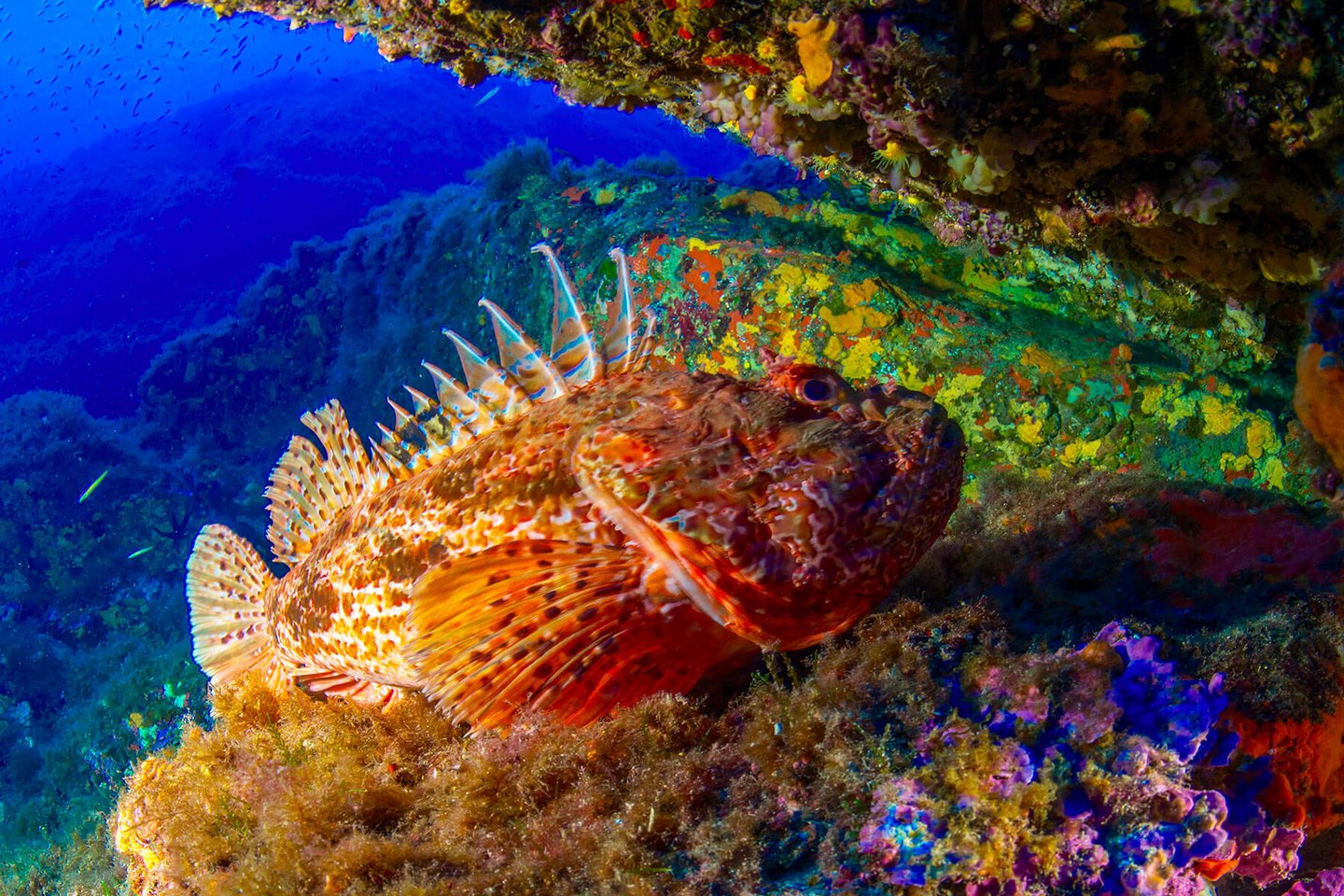
The protected status of these waters means the marine life here is noticeably more abundant and less wary than in unprotected areas of the coast. Regular sightings include:
Grouper | large, slow-moving, and utterly unruffled by human presence. The Mediterranean grouper is the unofficial emblem of these waters and can grow to a considerable size in protected areas.
Barracuda | usually encountered in schools, hanging in the mid-water column in the shadow of a pinnacle or wreck. Silvery, purposeful, and always slightly unnerving.
Wrasse | the most commonly seen fish in the shallows, in a dazzling range of colours. Corkwing wrasse, rainbow wrasse, and cleaner wrasse are all present around the posidonia meadows.
Octopus | more often spotted by the patient observer than the hurried one. Look for a small pile of shells outside a rocky crevice - that is usually a sign that someone is home.
Nudibranchs and moray eels| present in the rock crevices at depth. The nudibranchs in particular are remarkable: spotted sea slugs, giant dories, and red-rimmed flatworms that look too vivid to be real.
Sea turtles | an occasional and always memorable encounter, particularly in the open water between the islands.
Practical notes
The ferry crossing from Tour Fondue on the Giens peninsula takes around 20 minutes and runs up to 20 times a day in high season. Snorkelling equipment can be rented on the island, though bringing your own mask and fins is worthwhile if you plan to spend several days in the water. Guided snorkelling sessions with local operators give access to sites - including the Cimentier wreck - that are harder to reach independently, and most operators provide species identification guides so you know what you are looking at. For those new to diving, discovery dives are available directly from the beach. Porquerolles Plongée operates from the village port and caters to all levels, from first-timers to experienced divers seeking the deeper sites. The best visibility is typically from May through to October. July and August bring the most visitors; for those who prefer calmer water and fewer people, June and September are the quieter, often better, months to go.
Worth the crossing
Porquerolles is, on the surface, a beautiful island - pine forests, sandy beaches, a village that closes down after lunch. But the most interesting version of it is underwater, where the protection afforded by the national park has created something rare: a corner of the Mediterranean that still feels genuinely, quietly wild.
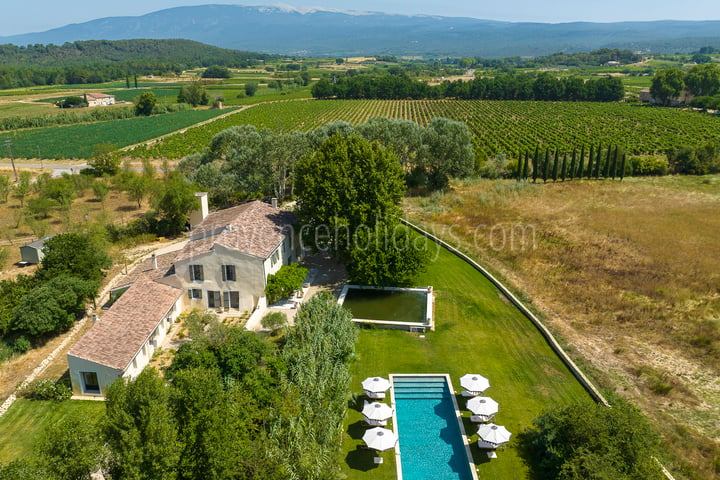
If you are staying in one of our villas in the Var and would like advice on reaching Porquerolles or arranging guided excursions on the water, our team would be happy to help.
À bientôt