A guide to the AOP Vallée des Baux-de-Provence, its three great mills, and the centuries-old art of fruité noir.
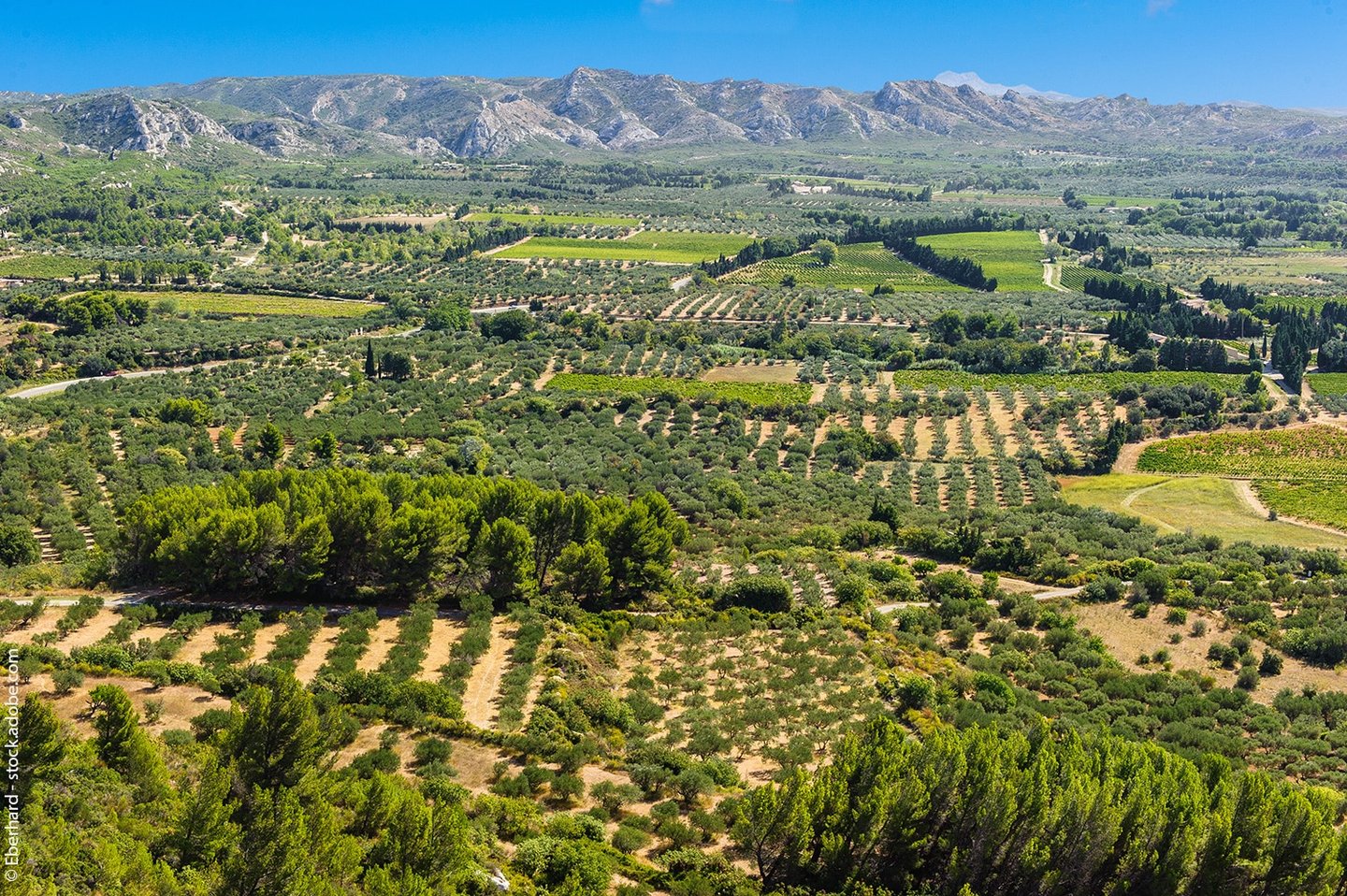
If the Luberon is defined by its lavender, the Alpilles are defined by their olive trees. The pale, silvery groves that pour down from the limestone ridges into the Vallée des Baux have been cultivated since Roman times, and today they produce one of the most prestigious olive oils in France: AOP Vallée des Baux-de-Provence. A few days spent visiting the working mills of the valley is one of the most rewarding food experiences in Provence - and one of those that visitors regularly tell us they wish they had discovered sooner. Here is everything you need to know about the Alpilles olive oil trail: what makes the AOP special, the difference between fruité vert and fruité noir, the mills worth your time, and how to taste like you know what you are doing.
What is AOP Vallée des Baux-de-Provence olive oil?
The AOP Huile d'olive de la Vallée des Baux-de-Provence was established in 1997 and is one of only eight olive oil AOPs in France - and one of five in Provence. The designation covers seventeen communes around the Alpilles massif and the Crau plain, including Maussane-les-Alpilles, Mouriès, Les Baux-de-Provence, Paradou, Fontvieille, Eygalières, Saint-Rémy-de-Provence, Saint-Étienne-du-Grès, Aureille, Eyguières, Mas-Blanc-des-Alpilles, Lamanon, Orgon, Sénas, Tarascon, Saint-Martin-de-Crau and Arles.
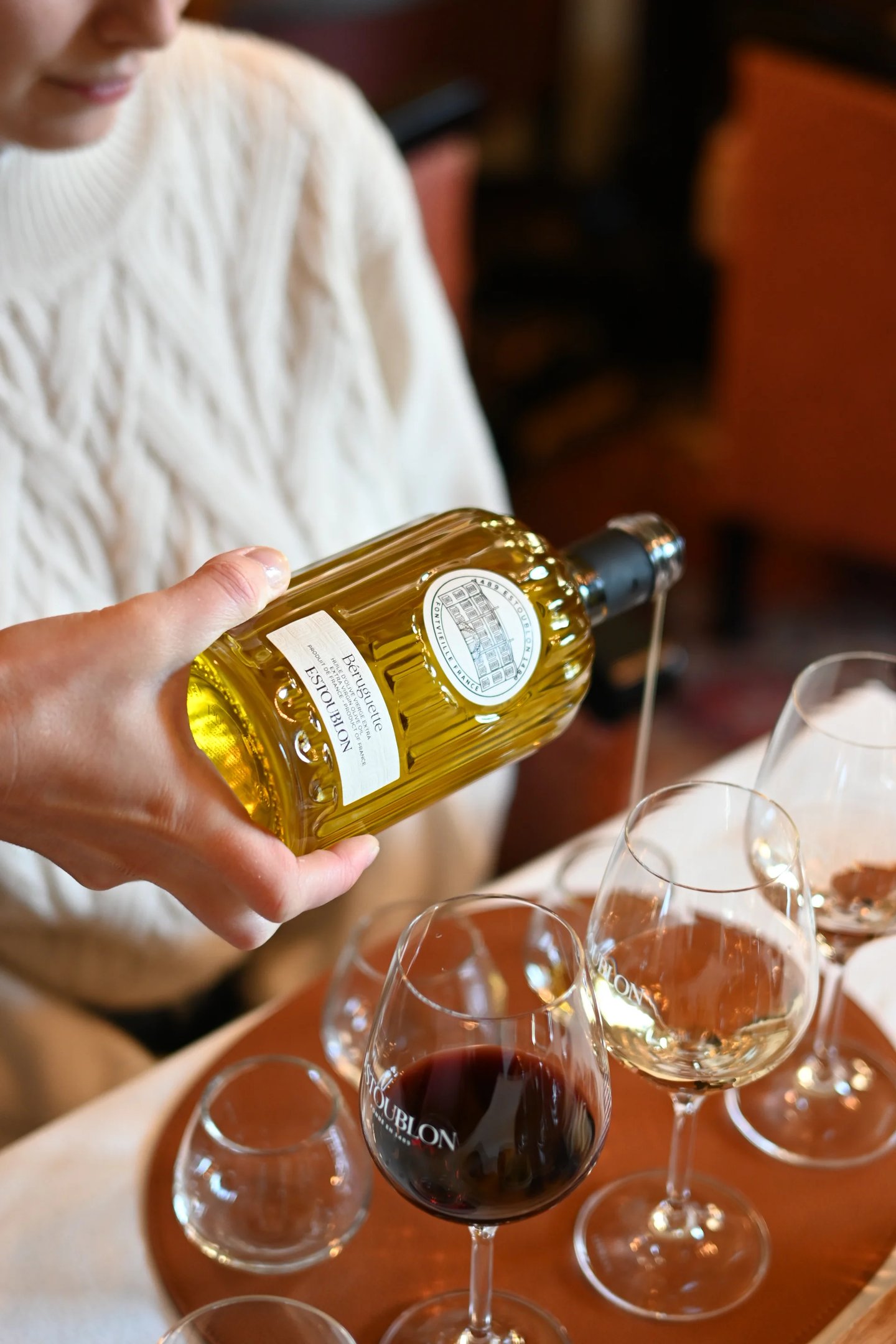
The valley's oils are made from a strict cocktail of five olive varieties: Salonenque, Aglandau (also known locally as Béruguette), Grossane, Verdale des Bouches-du-Rhône and Picholine. They are grown on stony, sun-baked soils with the cool mistral wind running through the trees, and the flavour profile that results is unmistakable: aromatic, complex, deeply layered, and capable of holding its own against any olive oil in the world. What sets the Vallée des Baux apart from every other AOP in France is that it officially recognises two completely different styles within the same designation: fruité vert and fruité noir.
Fruité vert and fruité noir | The great Alpilles divide
Fruité vert - green, fresh, peppery
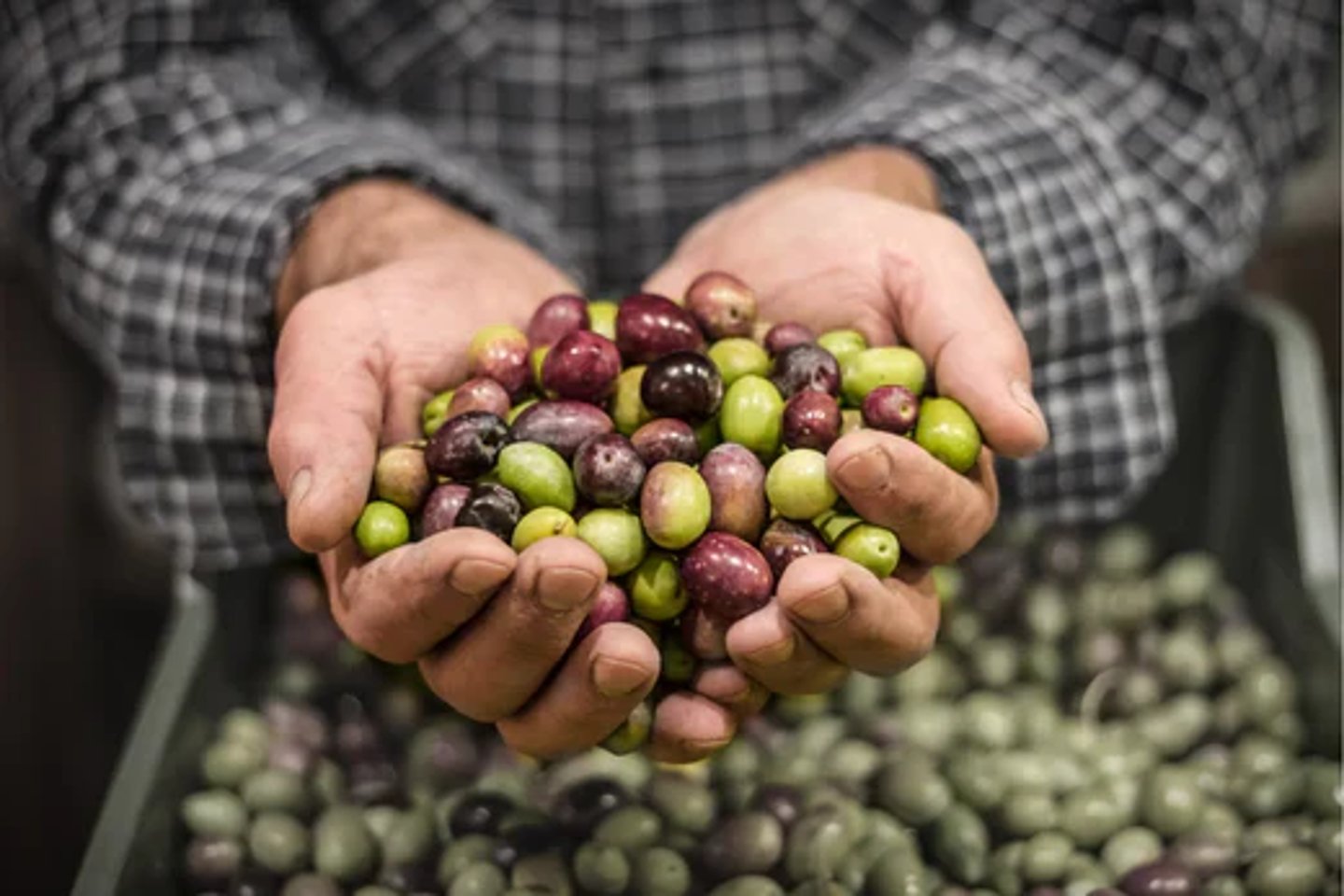
Fruité vert is olive oil as most of the world knows it. Olives are picked early, pressed within hours, and the resulting oil is bright green, peppery and grassy, with a punch of fresh herbs and almond and a slight burn at the back of the throat. It is the oil to drizzle over a tomato salad, a piece of grilled fish, or a freshly toasted slice of pain de campagne.
Fruité noir - mellow, complex, ancestral
Fruité noir is something else entirely. After harvest, the olives are held by the miller for three to ten days under controlled conditions before pressing. This brief, deliberate maturation transforms the fruit completely. The oil that emerges - sometimes called 'olive maturée' - is mellow, round and almost buttery, with deep aromas of cocoa, truffle, mushroom, sourdough bread, candied olive and cooked artichoke. Maussane-les-Alpilles is the historical home of the style. The cooperative there has been making fruité noir for a century and is widely credited with formalising the technique into the modern AOP. It is the oil for warm dishes, root vegetables, eggs, lentils - anything that needs softness rather than spark.


The Alpilles olive oil mills worth visiting
All three of the mills below welcome visitors, run tastings and sell directly from their boutiques. Opening hours and tour formats shift through the year - particularly during harvest in November and December, when the mills run flat out - so it is always worth checking the latest hours on each mill's website before you go.
Moulin Jean-Marie Cornille - Maussane-les-Alpilles
The cooperative mill of Maussane-les-Alpilles is the oldest and most storied stop on the trail. The vaulted stone building dates from between 1600 and 1620 - originally the private mill of the Lord of Manville - and became a growers' cooperative in 1924. It received the AOP Vallée des Baux designation in 1997 and has been awarded the prestigious Entreprise du Patrimoine Vivant (Living Heritage Company) status for its uninterrupted artisanal production.
This is where to taste the legendary fruité noir at the source - the mill was instrumental in defining the style - alongside a fruité vert and a deeply traditional black tapenade. The shop is tucked into a quiet street behind the village square. Walk in, ask for a tasting, and they will pour you small samples and tell you exactly which dish each oil belongs on. It is unfussy, generous and entirely lovely.
VISIT MOULIN JEAN-MARIE CORNILLE
Moulin Castelas - Les Baux-de-Provence
Just below the spectacular hilltop village of Les Baux, Moulin Castelas occupies a strikingly modern building set among its own working olive groves. The mill has been awarded medal after medal at the Concours Général Agricole in Paris over the past fifteen years - including multiple gold medals for its 'Noir d'Olive' fruité noir - and is widely considered one of the most consistent producers in the AOP.
The visit experience here is more polished than at Maussane: free guided tastings run every day without reservation, the tasting room is purpose-built, and the boutique is excellent. A short marked walking trail runs through the surrounding olive grove and explains the rhythm of the olive year. Castelas also produces a small range of olive oils infused with rosemary, basil and citrus, which make ideal gifts. Pair the visit with an afternoon at the Carrières des Lumières and a walk through the village of Les Baux itself - together they make one of the best days out in the Alpilles.
Moulin du Calanquet - Saint-Rémy-de-Provence
On the outskirts of Saint-Rémy, on the old road to Arles, Moulin du Calanquet is a family-run estate and mill founded in 2000. The mill, the boutique and the groves all sit on the same site, and the welcome is warm. Guided tours run for thirty to forty minutes in either French or English, and end with a tasting at three stations: oils, then tapenades and jams, then table olives, all made on site.
Opening hours are generous: from April to September the boutique is open seven days a week, 9am to 12.30pm and 2pm to 7pm; from October to the end of March it is open Monday to Saturday, 9am to noon and 2pm to 6.30pm. Of the three mills, Calanquet is the easiest to combine with a morning in Saint-Rémy itself - the Wednesday market, the Van Gogh trail at Saint-Paul de Mausole, and lunch in the old town.
When is the olive harvest in Provence?
The Vallée des Baux olive harvest runs from early November to late January, depending on the year, the variety and whether the producer is making fruité vert (early picking, immediate pressing) or fruité noir (later picking, controlled maturation). This is the moment to visit if you want to see the mills working at full tilt: the smell of fresh-pressed oil fills entire villages, and many mills offer tastings of the new season's oil straight from the press - bright, peppery and unfiltered.
If you cannot make the harvest, do not worry. The mills are open year-round, the boutiques are fully stocked, and the oils themselves keep beautifully for many months in a cool, dark cupboard. Spring and early summer are also lovely times to walk the groves before the heat sets in.
How to taste olive oil like a pro
Olive oil tastings work much like wine tastings, with a few twists. Pour a small amount into a clean glass - ideally something blue or opaque, so colour does not influence you - warm it briefly in your hand, sniff deeply, then take a small sip and draw air across the oil through your teeth. This releases the aromatic compounds and lets you taste both the front and the back of the oil.
Look for three things: fruitiness (does it taste of olives, of grass, of artichoke, of cocoa?), bitterness (a sign of fresh, healthy fruit) and pungency (the peppery burn at the back of the throat - also a sign of quality). Then taste it on bread, then with a tomato, then with a piece of cheese. The oil will taste different every time, and that is the point.
Where to taste Alpilles olive oil at the table
The Alpilles is full of restaurants that put their local oil at the centre of the plate. La Chassagnette outside Arles, the bistros around the Maussane village square, and the Michelin-starred kitchens of Saint-Rémy all use Vallée des Baux oils with reverence. Ask your server which mill the oil comes from - they will be delighted to tell you, and often pleasantly surprised to be asked. A simple tomato salad, dressed at the table with an oil from a mill you visited that morning, is one of the small, perfect joys of a Provence holiday.
Where to stay for the olive oil trail
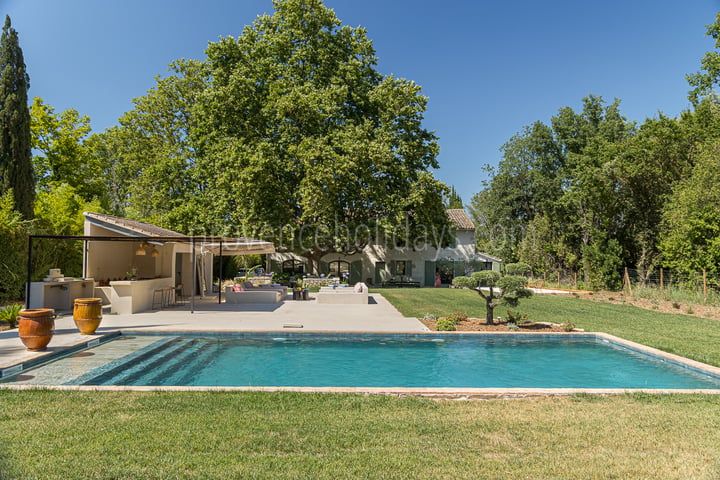
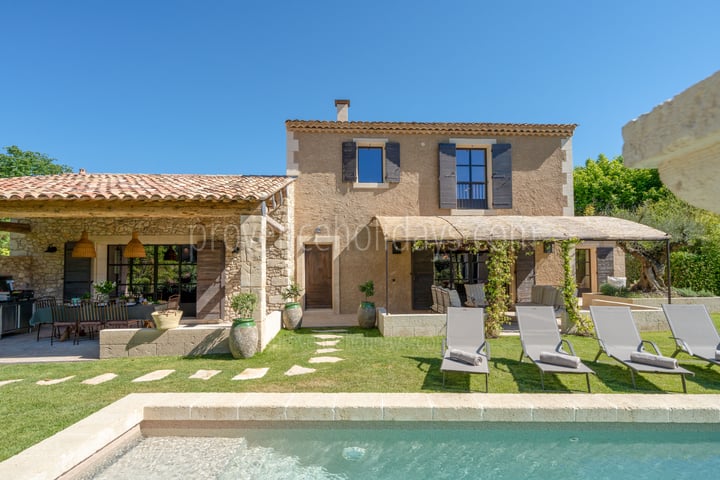
A villa in the heart of the Alpilles puts you within twenty minutes of every mill on this list. Maussane-les-Alpilles, Paradou, Eygalières and Saint-Rémy-de-Provence are all natural bases, with the added benefit of putting the best of the region's restaurants and markets on your doorstep. Plan three days for the trail at a comfortable pace: one mill per morning, with long lunches, village wandering and a glass of rosé in between.
Frequently asked questions
What is AOP Vallée des Baux-de-Provence olive oil?
It is one of eight French olive oil AOPs, established in 1997, covering seventeen communes around the Alpilles and the Crau plain. The AOP is unique in France in officially recognising two distinct olive oil styles - fruité vert and fruité noir - within the same designation, and is made from a blend of five varieties: Salonenque, Aglandau (Béruguette), Grossane, Verdale and Picholine.
What is the difference between fruité vert and fruité noir?
Fruité vert is made from olives picked early and pressed within hours: green, peppery, grassy, fresh. Fruité noir is made from olives held under controlled conditions for three to ten days before pressing: round, mellow, with deep notes of cocoa, truffle, mushroom and candied olive.
Which olive oil mills can you visit in the Alpilles?
The three classic stops are Moulin Jean-Marie Cornille (the cooperative mill in Maussane-les-Alpilles, founded as a cooperative in 1924), Moulin Castelas (Les Baux-de-Provence, multi-medal winner at the Concours Général Agricole) and Moulin du Calanquet (Saint-Rémy-de-Provence, family-run, founded in 2000). All three welcome visitors and run tastings.
When is the olive harvest in Provence?
Early November to late January, depending on the variety and the style of oil being produced. November is the most atmospheric time to visit the mills, when fresh oil is being pressed and tasted straight from the press.
Where can I buy authentic Vallée des Baux olive oil?
Direct from the mills themselves - Cornille, Castelas and Calanquet all sell from their own boutiques - and from the markets and délicatesses of Maussane, Saint-Rémy and Les Baux. Always look for the AOP Vallée des Baux-de-Provence seal on the bottle: it guarantees the variety blend, the production method and the origin.
The olive oil trail of the Vallée des Baux is one of the quiet pleasures of Provence: three working mills within twenty minutes of one another, two distinct styles of oil born of the same five olive varieties, and centuries of know-how poured into every bottle. Cornille for the storied cooperative and the legendary fruité noir at its source, Castelas for the medal-winning consistency and the polished tasting experience, Calanquet for the warm family welcome and the easy combination with a morning in Saint-Rémy. Time the trip around the November harvest if you can, taste at every opportunity, and take home a bottle or two - a single drizzle months later, over bread or a winter tomato, will carry you straight back to the Alpilles.
À bientôt,