What makes this village special?
The Vieux-Port is where the city's essential character is most legible. The daily fish market at the north quay - the fishwives of Marseille selling directly from their boats, the catch landed and displayed on trestle tables before eight in the morning - is one of the most authentic urban markets in France, and the bouillabaisse that ends up in the restaurants around the port begins here. The port itself is surrounded by cafés, and the morning ritual of coffee and conversation at the Vieux-Port is one that the city has been performing since it was founded.
The Corniche Kennedy - the long coastal road running south from the centre - is the city's equivalent of a promenade, but without the formal pretension of the Promenade des Anglais in Nice. It passes the Vallon des Auffes, a tiny fishing cove that has somehow survived intact beneath the road bridge - the boats still moored, the restaurant tables on the quay, the whole scene implausibly preserved - and continues to the Plage du Prado and beyond. The beach clubs along the Corniche have a directness and an energy that reflects the city rather than performing against it.
The MuCEM - the Musée des Civilisations de l'Europe et de la Méditerranée - opened in 2013 in a building by Rudy Ricciotti at the entrance to the old fort, and transformed Marseille's cultural profile in a single intervention. The building itself - a latticed concrete shell enclosing a glass box - is extraordinary, and the permanent collection covers the shared cultural history of the Mediterranean in a way that gives the city's own history a much wider context. The fort beside it, the Fort Saint-Jean, is freely accessible and connected to the MuCEM by a suspended walkway above the sea.
South of the city, the calanques are genuinely extraordinary - limestone fjords cut deep into the coastline by water and time, the rock white and almost vertical, the sea at the bottom a colour that varies between emerald and cobalt depending on the time of day and the angle of the light. The Calanques National Park covers most of this area, and access to some of the more sensitive inlets is restricted in summer to protect the vegetation. This is worth knowing before you go; a guided boat trip from the Vieux-Port covers the main calanques without the walk.
What is our favourite thing about Marseille?
Our favourite thing about Marseille is the Vallon des Auffes at lunchtime on a weekday - the cove below the road bridge, the boats on the water, the restaurant tables on the quay and the sense that the city has protected this particular corner not as a tourist attraction but simply as something it could not bring itself to lose. It is the most Marseillais thing in Marseille, which is saying something.
Where to stay in Marseille
Discover our selection of properties and villas in Marseille
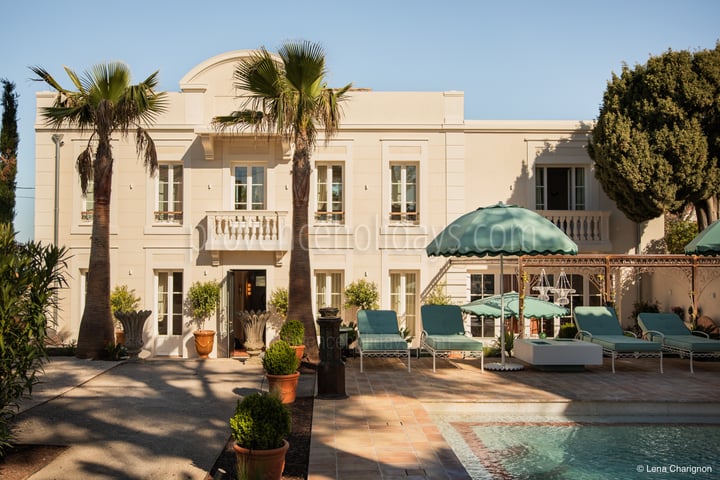
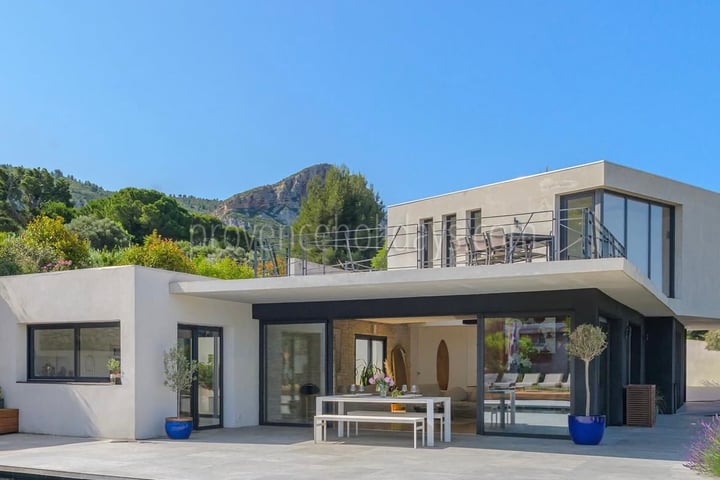
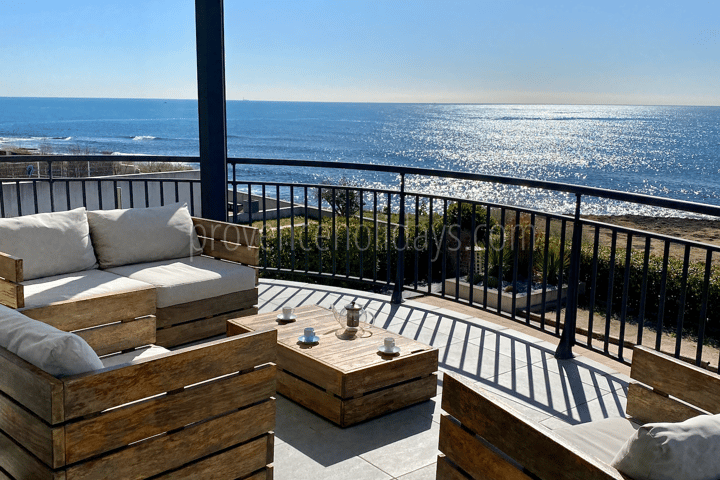
We pair exclusive holiday homes with completely tailored experiences
Our concierge service redefines luxury holidays, enhancing every stay, family holiday, or special occasion. Once you have confirmed your booking, you will be assigned a dedicated concierge who will arrange every detail, ensuring a memorable holiday from start to finish.

Food & Wine

Nature & Outdoors

Art & Culture
Entertainment
Sport & Wellness
Getting to Marseille
By TGV from Paris
Marseille Saint-Charles station is one of the major TGV hubs in the south of France - the journey from Paris takes around three hours and fifteen minutes, and the station is centrally located above the old port area with direct metro connections to the Vieux-Port and the Corniche. It is the most efficient way to arrive from northern France or from London via Eurostar connection.
From the Var coast along the A50
From Toulon and the Var coast to the east, Marseille is around forty-five minutes by car on the A50 autoroute, which passes through the limestone landscape above the calanques before descending into the city. Marseille Provence Airport at Marignane, on the shores of the Étang de Berre northwest of the city, is around thirty minutes from the centre and handles a broad range of European and international routes.
Useful information about Marseille
History and architecture
Massalia - the Greek colony that became Marseille - was founded around 600 BC by Phocaean Greeks from Asia Minor and grew into one of the most significant trading ports in the western Mediterranean. It was an ally of Rome, which allowed it to maintain its independence long after the rest of Gaul was conquered, before finally becoming a Roman city in 49 BC when Caesar seized it for supporting his rival Pompey. The city's subsequent history encompasses Arab raids, incorporation into the Kingdom of France, the Revolution (the song the southern volunteers sang as they marched to Paris became the Marseillaise), and its emergence in the twentieth century as France's second city and principal Mediterranean port.
Cultural attractions
The MuCEM is the preeminent cultural institution - a world-class museum in an architecturally extraordinary building. The Musée des Beaux-Arts in the Palais Longchamp holds a significant collection of European painting. The FRAC (Fonds Régional d'Art Contemporain) covers contemporary art. The Docks Villette cultural complex has transformed the nineteenth-century dockside warehouses into cultural and creative spaces. The opera is one of the oldest in France.
Natural beauty
The Calanques National Park - established in 2012 - covers the extraordinary limestone coastline south of the city, extending to Cassis. The calanques themselves are the defining natural feature: fjord-like inlets of vertical white rock with turquoise water at the base. The Frioul archipelago, four islands just offshore from the Vieux-Port, is accessible by boat and has beaches, walking trails and the Château d'If of Dumas's fiction. The coastal path along the Corniche Kennedy and beyond provides urban waterside walking of real quality.
Explore activities nearby
Our hand-picked selection of the best experiences near your villa.
Discover Provence with us
Our magazine encourages you to truly live and breathe the essence of the region. From secret villages to culinary treasures, experience Provence authentically with us.