Lourmarin sits in the southern gap of the Luberon massif and earns its place among France's most beautiful villages honestly. From the Renaissance chateau to Camus's grave to the July concert season, here is what makes it worth more than a quick stop.
The village in the gap
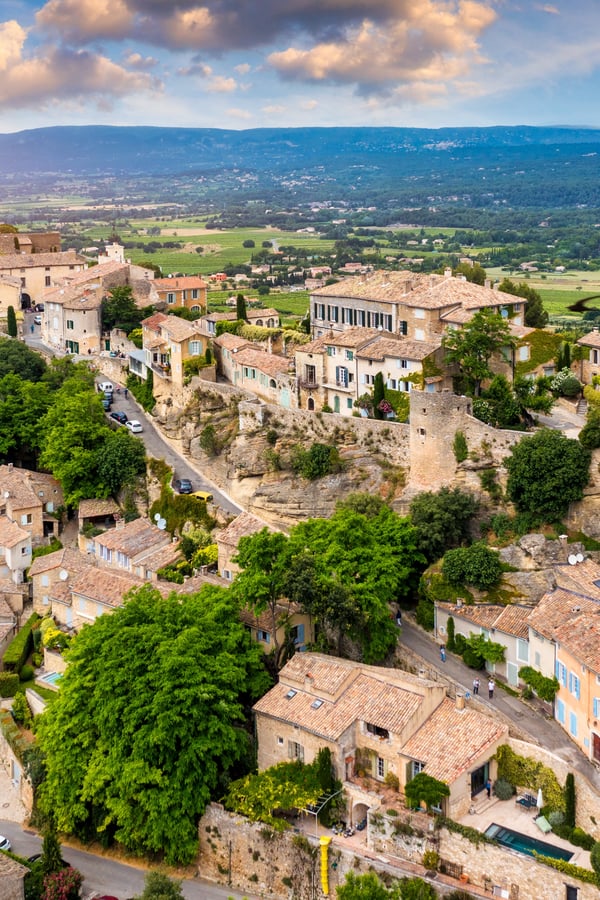
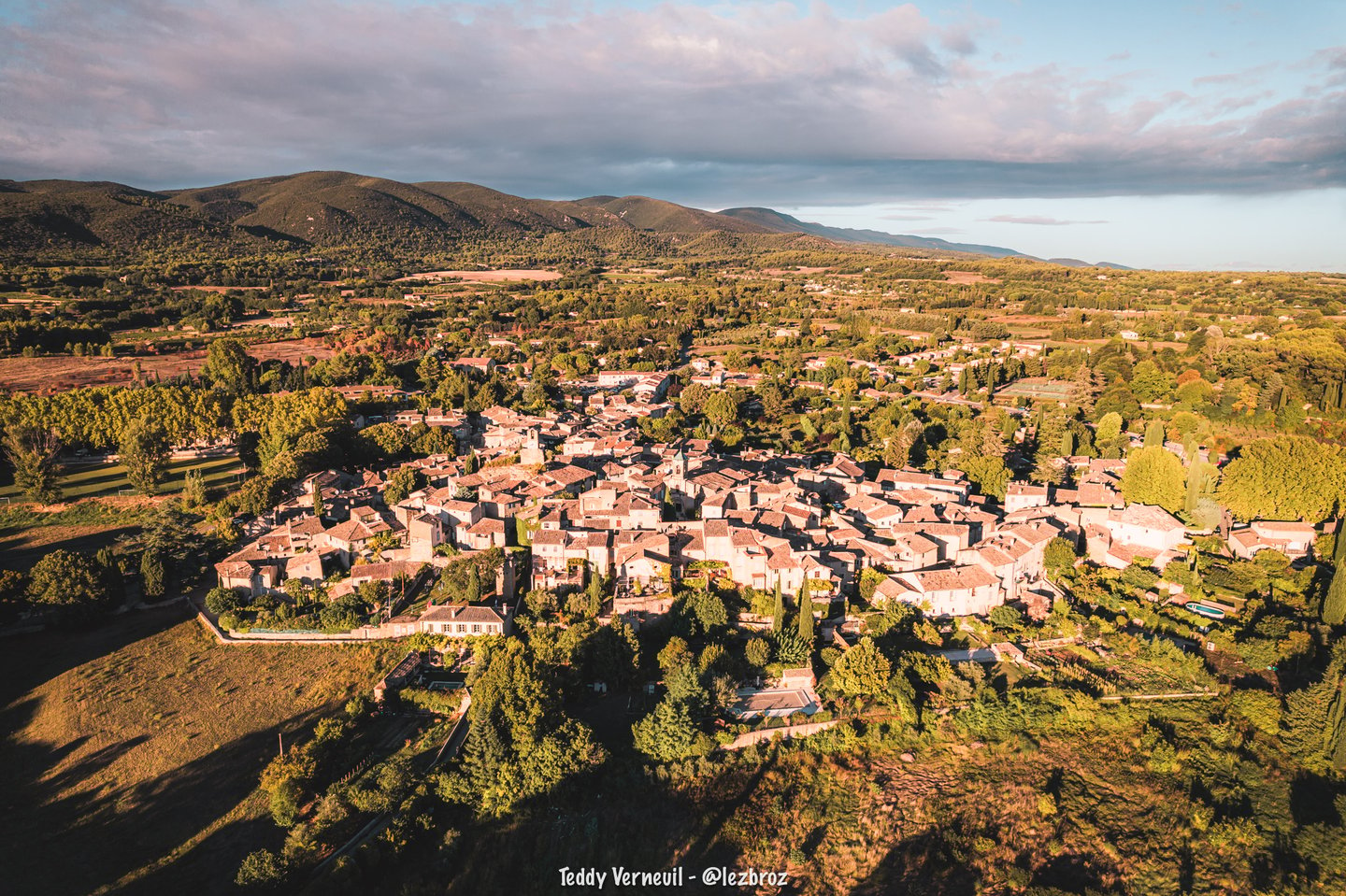
There are several villages in the Luberon that attract significant attention, and most of them are perched at altitude, visible from a distance, and built to impress. Lourmarin is different. It sits in the gap: in the geological cleft known as the Combe de Lourmarin that cuts through the southern face of the Luberon massif. Its appeal is quieter, more residential, and considerably harder to summarise in a single photograph.
The Combe itself is worth understanding. This natural pass through the mountain has been used as a route between the northern Luberon plateau and the southern Luberon plain for centuries. The village grew up at its southern exit, which explains its historical importance as a market town and staging point. The cliff faces that rise either side of the road approaching from the north give a strong sense of the geology: you are literally passing through the mountain, and the change in temperature as you emerge from the shaded ravine into the open plain below is perceptible even in July.
Listed as one of Les Plus Beaux Villages de France since 1995, Lourmarin earned its place on that list honestly. It is a working village as much as a destination: you will find a butcher, a pharmacist and a school alongside the market stalls and the restaurant terraces.
The Chateau de Lourmarin
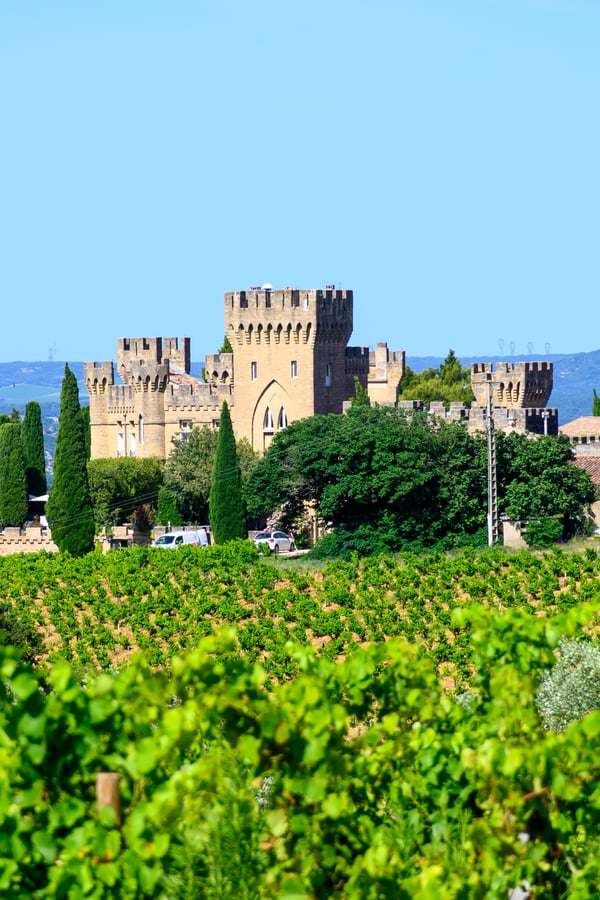
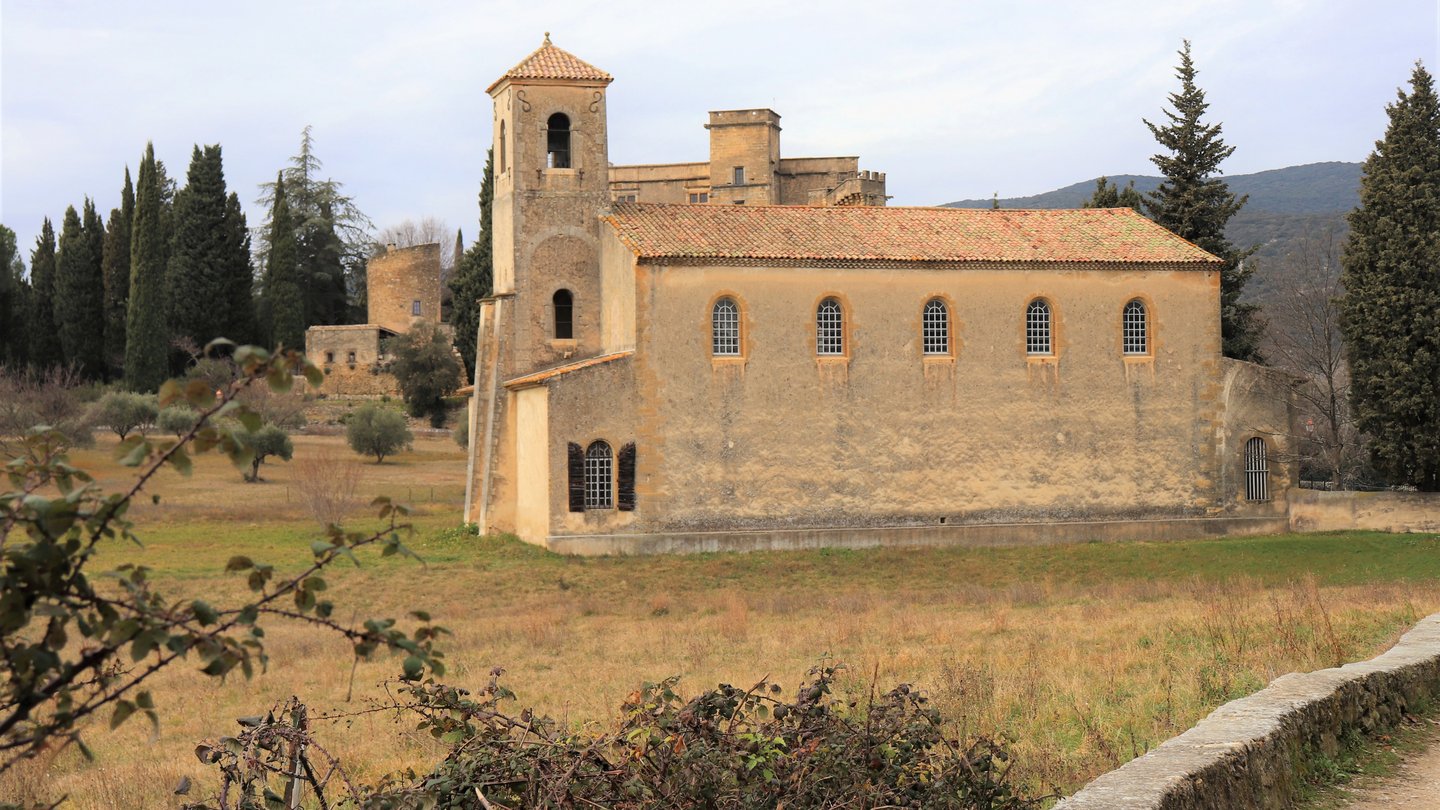
The Chateau de Lourmarin dominates the eastern edge of the village and is the oldest Renaissance chateau in Provence, construction having begun in the late fifteenth century under the Agoult family and continued into the sixteenth. It is open to the public for guided tours, which run throughout the day from April to October. The interior contains a notable collection of period furniture and Provencal faience, and the roof terrace offers a view across the village rooftops to the Luberon ridge. The late afternoon light on the stone is at its warmest from around 5pm, which makes the visit worth timing if you can. Summer concerts are held in the courtyard in July and August, with a programme ranging from classical chamber music to jazz: check the chateau's schedule when planning your visit, as the courtyard concerts are one of the genuinely special July experiences in the southern Luberon.
What fewer visitors know is that the chateau was purchased in 1920 by the industrialist Robert Laurent-Vibert, who undertook a careful restoration and left it to the Academie des Beaux-Arts upon his death. That legacy explains why the building has been so consistently well-maintained: it has functioned as a working residency for artists and scholars for over a century. The programme of summer events reflects that tradition.
A bit about Albert Camus
Albert Camus bought a house in Lourmarin in 1958, shortly after receiving the Nobel Prize in Literature, and it was the village where he chose to settle. He is buried in the village cemetery, a simple grave marked with a flat stone that receives a steady stream of visitors throughout the year. The house he bought, La Marguerite on the Route de Vaugines, is not open to the public but is visible from the road. For anyone with an interest in twentieth-century French literature, the combination of the grave, the village streets he walked, and the landscape he wrote about gives the visit a particular weight. Lourmarin holds his memory quietly rather than commercially: there is no dedicated museum, no gift shop aimed at literary tourism. The grave in the village cemetery is the right place to start, and the walk back through the old streets rewards the unhurried visitor. Camus died in a car accident in January 1960, just eighteen months after settling here permanently. He was 46. The village's restraint in how it marks his presence feels appropriate to the man and to the place.
In July here: the Friday market at its best
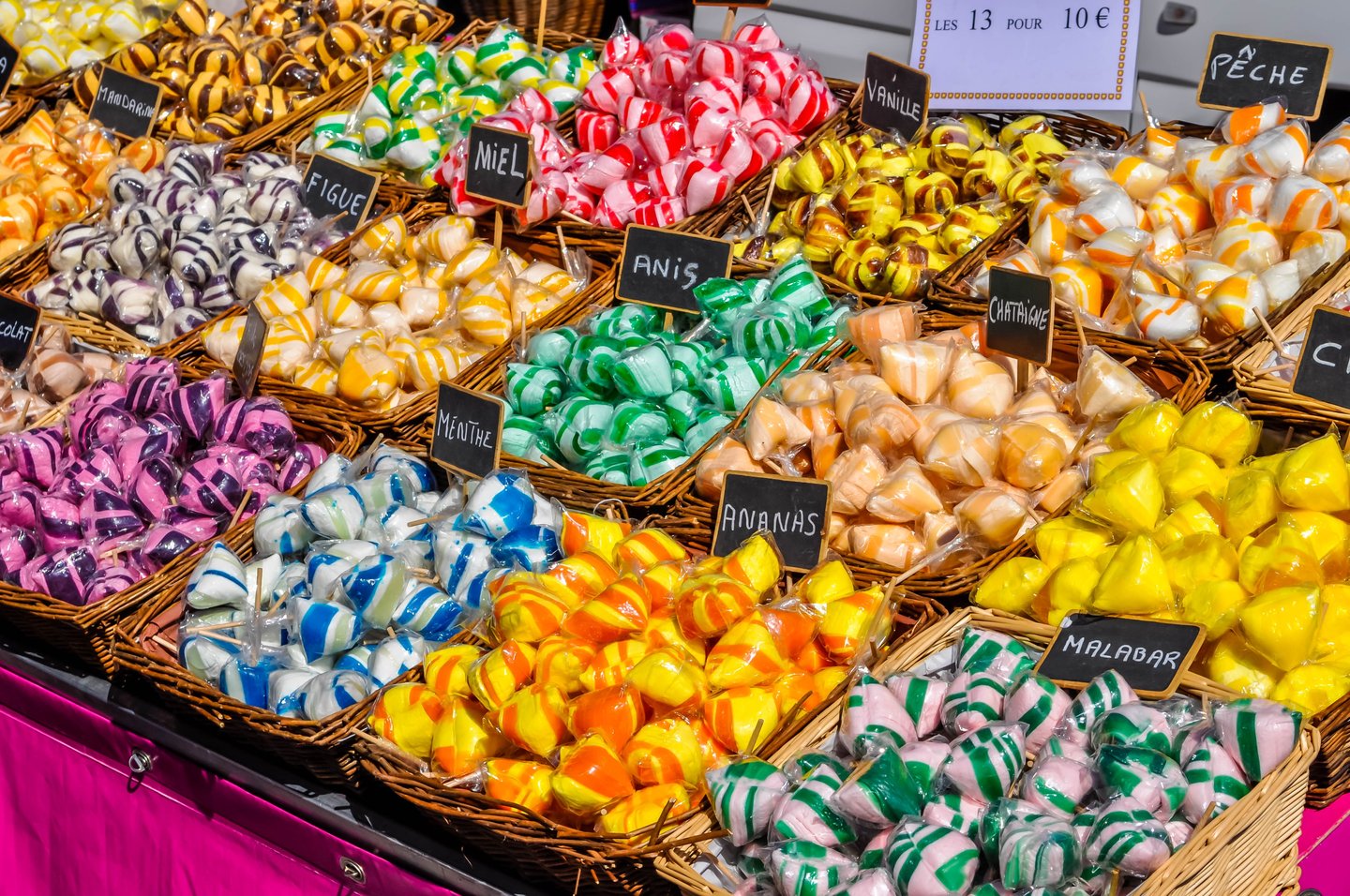
July is when Lourmarin's Friday morning market reaches its fullest form. Running from around 8am until 1pm, it covers the main square and the surrounding streets with stalls selling local produce: olives, oils, jams, goat's cheese from the Luberon plateau, and seasonal vegetables from the Durance valley. In high summer the market expands into the side streets, and the energy shifts noticeably from the quieter spring version.
The stone fruit is the reason to come in July. Peaches, apricots and nectarines from the local farms are at their absolute peak through the second and third weeks of July, and several stalls sell jam and preserve alongside the fresh fruit. The flower stalls arrive early and are generally sold down by 10am, so an early start is worthwhile if you want the full choice. The market also has a small brocante element: vintage linens, Provencal ceramics and occasional furniture pieces that, while nothing on the scale of L'Isle-sur-la-Sorgue, are worth a browse.
Beyond the produce, the chateau's July concert programme turns warm evenings into something memorable. The courtyard fills with a local and visiting audience, the sound carries into the surrounding streets, and the combination of the Renaissance stone, the lights, and the music is the kind of thing that stays with you. Tickets tend to go quickly: check the chateau's calendar and book ahead if you are visiting in mid to late July.
The village streets are at their most animated in the early evening in July. The restaurants and cafes fill from around 7pm, and the light on the stone facades turns a deep gold from about 7.30pm. Cafe de la Fontaine on the main square is reliable for an aperitif: by early evening in high summer it fills up quickly, so arrive on the early side if you want to sit outside.


The village on foot
The village centre is compact enough to cover in an hour at a leisurely pace. The main street, the Rue Henri de Savornin, runs through the heart of the old village and is lined with independent shops, a good bookshop and several solid restaurant options. The street is largely pedestrianised in the old section, which makes it easy to walk without negotiating traffic. The wine bar and epicerie on the main street are good for picking up local bottles to take back to a villa. The selection tends toward southern Luberon producers: Chateau Val Joanis in Pertuis and Chateau Revelette near Jouques are both worth looking for.
The surrounding villages
Lourmarin sits at the centre of a cluster of smaller southern Luberon villages that are all worth brief visits. Cucuron, about ten minutes east, has a large etang, a natural pond, at its centre, ringed by plane trees and lined with cafe terraces. In summer it is one of the most agreeable places to sit in the Luberon, particularly in the early evening when the light on the water changes. Ansouis, slightly further east, holds a medieval chateau that has remained in the same family for over four centuries.
Vaugines, just two kilometres north-east of Lourmarin, is a tiny village that appears briefly in the film Manon des Sources: worth a five-minute stop if you are following the Pagnol trail through the southern Luberon. The landscape between Lourmarin and Vaugines, flat agricultural land threaded with irrigation channels, is more reminiscent of the farmland in the film than any of the better-known hilltop villages.
Lourmarin is the southern Luberon village that earns its reputation through substance rather than spectacle: the chateau, the market, the literary legacy, and the quiet streets that reward those who arrive early and stay long enough to find their rhythm.
A bientot,