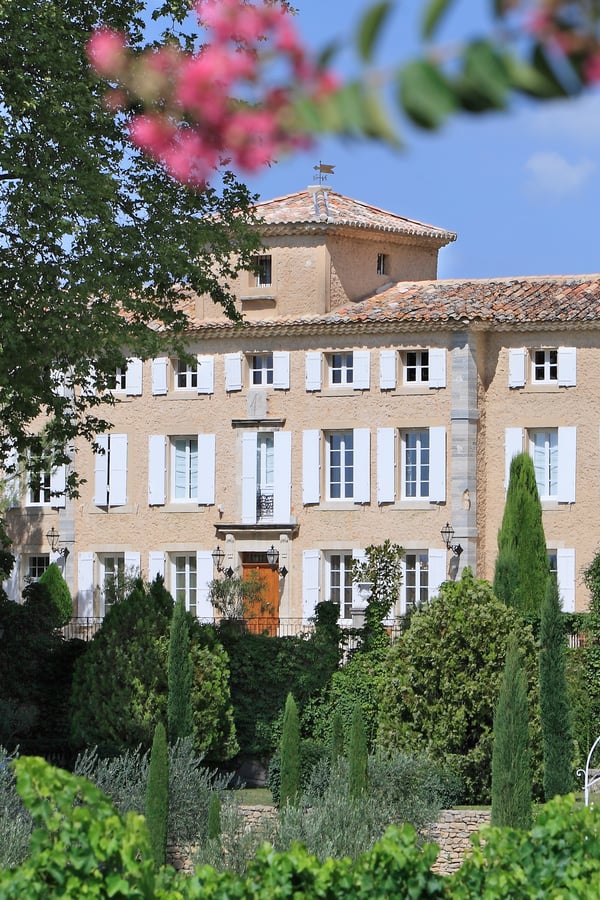
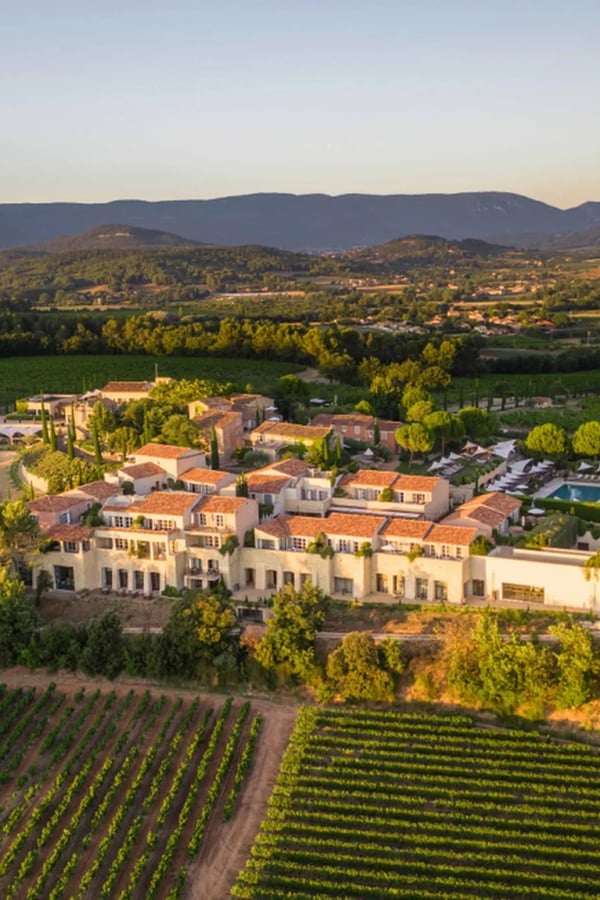
September in Châteauneuf-du-Pape means the harvest is underway. The scent of fermenting grape must drifts through the village, tractors move between rows of vines in the early morning, and the wine estates open their doors to visitors who want to see the process from field to cellar.
The village and its papal history
Châteauneuf-du-Pape sits on a low ridge above the Rhône plain, about fifteen kilometres north of Avignon. Its name refers to the new château built by Pope John XXII in the 1320s, when the papacy was installed at Avignon and the surrounding territory had become one of its principal wine-producing estates. The papal connection runs deep: the wines made on these vineyards supplied the Avignon court for over a century, which is partly why the appellation's reputation has endured for so long.
The village is small, with fewer than two thousand inhabitants, and its economy has revolved almost entirely around wine for centuries. The main street is lined with estates offering tastings from their street-level caves, and most conversations in the village at some point return to the vintage, the weather and the state of the harvest.


The vendange in September
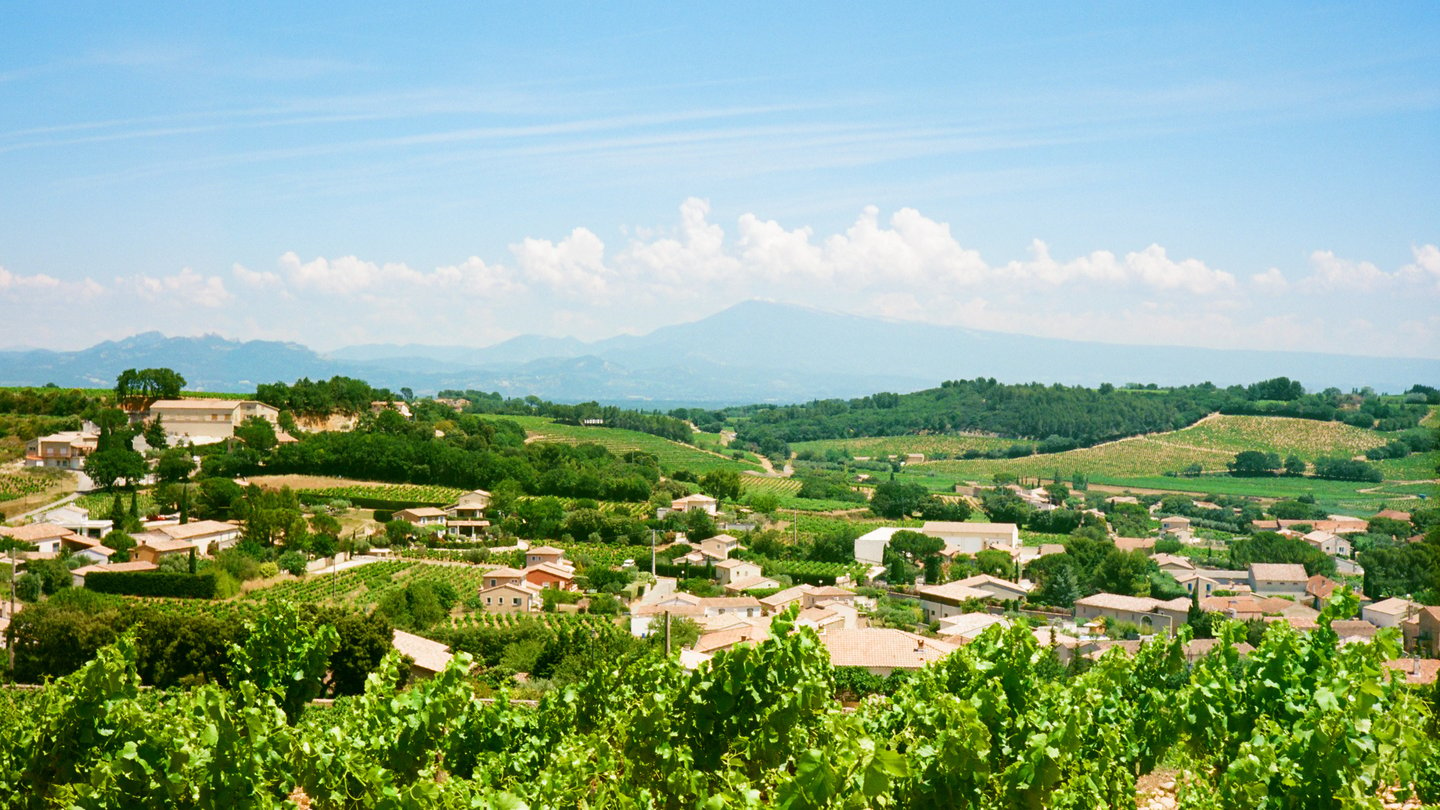
The Châteauneuf-du-Pape harvest typically begins earlier than most other appellations in France: in warm years some estates start picking in the third week of August. The timing varies by plot, variety and vintage, and the harvest continues in stages through September and sometimes into October as estates work through different parts of their vineyards.
In September the activity is at its most visible. Tractors collect bins of hand-harvested grapes in the early morning, the cooperative's weighbridge on the edge of the village is busy from dawn, and the smell of fermenting juice is present throughout the village by mid-morning. For wine lovers, this is one of the most atmospheric times to visit any wine region in France: the Châteauneuf-du-Pape appellation's scale and concentration make it particularly impressive. Many estates welcome harvest-time visitors, though the cellar teams are understandably occupied. It is worth calling ahead in September to confirm visiting hours, as some domaines suspend their normal tasting room schedule during the peak picking period.
The wines: thirteen varieties and two colours
Châteauneuf-du-Pape permits thirteen grape varieties in its blends: more than any other appellation in France, with Grenache dominant in most red wines, supported by Syrah, Mourvèdre, Cinsault and others. The result is a wide range of styles even within the same appellation: some estates produce wines that age for decades, others focus on more immediately approachable characters. The white wines, based on Grenache Blanc, Clairette and Roussanne, account for only about ten per cent of production but tend to be more individual and age-worthy than their relative obscurity might suggest. The appellation was the first in France to be formally defined, in 1936, and the regulations established here became the template for the national AOC system. A visit to the village is, in that sense, a visit to the origin of French appellation law.
The galets roulés: the stones that define the terroir
The Châteauneuf-du-Pape vineyards are visually distinctive because of the galets roulés: large, rounded river stones that cover much of the vineyard soil in the northern part of the appellation. These stones were deposited during the Quaternary period by an ancient arm of the Rhône and now serve a practical viticultural function: they absorb heat during the day and release it slowly at night, extending the hours of warmth available to the vines and contributing to the ripeness that defines the appellation's character. Walking in the vineyards in the morning, particularly north of the village towards the plateau, gives a strong sense of this terroir. The stones roll and shift underfoot, the vines grow low to the ground in the traditional gobelet pruning style, and the flatness of the plateau is broken only by the occasional stone marker or estate boundary.
Visiting the domaines
Château la Nerthe and Château Fortia both offer regular tasting room visits and are among the more accessible major estates for walk-in visitors. Château Rayas, one of the most celebrated estates in the appellation for its old-vine Grenache, operates a much more restricted visiting policy and requires advance contact. For a first visit to the appellation, the village's street-level caves offer the most practical way to taste across a range of producers without the formality of a domaine appointment. The village also has a wine museum, the Musée du Vin, in the château ruins, which covers the appellation's history and gives a useful context for the tasting that follows.
To note, Châteauneuf-du-Pape is about twenty minutes by car from Avignon and fifty minutes from the Luberon. It works well as a half-day excursion rather than a full-day visit: the village can be covered in a morning, leaving time for one or two estate visits and a long lunch before returning to your villa. Parking is free in the spaces on the approach road below the village. The nearby villages of Orange, fifteen minutes north for the Roman amphitheatre, and Villeneuve-lès-Avignon, twenty minutes south for the Chartreuse and the view across to the Palais des Papes, both add well to a day that starts at Châteauneuf-du-Pape.
The château ruins and the view
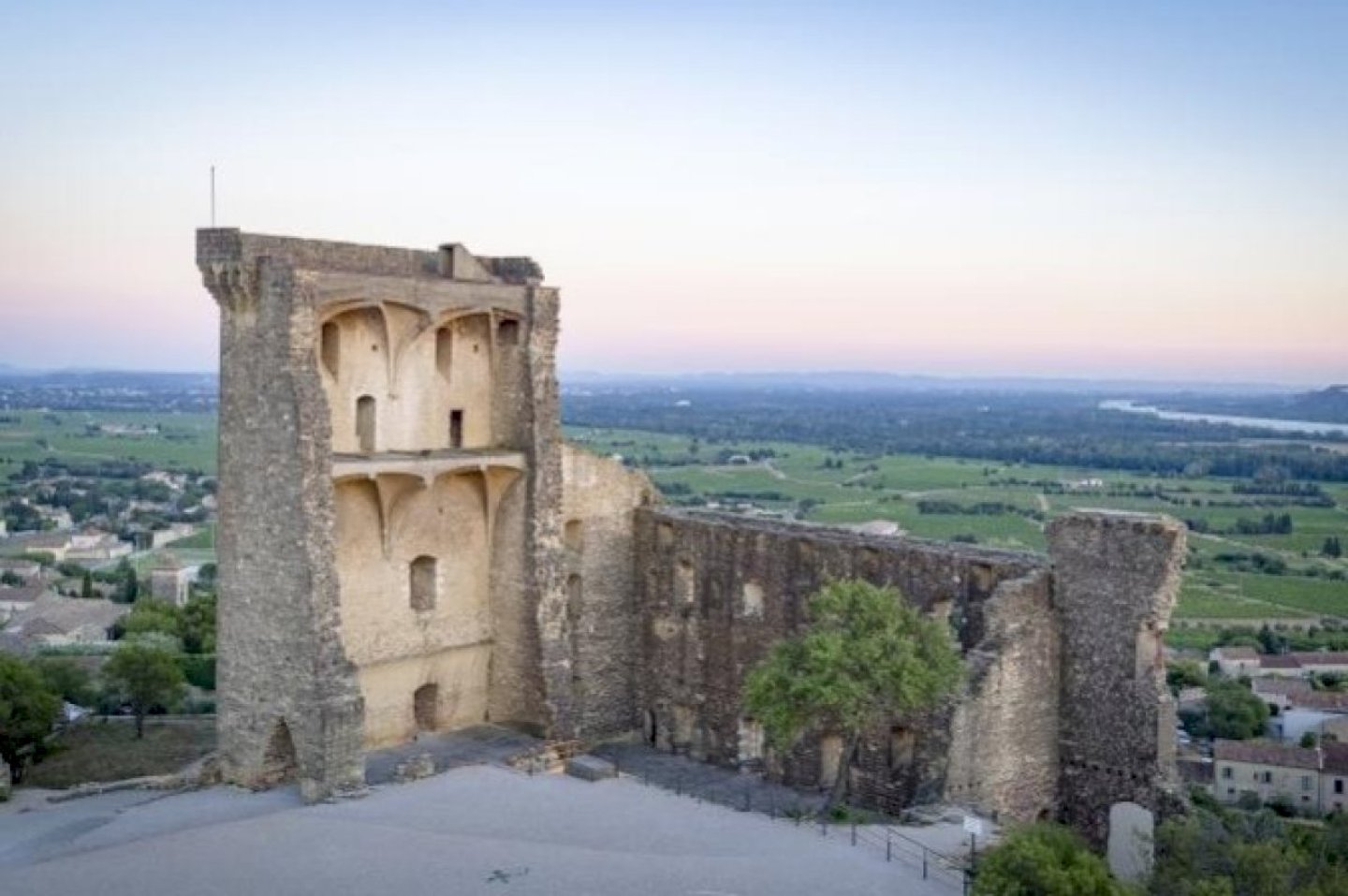
The remains of the papal château stand at the top of the village and are freely accessible. The original building was largely destroyed during the Wars of Religion in the sixteenth century and again during the Second World War, when retreating German forces demolished one of its towers. What remains is a single wall and tower fragment, but the position above the village gives a clear view across the Rhône plain towards Avignon to the south and the Dentelles de Montmirail to the east.
In September, with the vineyards in full green leaf and the harvest activity visible below, this is one of the more satisfying elevated viewpoints in the area: not dramatic, but genuinely informative about the landscape that produces the wines.
Châteauneuf-du-Pape in September is the harvest in full swing: the vines heavy, the cellars active, and the village at its most purposeful and alive.
À bientôt,