The Riviera town that doesn't need to shout about itself
Saint-Raphaël sits midway between Cannes and Saint-Tropez, and it has spent much of its modern history being overshadowed by both. At the beginning of the 20th century Saint-Raphaël was a grand and glamorous resort, but it was badly damaged during the Second World War, destroying many of its Belle Époque buildings. What the jet-setters lost, the family holidaymaker gained - it is now far more affordable than its neighbours and all the more pleasant for it. What remains is a genuinely good town. It has over 30 beaches along 36 kilometres of coastline Experiencecotedazur, one of the most dramatic coastal landscapes in France rising directly behind it, a well-preserved old town, a daily market and a history dense enough to keep a curious visitor occupied for several days. Napoleon Bonaparte passed through twice. F. Scott Fitzgerald wrote most of The Great Gatsby in a villa above the town. The Allied forces landed on one of its beaches in 1944. For a place that rarely makes the shortlist of Riviera highlights, it has rather a lot going on.
Where it is and how it fits into the wider region
Saint-Raphaël is a commune in the Var département of Provence-Alpes-Côte d'Azur, sitting 66km from Nice, between Cannes and Saint-Tropez. The town of Fréjus lies immediately to the west - so close that you can walk between them along the seafront without really noticing the transition. Fréjus is the older of the two and worth half a day for its Roman remains alone. Cannes is approximately 30 minutes by train. Nice is around an hour. Saint-Tropez is reachable by ferry from the old port in summer - a far more pleasurable option than the road, which in July and August can test the patience of even the most relaxed traveller. Port Santa Lucia, within walking distance of the town centre, is the third largest marina on the French Riviera and an ideal starting point for boats heading along the Mediterranean coast towards Corsica and Italy.
The history of Saint-Raphaël
The area has been inhabited since prehistoric times, and during the Roman period it was popular with wealthy families who built their Gallo-Roman villas here. The area north of the current town, Valescure, was named Vallis Curans for the curative properties of its climate. Provence Beyond The current town was established in the 11th century by the monks of the Lérins Islands, and in the 12th century the Knights Templar established an important commanderie here.
Then Napoleon arrived - twice, and in very different moods. On 9 October 1799 he landed at Saint-Raphaël on his way back from Egypt, having escaped the English Navy. Then on 27 April 1814, considerably less triumphantly, he departed from the same town on an English ship called the Undaunted, bound for his first exile on the island of Elba. Parispersonaltours An obelisk on the northeast corner of the port commemorates his 1799 arrival Avignon et Provence - it is the kind of detail that makes a harbour stroll feel like something more than exercise.
The train station opened in 1863, and when the French writer Alphonse Karr settled in Saint-Raphaël in 1865, the town rapidly became one of the most fashionable seaside resorts on the Mediterranean. Writers, composers and a wealthy summer society followed. Charles Gounod stayed long enough to write his opera Roméo et Juliette in 1867. And in the summer of 1924, F. Scott Fitzgerald rented the Villa Marie in the hills above the town with his wife Zelda and daughter Scottie. It was here that he wrote most of The Great Gatsby, sending his manuscript to his publisher Scribner's from Saint-Raphaël. Not a bad creative legacy for a town most people drive through on the way to somewhere else.
The Plage du Dramont is where Allied forces landed on 15 August 1944, as part of the liberation of Provence. Provence Lovers It is a beach worth visiting for that reason alone, and considerably less crowded than it deserves to be.
Museums in Saint-Raphaël
The presbytery of San Rafeu now houses the Museum of Prehistory and Underwater Archaeology, with a remarkable collection of amphorae from antiquity, furnishings from underwater excavations and bas-reliefs from the Carolingian church. It is a small museum but a genuinely interesting one, particularly for the amphorae - Saint-Raphaël's waters have been a burial ground for Roman trading ships for two thousand years.
The Louis de Funès Museum is dedicated to the French comedian whose films, particularly the Gendarmes series and La Grande Vadrouille, remain among the most watched in the history of French cinema. It is a small museum but packed with things to watch and read. Even visitors who have never seen a Louis de Funès film tend to leave having enjoyed themselves.
The old town of Saint-Raphaël
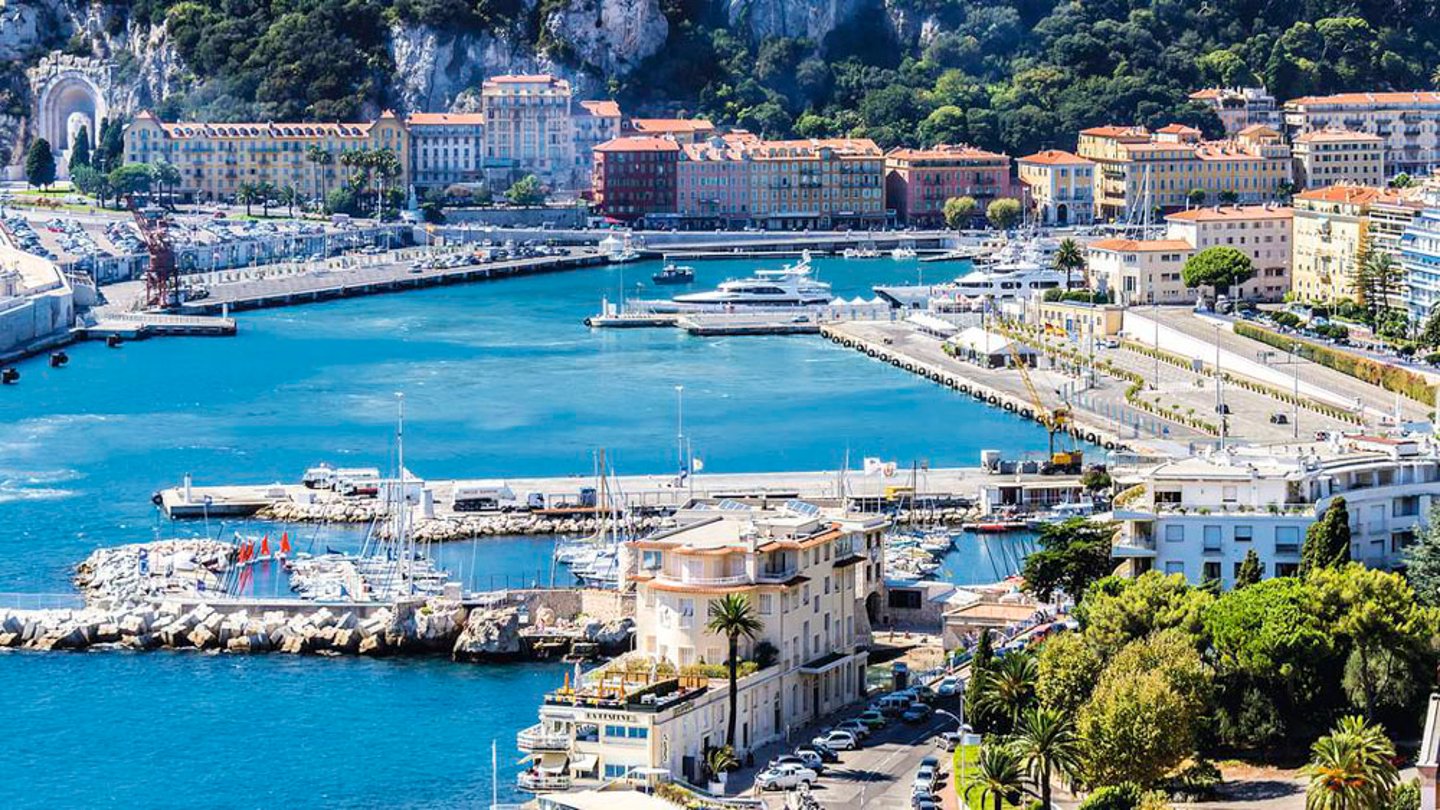
The narrow streets of the old town were once the peasants' quarter, built around the church of San Rafeu. Avignon et Provence It is the kind of place that rewards aimless walking - small squares, shaded streets, the smell of a market in the morning. A daily flower and vegetable market is held in the Quartier du Village. Two buildings here are worth going out of your way for. The Romanesque church of San Rafeu was originally built on ancient foundations in the 6th century, with significant construction in the 11th and 12th centuries, further fortification in the 14th century and enlargement in the 17th. It was around this church that the village of Saint-Raphaël developed. Avignon et Provence Climb the 129 steps up the tower and you are rewarded with a 360-degree panorama taking in the summits of the Estérel, the town below, the whole bay and the tip of Saint-Tropez on a clear day. It takes about ten minutes and it is entirely worth it.
The Basilica of Notre-Dame-de-la-Victoire is one of only two basilicas on the Côte d'Azur, a blend of neo-Byzantine architecture with French craftsmanship, with coloured stained glass, mosaics and a large fresco. Its dome is visible from much of the town and it is the kind of building that makes you stop mid-stride when you first come across it.
The Jardin Bonaparte, built on the roof of a car park, is 20,000 square metres of landscaped space planted with palm trees and Mediterranean plants, with a playground for children and views over the old port and the bay. It sounds like an odd concept, but it works extremely well.


The coastline and beaches
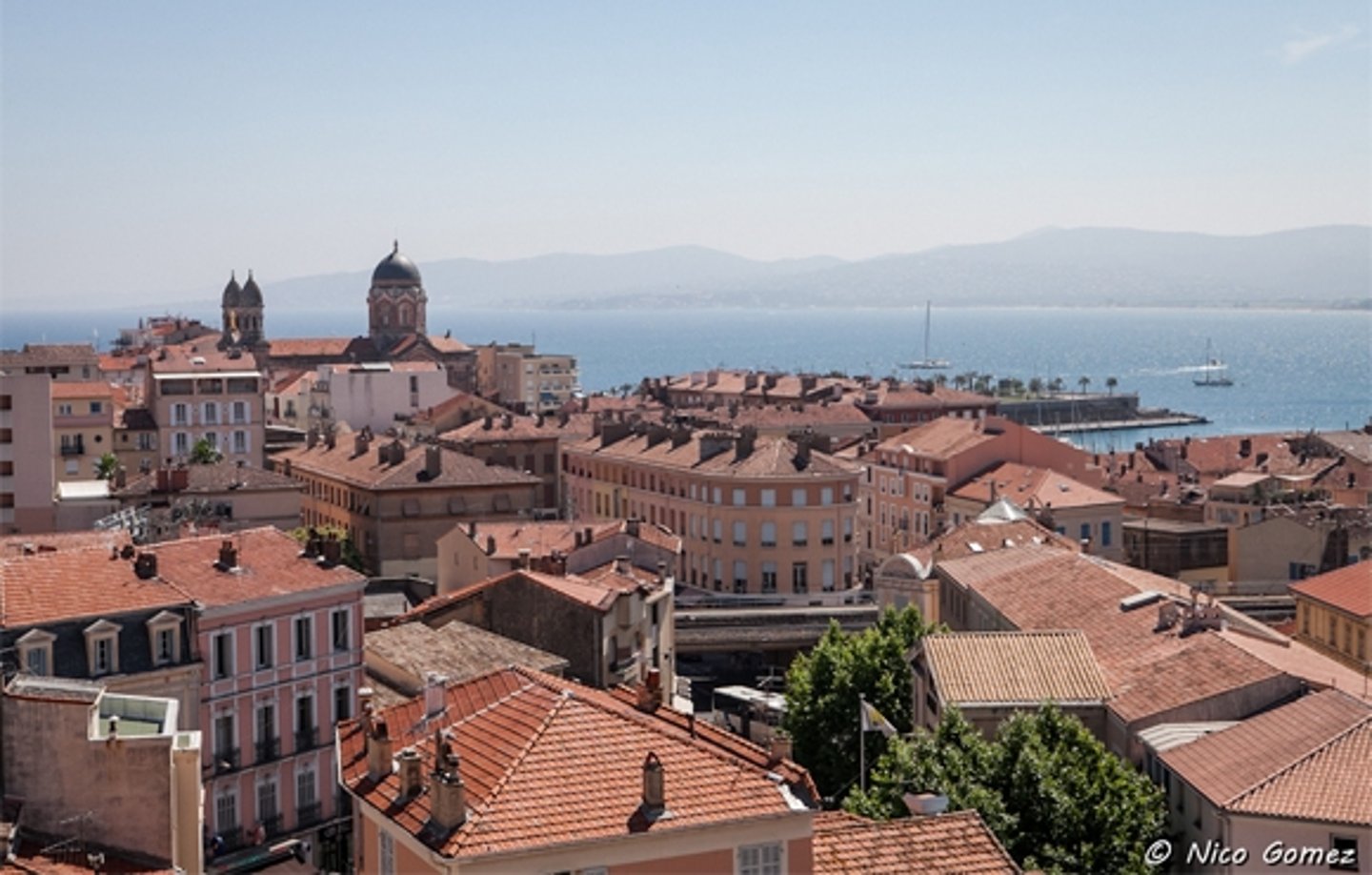
Saint-Raphaël has four large sandy beaches: Veillat near the town centre, Boulouris, Le Dramont and Agay. There are two smaller ones at Anthéor and Le Trayas. Each has a distinct character. Veillat is the most central, best served by facilities and the obvious choice for a morning without a plan. Agay sits in a sheltered bay of red rock with three sandy beaches and a particular quality of light in the late afternoon. Le Dramont carries the weight of the 1944 landings behind it and looks out to the small Île d'Or just offshore - a private island classified as one of the sixty most beautiful sites in France, its square crenellated tower built in red Estérel stone.The coastal path leaves from Port Santa-Lucia and runs to the bay of Agay, passing the beaches of Boulouris and Dramont, the Île d'Or, the small port of Poussaï, the Dramont semaphore and the bay of Agay. The path is 12 kilometres long and takes approximately four hours and 30 minutes to complete. It is one of the finest coastal walks in the eastern Var and surprisingly uncrowded given how good it is.
The Massif de l'Estérel and the Corniche d'Or
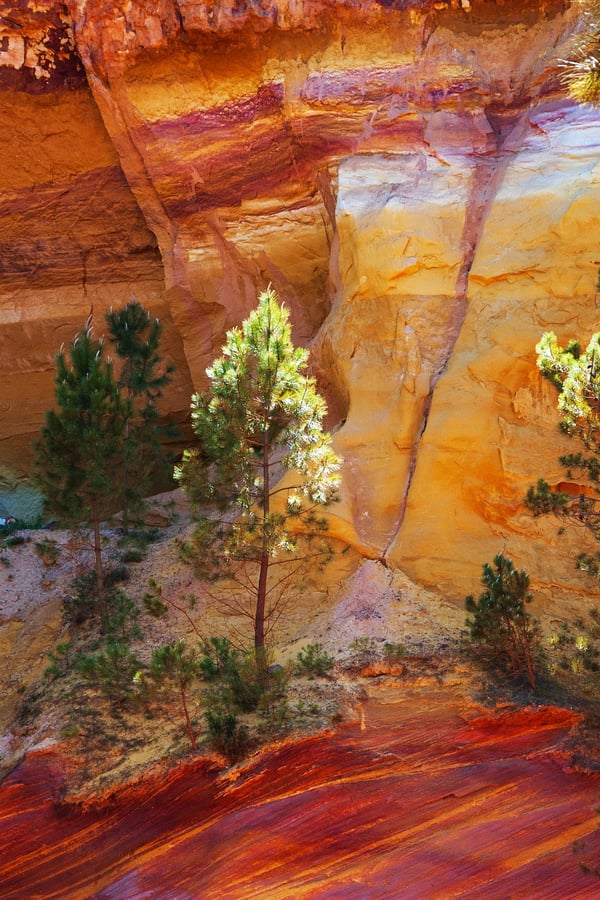
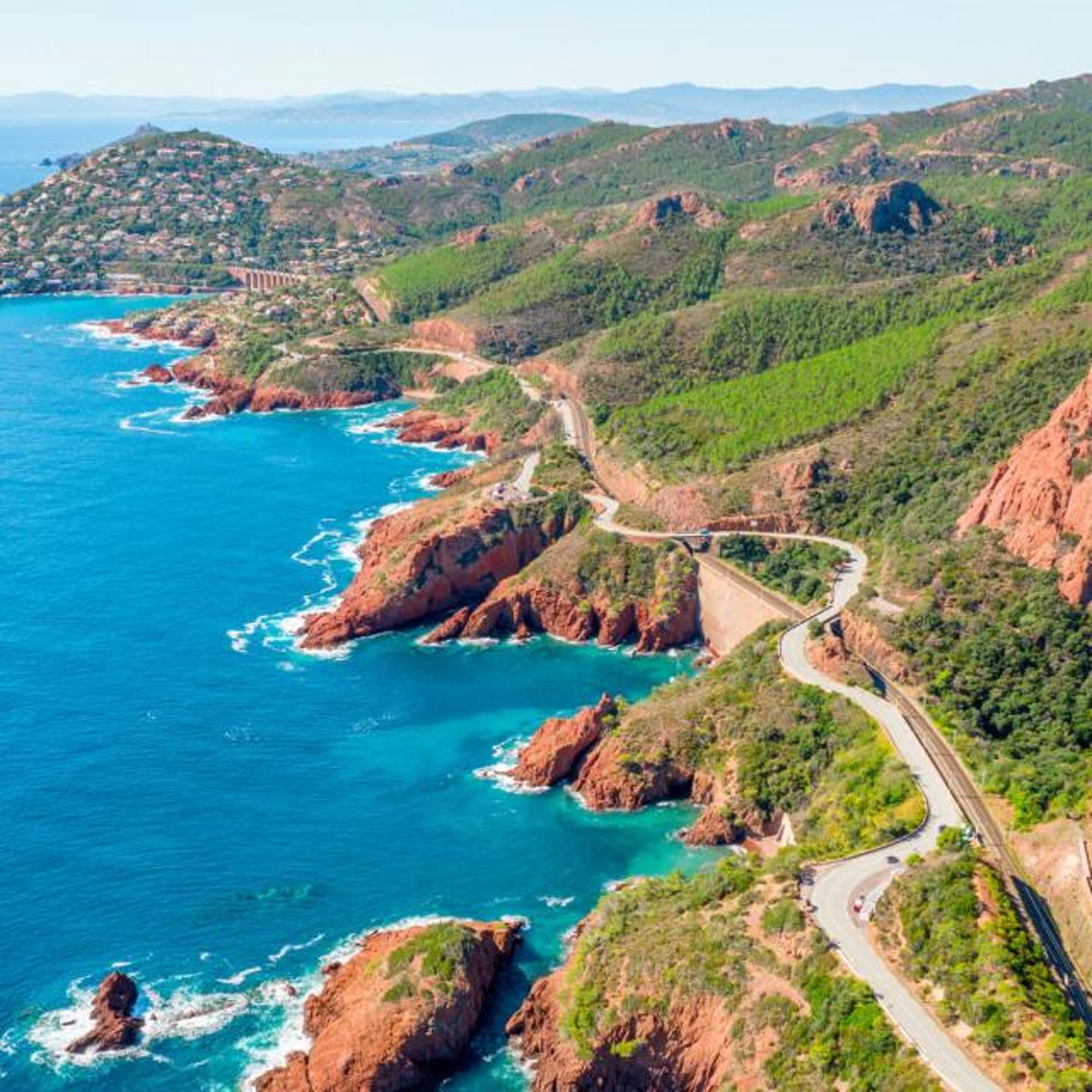
The red volcanic rock of the Massif de l'Estérel is the defining backdrop to Saint-Raphaël - the thing that makes the coastline here unlike anywhere else on the Riviera. The contrast between the rust-red cliffs and the blue of the Mediterranean is one of those views that photographs well but is considerably better in person. The massif covers 32,000 hectares and offers a range of trails for hiking, trail running, mountain biking and climbing. The Corniche d'Or was opened in the early 1900s by the Touring Club de France and links Saint-Raphaël to Cannes, winding along steep cliffs that plunge directly into the sea with access here and there to hidden coves. Driving it in the direction of Cannes, with the sea to your right and the red rock above you, is one of those journeys that makes you glad you came.
Water sports and activities
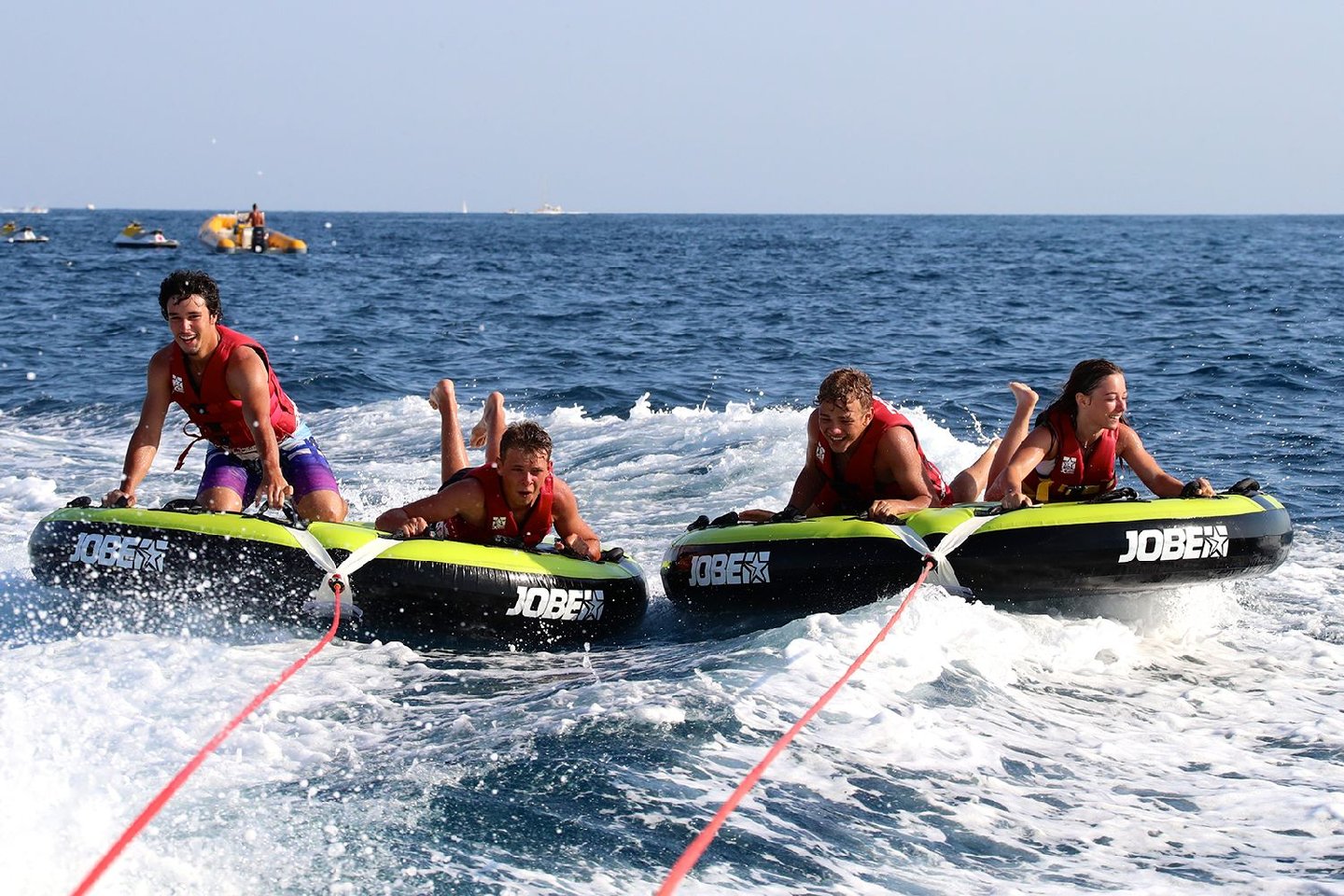
The water around Saint-Raphaël is clear, warm in summer and rich with marine life. For divers, the rocky cavities of the Estérel support significant aquatic fauna and flora, and for more experienced divers there are numerous wrecks from the Second World War in shallow water waiting to be explored. Kayaking along the base of the red cliffs, paddleboarding in the bay of Agay and boat hire from Port Santa Lucia are all straightforward to arrange. Saint-Raphaël has four golf courses, including the Golf de Valescure, created at the end of the 19th century and one of the oldest golf courses in France, set in a forest of umbrella pines. For those who prefer their sport at altitude, the Estérel via ferrata at Le Dramont offers a way into the massif that rewards people with a head for heights.


Day trips from Saint-Raphaël
Fréjus
Fréjus is next door and walkable from the eastern end of Saint-Raphaël. Its Roman remains include the arena and the amphitheatre, and the baptistery of the cathedral dates from the 5th century, making it one of the oldest in France. Allow at least two hours and go on a weekday if you can.
Aqualand Fréjus is the water park five minutes from town by car, open from mid-June to early September, and the most popular family day out in the area. More on that in our dedicated guide below.
Saint-Tropez
Saint-Tropez is best reached by ferry from the old port in summer. The crossing takes approximately an hour and deposits you directly in the port of Saint-Tropez. The road alternative in July and August is an experience best avoided.
Cannes
Cannes is 30 minutes by train and offers a full day of market, beach, old town and people-watching on the Croisette. It is a good rainy-day option if the weather turns.
When to visit and what to pack
May and June are our top recommendation for Saint-Raphaël. The sea temperature along this stretch of the Var coast reaches swimming temperature by late May, the Corniche d'Or is at its most beautiful with the coastal scrubland in flower, and the Estérel hiking trails are comfortable before the summer heat sets in. Restaurant terraces are open, the beaches have space on them and you can park without a strategy. June in particular hits a sweet spot - warm enough for everything, busy enough to feel alive, quiet enough to enjoy it. September runs June very close. The sea is at its warmest of the year, the summer crowds have thinned noticeably, the light in the evenings along the Agay bay is exceptional and the vineyards in the hills behind the town are moving into harvest. It is also when locals come back to their favourite restaurants and the town feels most like itself. July and August are genuinely lovely but require more planning. The beaches at Veillat and Agay fill up quickly on sunny mornings, parking anywhere near the coast needs to be sorted early, and restaurants along the waterfront book up days in advance in peak weeks. The Corniche d'Or in particular gets busy - if you are driving it, go early in the morning or in the evening. None of this should put you off, but going in with a plan makes a significant difference. October through April is underrated. The Massif de l'Estérel is at its best for walking when the temperature drops - the trails are empty, the red rock against a clear winter sky is as good as anything the Var offers and the Golf de Valescure is never more peaceful. Some beach facilities and seasonal restaurants close in winter, but the town itself stays open and the daily market on Place Victor Hugo runs year round.
What to pack
For summer visits, the essentials are straightforward: high-factor sun protection, a good hat and water shoes or sandals with grip for the rocky sections of the coastal path. The Estérel rock can be sharp underfoot and flip flops do not cut it on anything beyond the sandy beaches. A light layer for evenings is worth including even in July - the terrace breeze off the Mediterranean drops the temperature more than you might expect once the sun goes down.
For the coastal path specifically, bring a small backpack with water, snacks and proper walking shoes. The 12-kilometre route from Port Santa-Lucia to Agay has no facilities along much of its length and the sun exposure is significant in summer. Starting early and finishing before midday is the sensible approach in July and August.
For spring and autumn visits, add a mid-layer and a light waterproof. May mornings in the Estérel can be cool before the sun gets going, and September occasionally produces an afternoon shower. Neither is a reason to stay indoors - the massif after rain, when the scrubland releases its scent of thyme and wild herbs, is one of the better things about visiting outside of high summer.
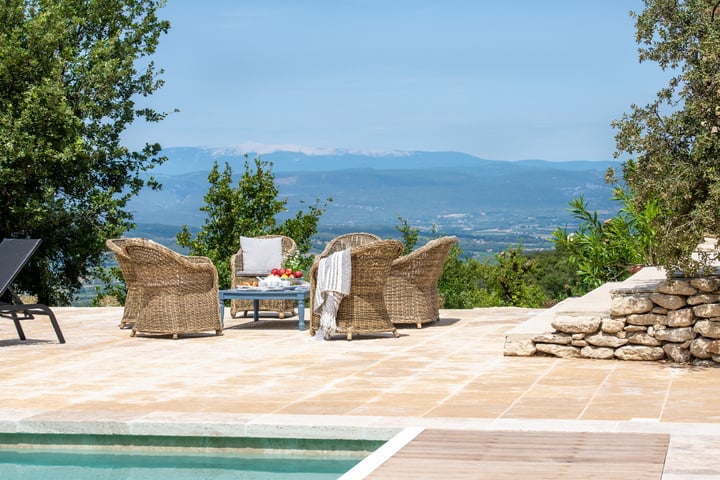
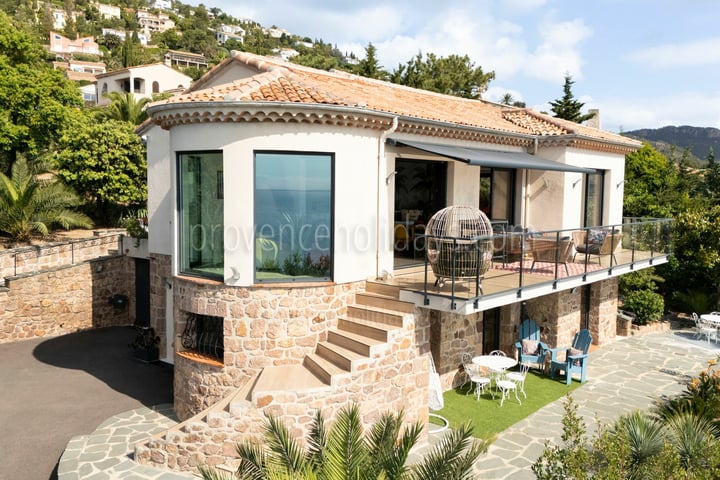
A Provence Holidays villa in the eastern Var puts you within easy reach of Saint-Raphaël and everything along this stretch of coast - the Corniche d'Or, the Estérel, the beaches of Agay and the ferry to Saint-Tropez. Browse our villas in Saint-Raphaël and speak to our concierge team about building an itinerary around this part of the Riviera.
À bientôt,