There is a moment, usually just after you cross the first bridge and catch your first proper view of the canals, when Port Grimaud stops you in your tracks.
The water is still. The houses are painted in faded ochres, terracottas and soft yellows. Geraniums trail from iron balconies. Somewhere, a boat engine cuts out and everything goes quiet. You forget, for a second, that you are in the south of France at all. Port Grimaud is one of the most unlikely places on the Riviera - because it should not exist. None of it is old. None of it grew organically over centuries the way the villages nearby did. It was drawn on paper, built on marshland, and opened to the world in 1966. And yet somehow, improbably, it feels completely and utterly right.
From marshland to landmark | the story of Port Grimaud
In the early 1960s, a stretch of waterlogged ground at the edge of the Gulf of Saint-Tropez sat largely unused. The Alsatian architect François Spoerry looked at it and proposed something that, at the time, struck most people as impractical: a lakeside town built on the marshes, where every house would have direct access to the water by private boat. Construction began in 1966. Spoerry drew the streets himself - or rather the canals, since there are almost no roads. He insisted on building regulations that produced architectural variety without chaos: no two facades identical, but everything built to the same human scale and in the same palette of warm Provençal tones. The result earned the French state designation Remarkable Contemporary Architecture, one of the highest classifications a modern building can receive. Port Grimaud is twinned with Venice. It is worth pausing on that date: 1966. The rest of the Riviera was building concrete apartment blocks. Spoerry was hand-drawing bridges and planning church towers and stipulating that the cast-iron pillars at the Place du Marché should echo New Orleans as much as they echoed Provence. The audacity of it is still visible.
Why they call it the little Venice of Provence
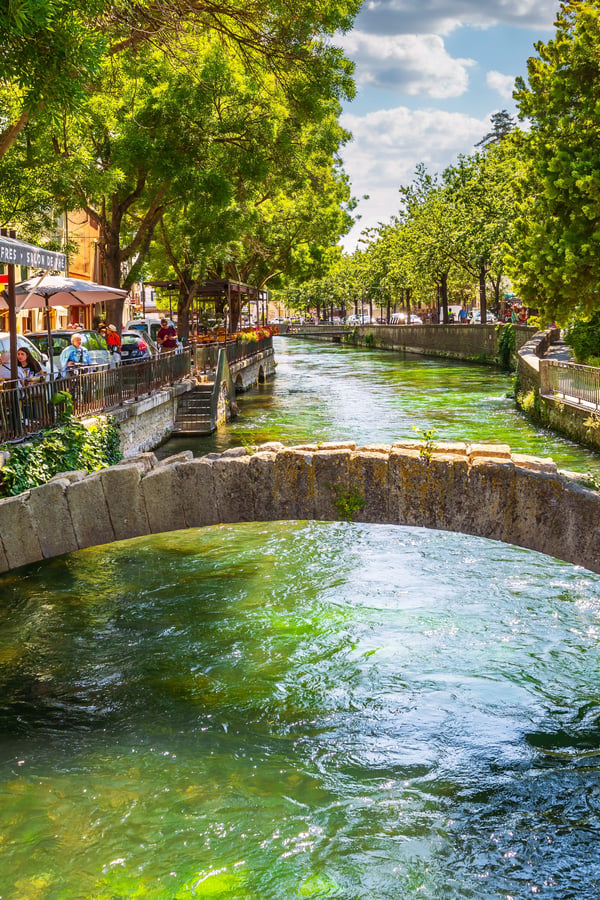
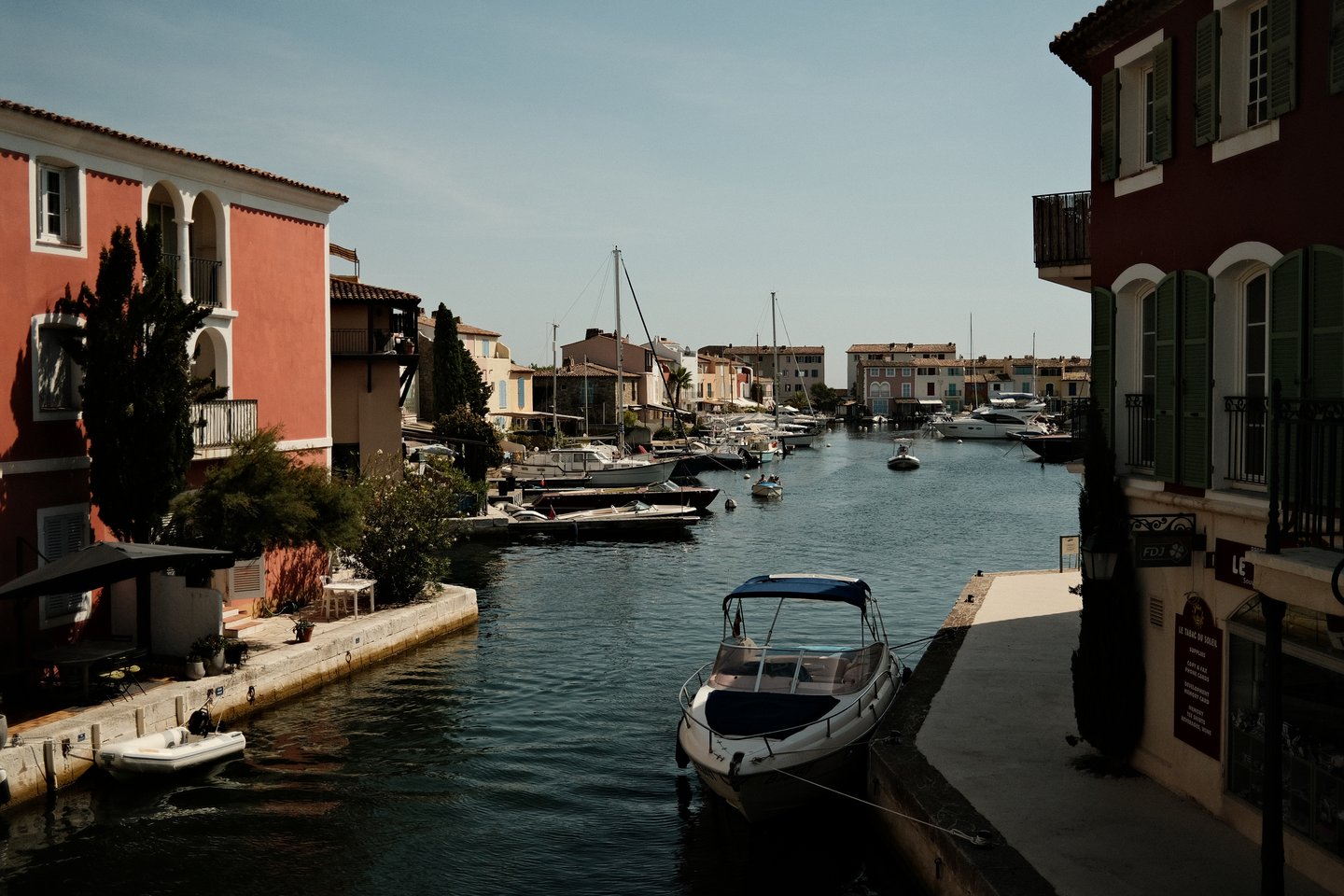
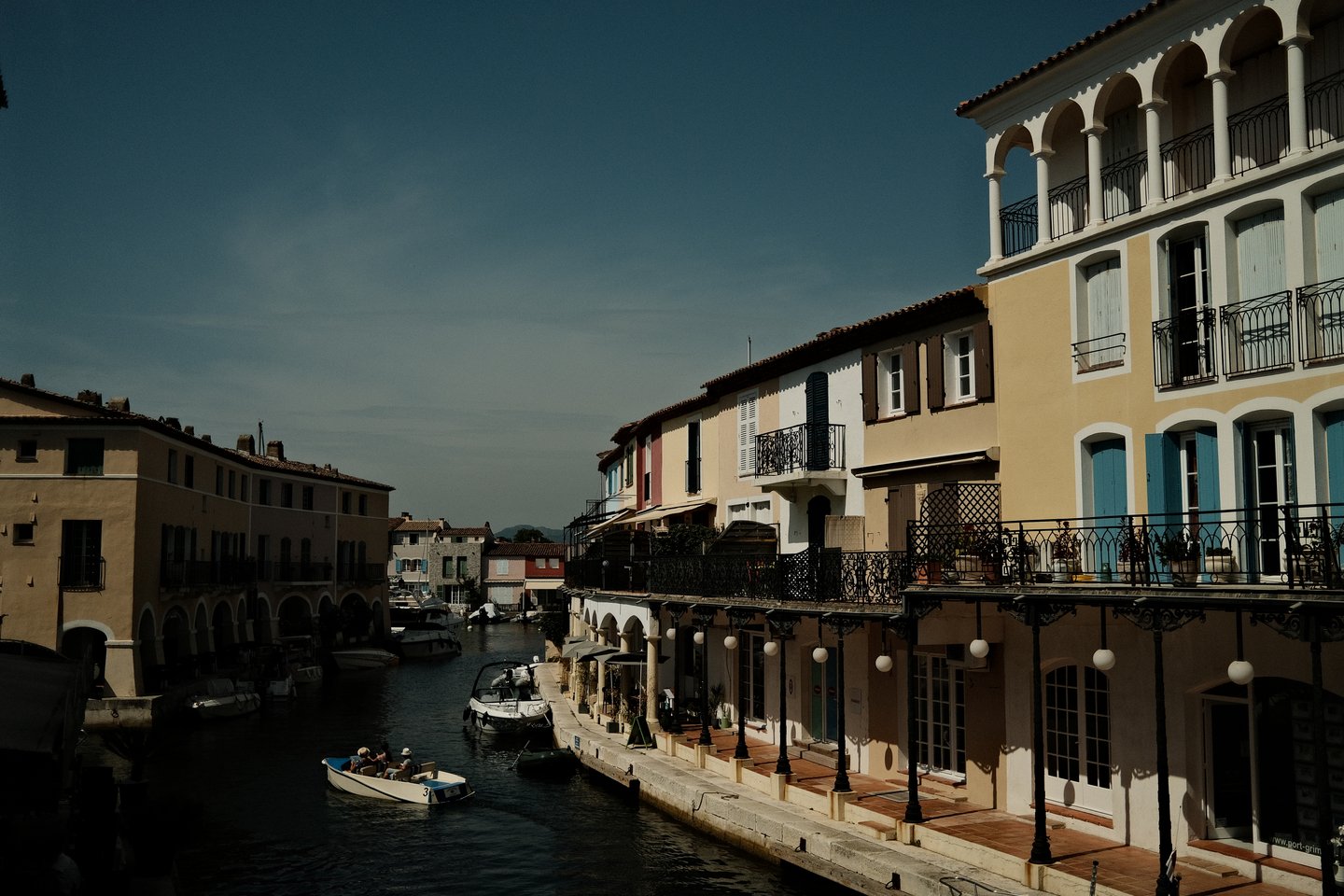
The comparison to Venice is not purely poetic. It is structural. In Port Grimaud, the canals are the streets. There are no cars inside the town. You navigate by bridge and by boat, and the water is present at almost every turn - running alongside you as you walk, visible at the end of every alley, lapping quietly at the stone steps below the restaurant terraces.
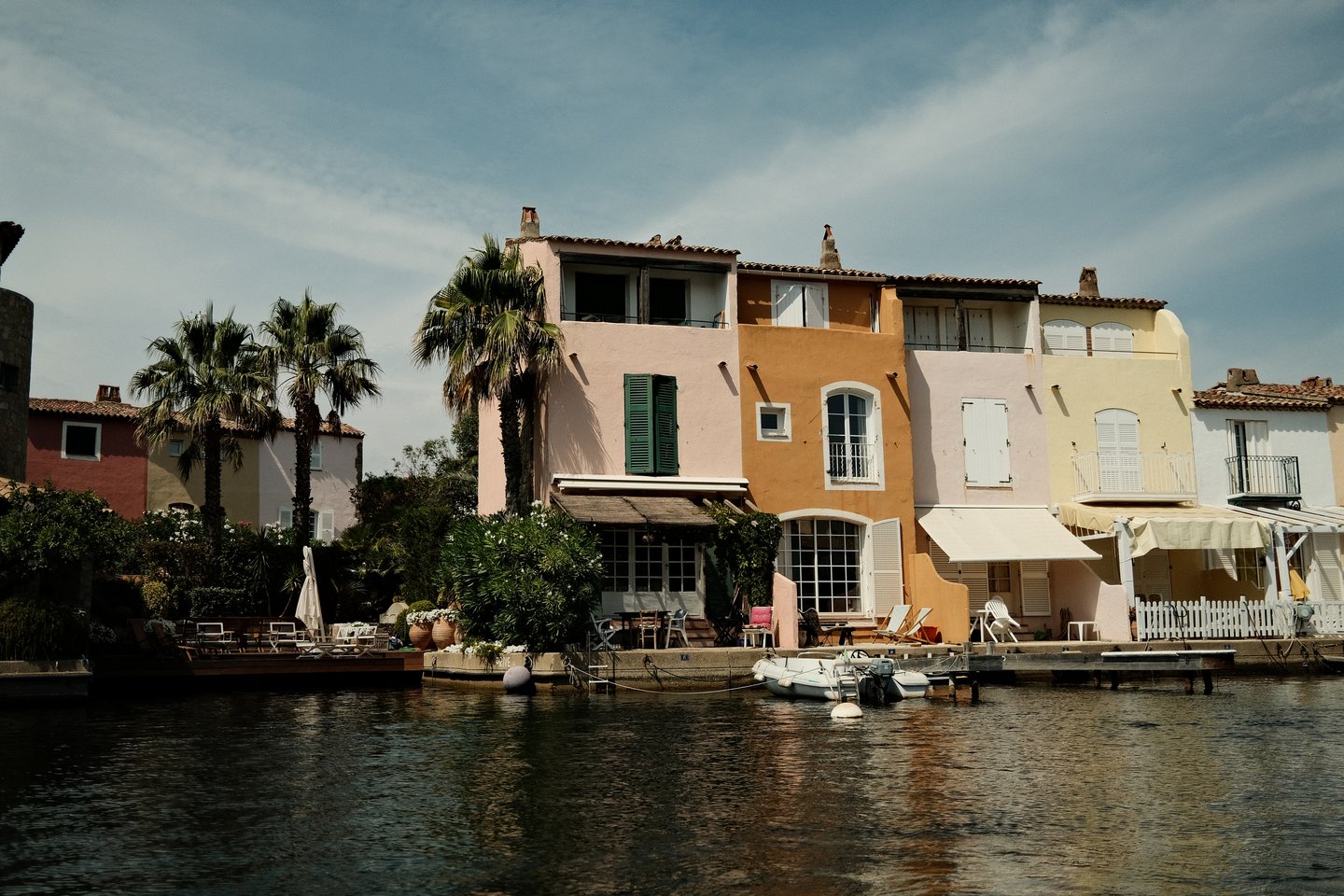
What makes it feel distinctly different from Venice - and distinctly Provençal - is the scale and the light. The buildings are two and three storeys rather than five or six. The palette is warm rather than cool: burnt sienna, dusty rose, faded yellow, the occasional deep blue shutter. In the middle of the day the reflections on the canal water are sharp and clear. In the late afternoon, when the sun drops behind the Maures hills, the whole town turns gold.
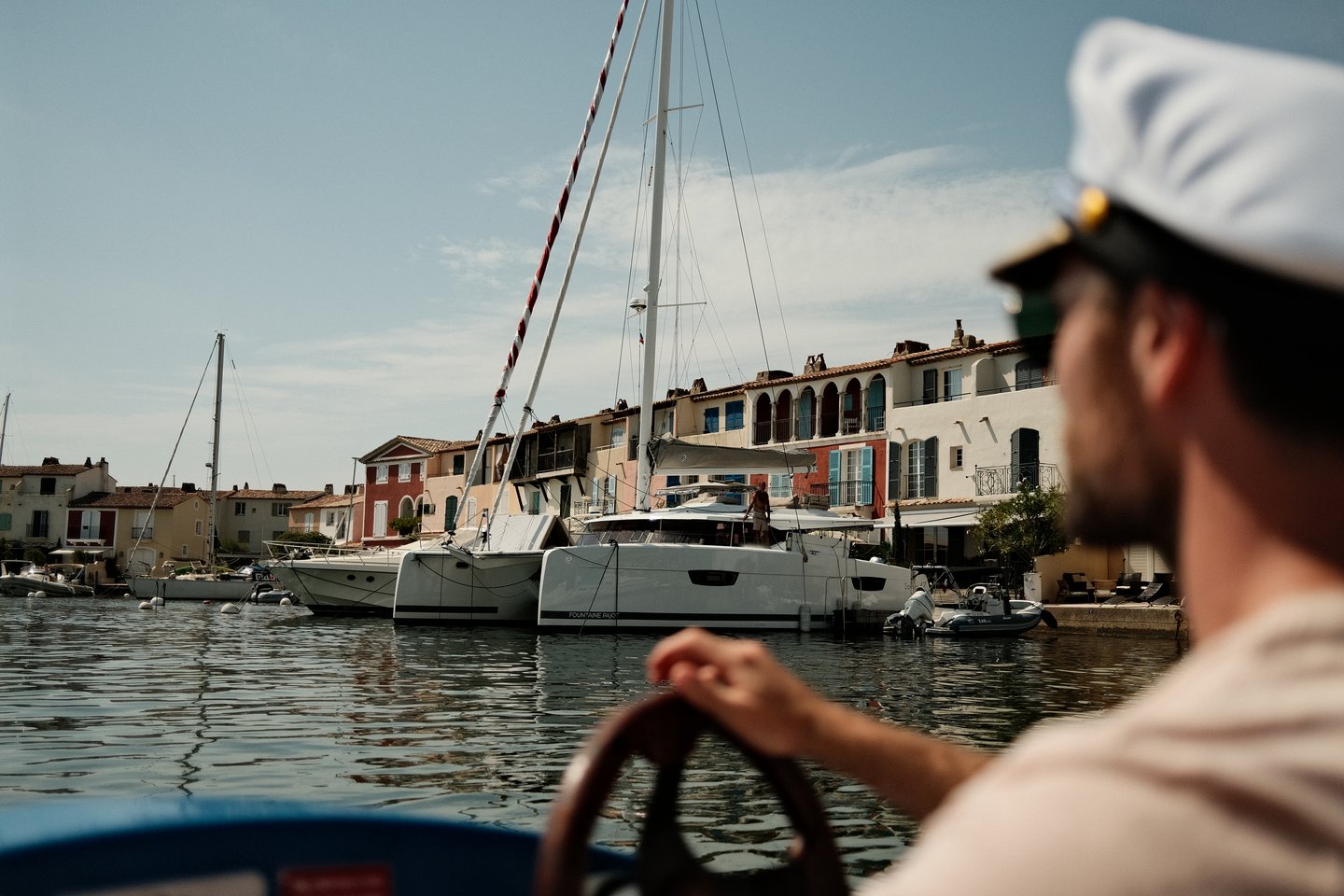
The boats are part of the picture too. Every house has a mooring. Residents arrive home by water as naturally as others pull into a driveway. Dinghies sit tied at iron rings. Larger sailing boats occupy the outer basin. The coches d'eau - small water taxis that have served the town since it opened - ferry visitors between the ports along routes that have not changed in sixty years. Sitting on one of those boats, watching the facades pass at water level, is the closest Port Grimaud comes to earning the Venice comparison outright.
What to see
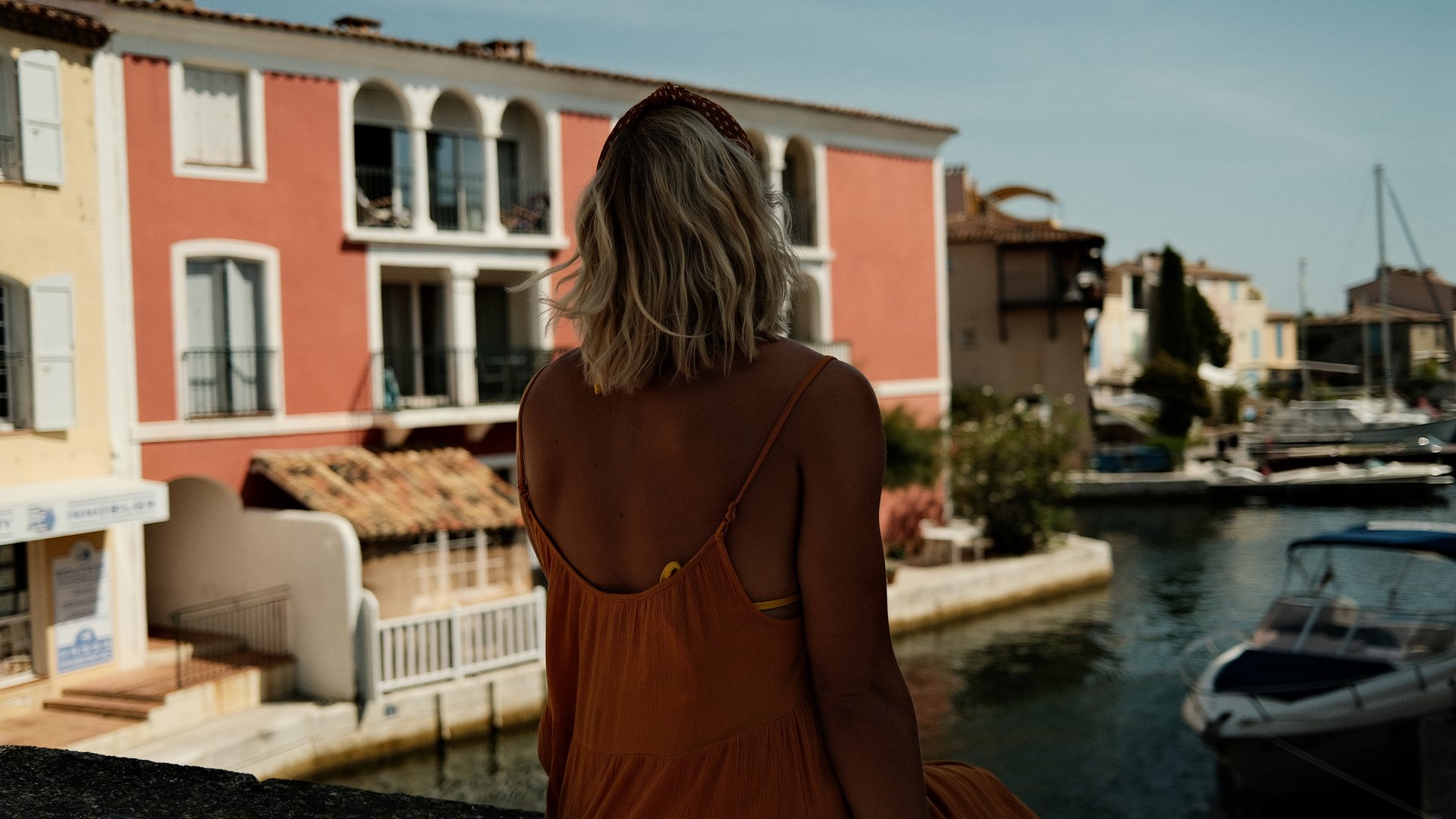
Walking is the only way to understand Port Grimaud. Cross the main bridge between the Place des Artisans and the Place du Marché and take the first right along the canal. The details are the point here: the trompe-l'oeil of a Provençal woman painted on the wall at the market square, placed there by Spoerry himself; the pebble pathway under the covered arcade; the Tour des Célibataires, a small tower that stands at the edge of the town like a private fortress.
The Church of Saint-François d'Assise contains stained glass by the Hungarian-French artist Victor Vasarely. Climb the 78 steps to the top of the tower and you earn a view across the entire town that makes Spoerry's plan suddenly legible - you see, in one sweep, exactly what he was building and why it works.
For a different perspective entirely, hire an electric boat. No licence is required, and the canal view is not available on foot. From the water you see the private terraces, the garden steps leading down to jetties, and the upper-floor details of houses that face away from the walking routes. It takes about an hour to cover the main canals properly.
Getting your bearings | the three ports
Port Grimaud is divided into three distinct zones, and knowing this before you arrive saves time and confusion.
Port Grimaud I is the original and most visited section, built first by Spoerry in the late 1960s. This is where you will find the Place des Artisans, the Place du Marché, the Church of Saint-François d'Assise and the majority of the restaurants and shops. If you are visiting for the first time, start here.
Port Grimaud II sits adjacent and was developed slightly later. It is quieter and more residential in character, with wider canals and larger properties. Worth exploring on foot or by boat once you have covered the first port.
Port Grimaud South - sometimes called Port Grimaud III - is the most recent addition and the least tourist-facing of the three. It sits next to the shipyard and has a working, local feel that the other two sections lack. La Calypso restaurant is here, which is reason enough to make the walk.
Our favourite spots to eat and drink in Port Grimaud
La Calypso
La Calypso sits on the quieter side of Port Grimaud South, next to the shipyard and well away from the busier central canals. It is the kind of address that regulars keep to themselves. The menu is short and focused, fresh fish, honest meat dishes, homemade desserts, and the terrace looks directly over the water. It is run by a husband-and-wife team, and the service reflects that. Reservations are advisable in summer.
Lily's
Lily's occupies 14 Place des Artisans, Port Grimaud I, directly on the canal with a terrace that takes full advantage of the position. Under new ownership since 2024, the kitchen produces market-led cooking with genuine attention to seasonal ingredients: burrata, red mullet, fresh fish daily. It is ranked among the top four restaurants in Port Grimaud on TripAdvisor and the reviews are consistent. Open Tuesday to Sunday, midday and evening, April to October.Maison Ballarini - the best gelato in Port Grimaud
Maison Ballarini
Maison Ballarini is not on the main canal. It sits at La Halle de Grimaud, 56 Chemin de la Rine, and it is worth the short detour. Everything is made on the premises by a master ice cream maker who uses Alpine milk from an organic farm and selects his flavours with the kind of care that produces results you notice immediately. On a July afternoon, it is the most worthwhile ten minutes you will spend in the area.
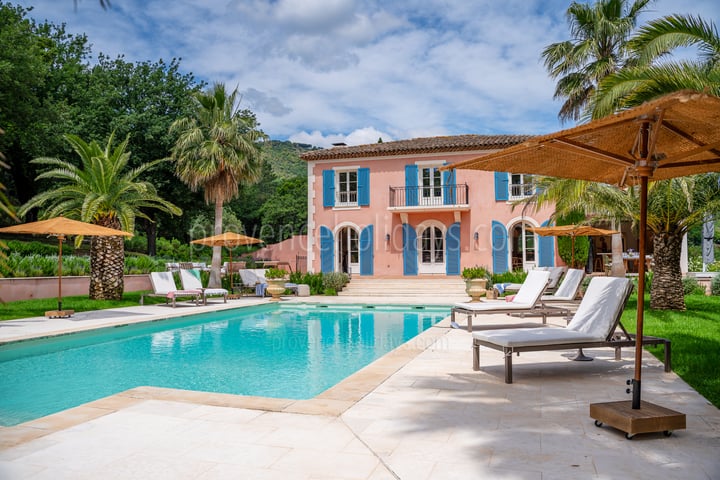
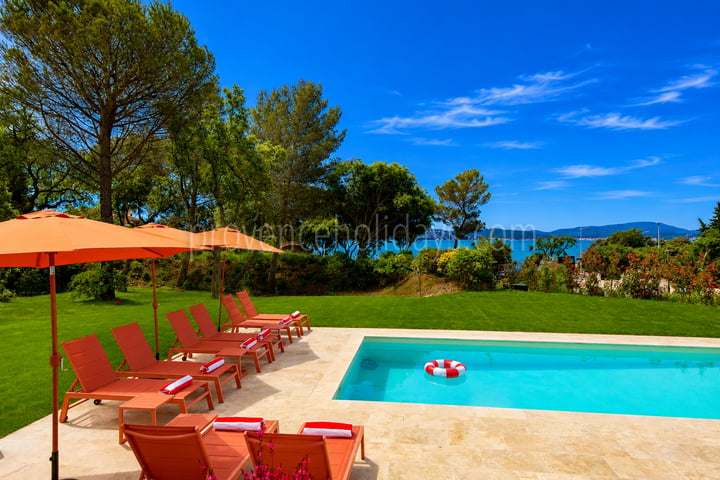
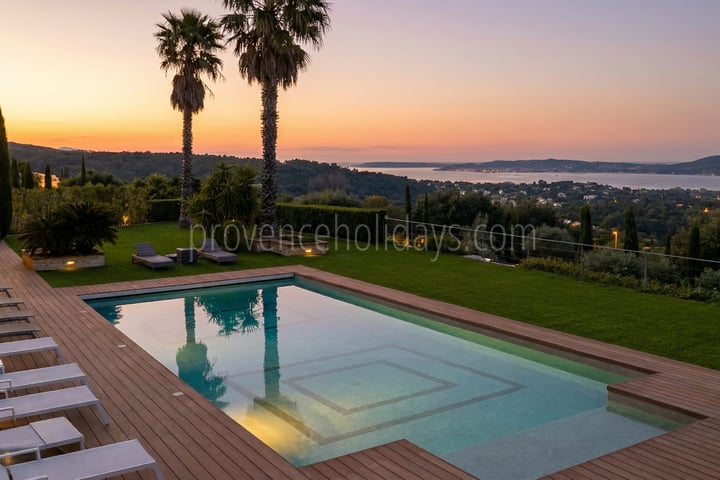
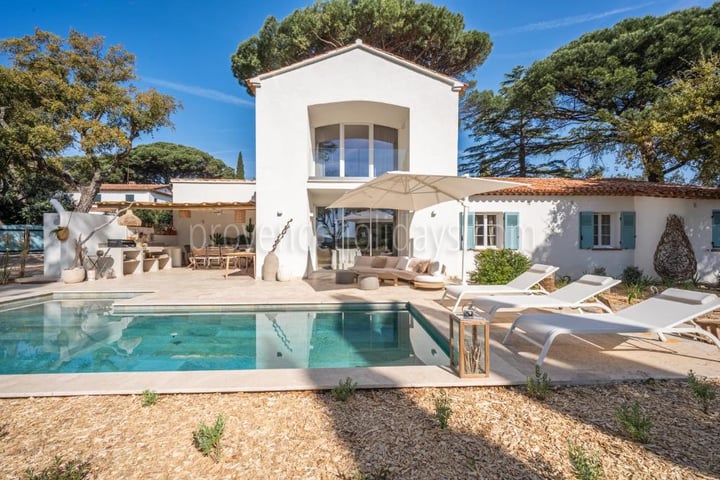
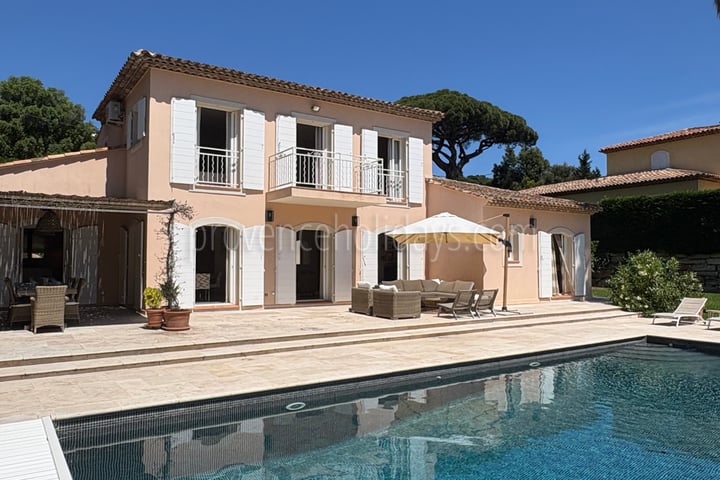
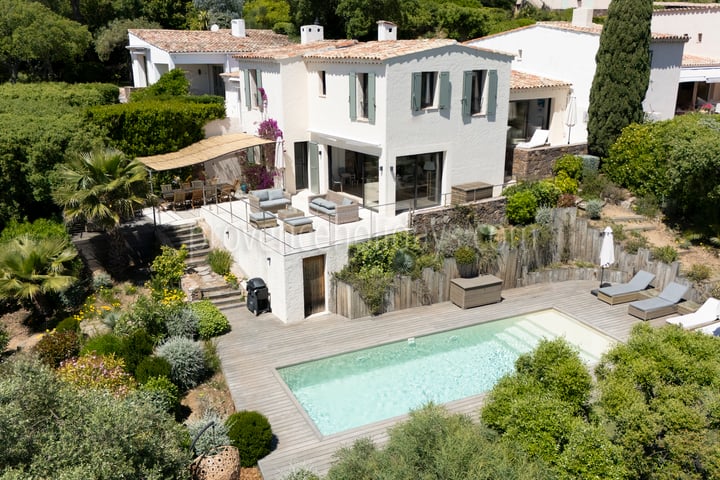
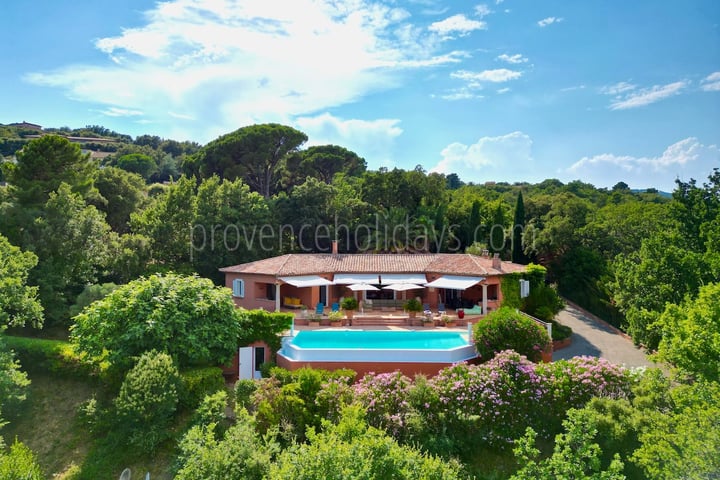
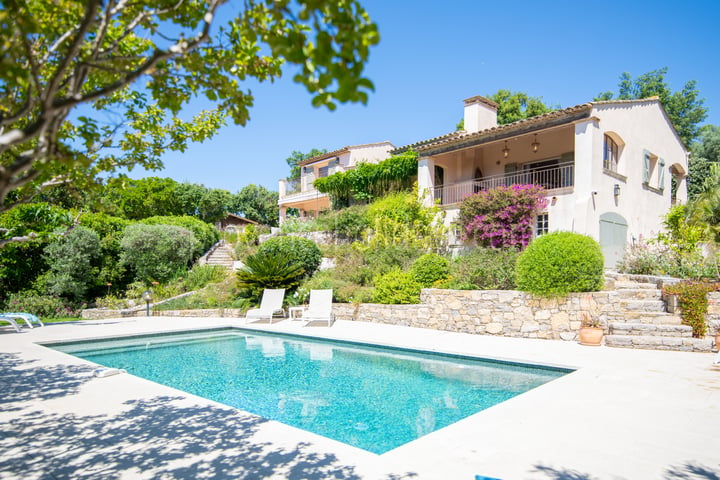
Port Grimaud sits at the heart of some of the most sought-after villa territory on the Côte d'Azur. The surrounding hills and coastline of the Gulf of Saint-Tropez offer a range of properties - from hillside villas with views across the bay to farmhouses set among the vineyards of the Massif des Maures. From almost anywhere in the area, Port Grimaud is within easy reach by car or, in summer, by water taxi from Saint-Tropez.
For guests staying with us in the Gulf of Saint-Tropez region, our concierge team can arrange electric boat hire, transfers between the ports and day trips to the medieval village of Grimaud, four kilometres inland. Port Grimaud rewards more than a single visit. Those who arrive once by car on a Tuesday morning in June tend to find themselves back on a Thursday with a reservation and a plan.
À bientôt,