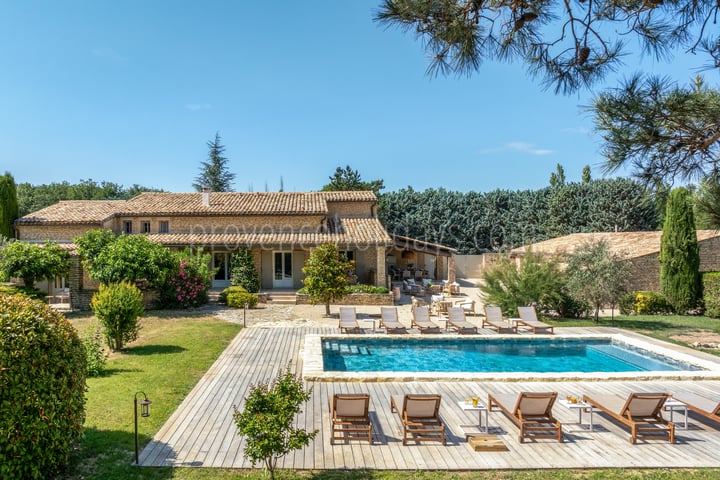
On the evening of 24 December, long before anyone thinks of presents, Provençal families sit down to the most important meal of their year. It is called le gros souper, the big supper, and the name is a gentle joke: there is no meat on the table at all. It is a meal of three white tablecloths, three candles and seven lean dishes, and it ends with the thirteen desserts. Here is how it works, what is served, and how to keep the tradition in a villa of your own this Christmas.
A big supper without a scrap of meat
The gros souper is a repas maigre, a lean meal, eaten on Christmas Eve before midnight mass. For centuries the faithful fasted before Christmas, so Provence did what Provence does best and turned a restriction into a feast. The best of the store cupboard, the garden and the market is kept back for this one evening: olive oil, salt cod, winter vegetables, snails, garlic and good bread.
It is a family meal, and it starts early, traditionally around seven o'clock. Christmas in Provence also keeps its own calendar. The festive season, the period the Provençaux call calendale, runs from 4 December to Candlemas on 2 February, and the evening of the 24th is its high point. As the city of Aix-en-Provence reminds us in its guide to local customs, Provençal tradition knows no réveillon. The celebration is the supper itself.
Setting the table: everything in threes
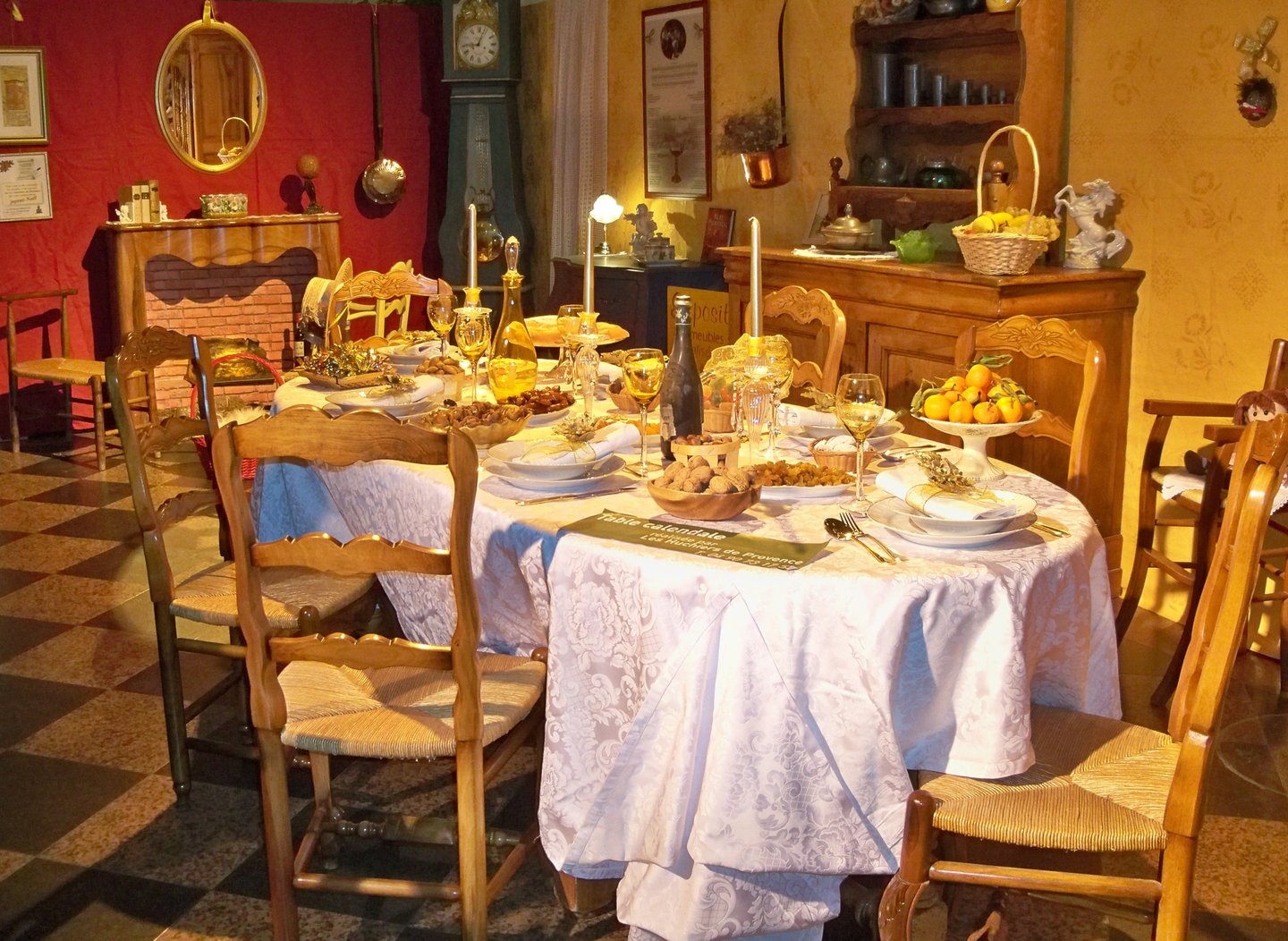
Before a single dish arrives, the table tells the story. The number three, for the Holy Trinity, runs through all of it.
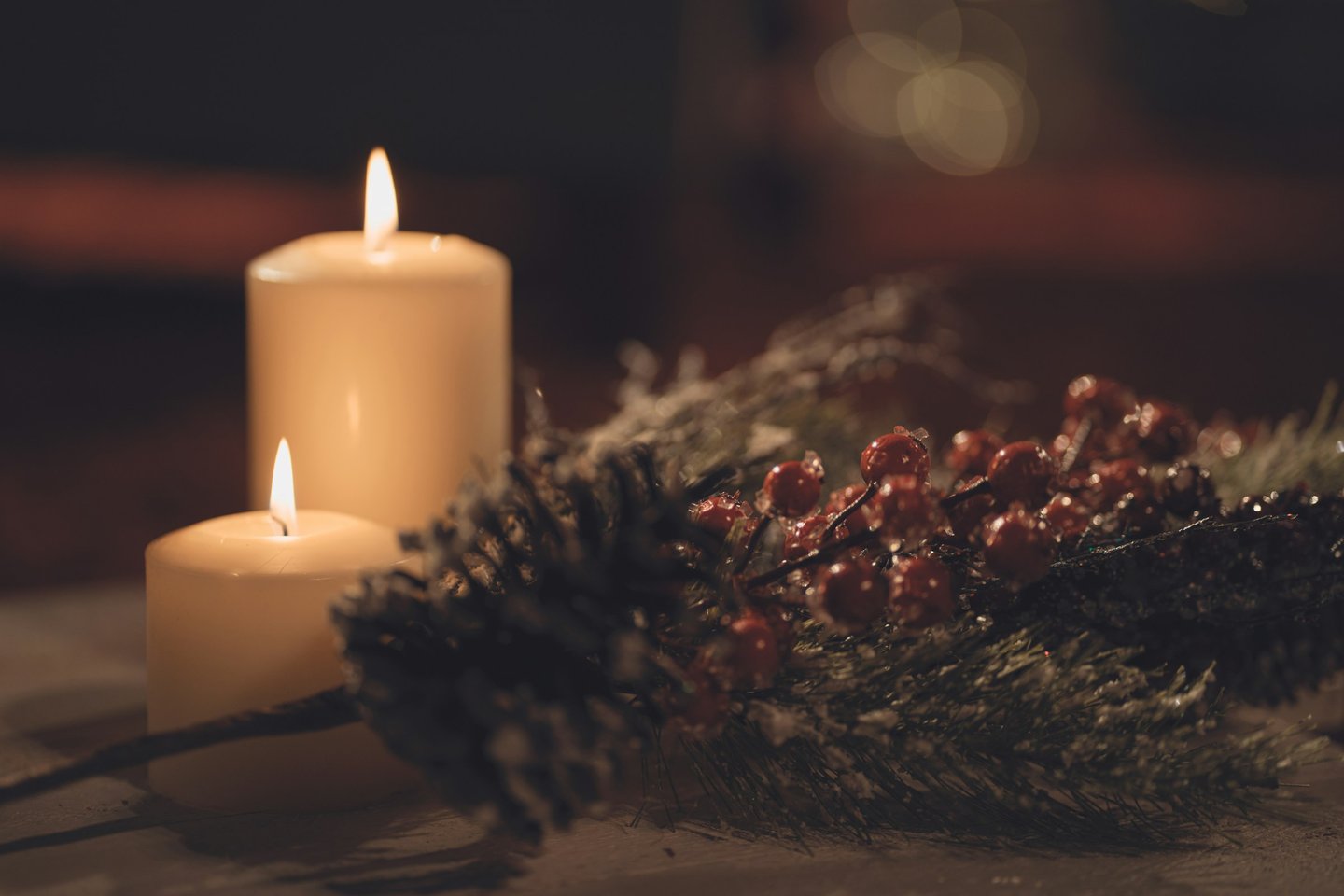
Three white tablecloths are laid one over the other. Three candlesticks light the table. Three small saucers of wheat sit in the middle, sown on 4 December, the feast of Sainte-Barbe, and green by Christmas Eve. If the wheat grows straight and thick, the year ahead will be a good one.
At the centre sits the pain calendal, a round loaf surrounded by twelve smaller ones for Christ and the apostles, often pricked with a sprig of wild holly. In many families an extra place is laid, or a share set aside, for any poor traveller who knocks at the door. In the old days, the door of the house was never locked on Christmas Eve.
Cacho fiò, the blessing of the log
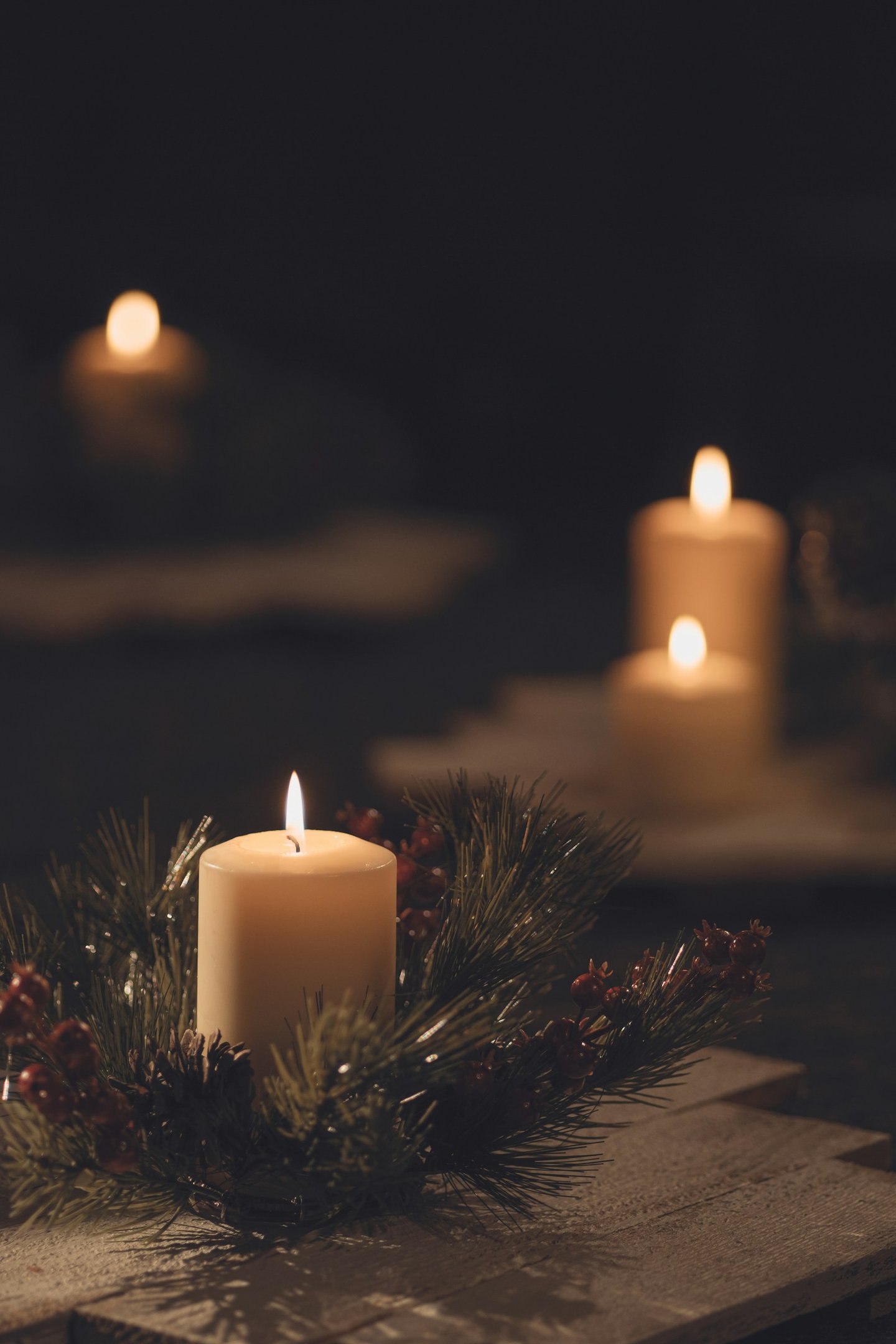
The supper opens with one of the oldest rituals in Provence. The oldest and the youngest of the family carry a log from a fruit tree together, walk three times around the table and lay it on the embers of the fire. The eldest then sprinkles it three times with vin cuit, the sweet cooked wine of a Provençal Christmas, and speaks the blessing immortalised by the poet Frédéric Mistral.
Alègre ! Alègre !
Mi bèus enfant, Diéu nous alègre !
Emé Calèndo tout bèn vèn…
Rejoice, rejoice, my fine children, may God fill us with joy. With Christmas, every good thing comes. The blessing ends with a wish every family understands: God grant us the grace to see the coming year, and if there are not more of us, may there be no fewer. Some villages still light a cacho fiò in the square in the days before Christmas, with costumes, carols and the whole community gathered around the fire.
The seven lean dishes
Seven is the perfect number, in memory of the seven sorrows of the Virgin Mary, but no two families serve exactly the same menu. What goes on the table depends on the village, the harvest and, above all, on what a grandmother used to make. These are the dishes you are most likely to meet.
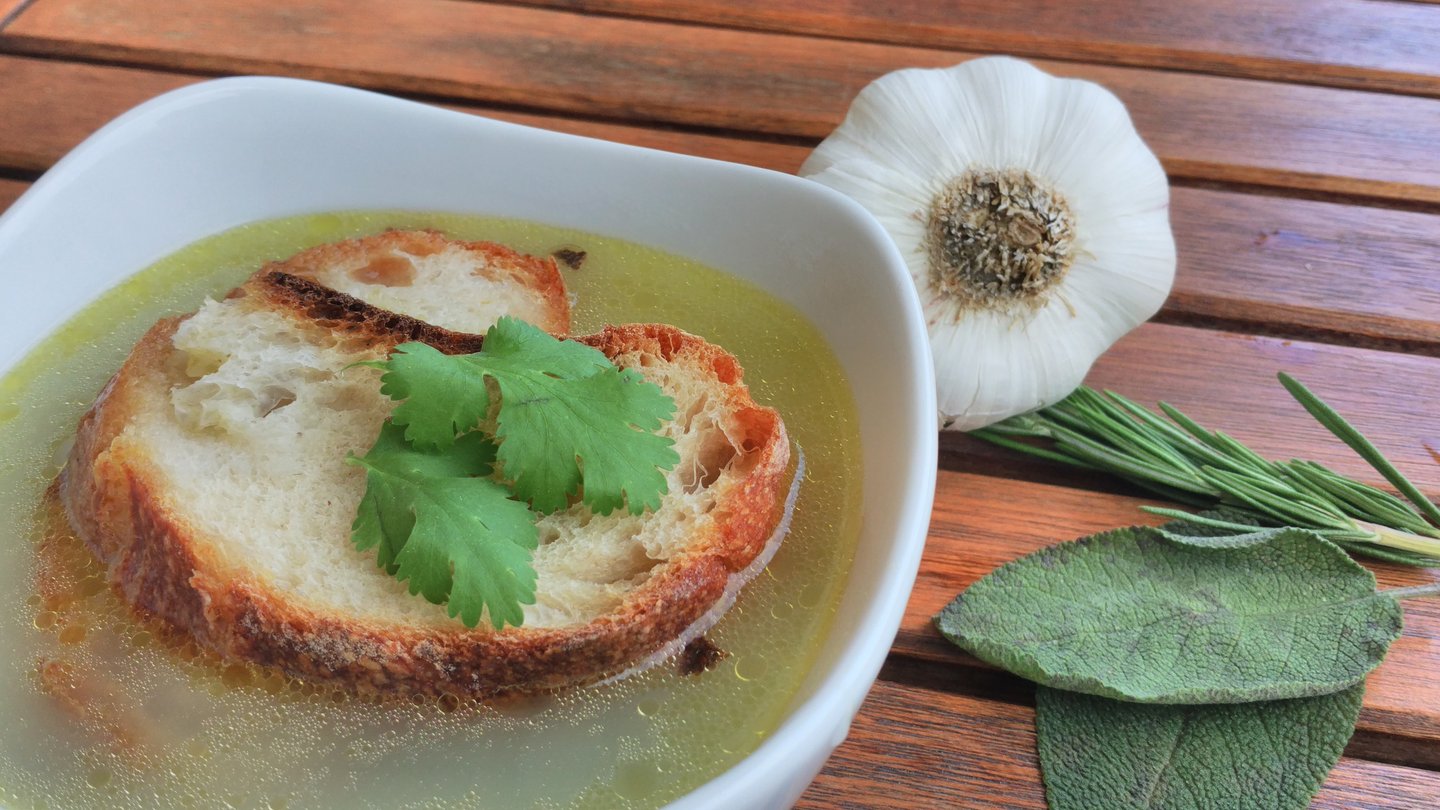
Aigo boulido. A simple broth of garlic and sage, poured over bread with a thread of olive oil. The Provençal saying goes that it saves your life.
Salt cod. The star of many tables, served in raïto, a sauce of wine and capers, or whipped into brandade.
Snails, sometimes served with spinach.
Vegetable gratins. Spinach, cauliflower or chard, baked with a little olive oil and breadcrumbs.
Fish. Grey mullet with olives, sea bass or eel.
Omelettes, made with truffle when the year has been kind, or with artichoke.
Anchoïade. Anchovies crushed with garlic and olive oil, for dipping winter vegetables such as celery.
Around Aix, tradition even calls for seven wines to be poured during the meal. The vin cuit is kept back for the desserts.
And then, the thirteen desserts
When the last plate is cleared, the thirteen desserts come out together: the pompe à l'huile, white and black nougat, the four beggars, dates, calissons and more. They are not served one after another. They are laid out at once, and everyone is expected to taste a little of each.
Before the family leaves for midnight mass, the four corners of the tablecloths are lifted so that no evil spirit can climb up, and the table stays set. Christmas Eve is a night of communion with those who have gone before, and when the room is empty, the souls of the family's departed are said to come and share the desserts.
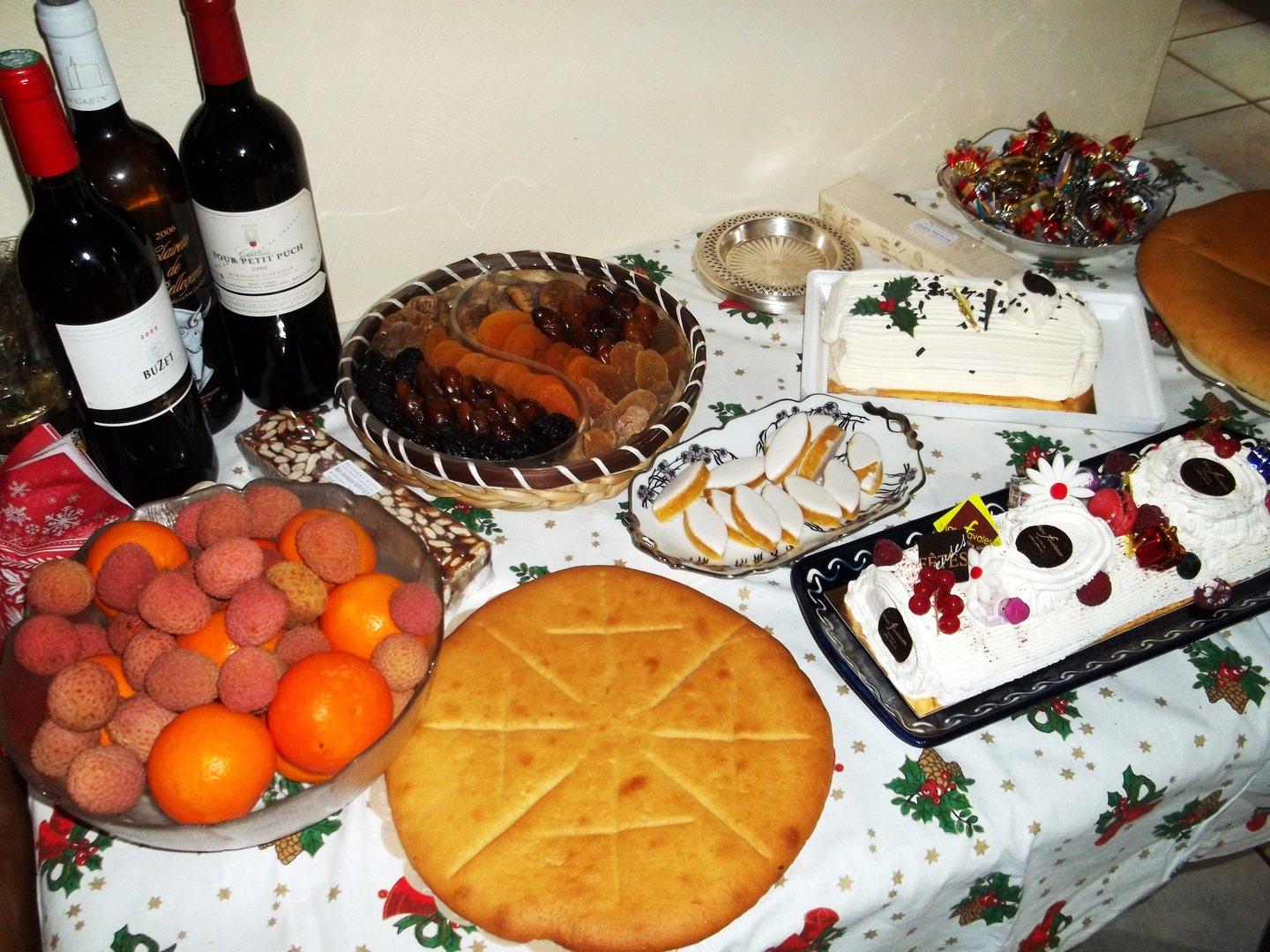
Keeping the tradition in your villa this Christmas
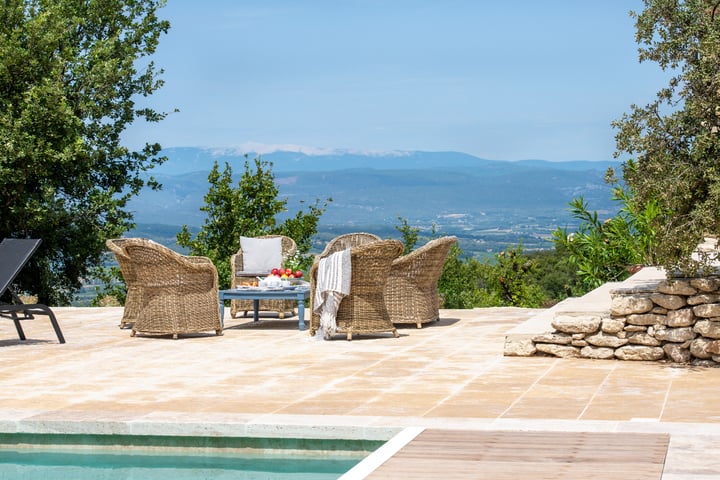
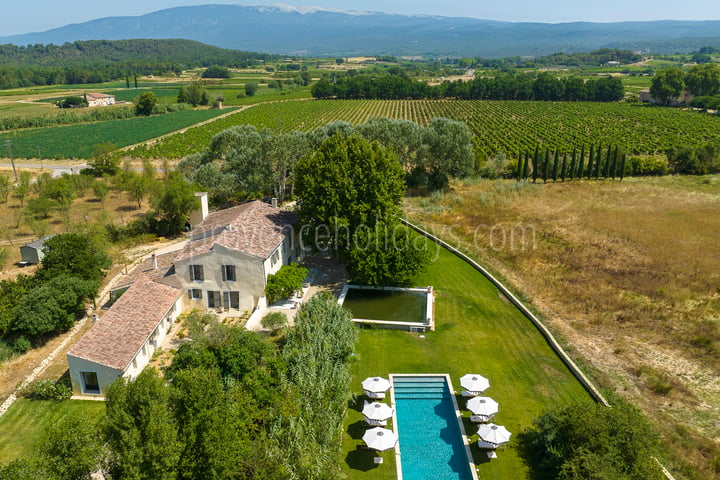
You do not need a Provençal grandmother to sit down to a gros souper. A villa with a long table, a fireplace and a good market nearby is a fine place to start.
Lay three white cloths and three candles. Find the salt cod, the nougat and a pompe à l'huile at a Christmas market or the village baker, and ask the local wine shop for a bottle of vin cuit. If you would rather sit at the table than stand at the stove, one of our private chefs can cook the supper in your villa, and the only thing left for you to carry is the log.
For more ideas for the festive season, from Christmas markets to midnight mass in a village church, read our guide to spending Christmas in Provence.