How one of the oldest villages in the Var became one of the most beautiful in France.
The beauty of Gassin is not the kind that was planned. It was not designed by an architect or cultivated for a photograph. It is the kind of beauty that emerges slowly from necessity - from a community that built its walls thick because it had to, that stayed on its rock because coming down was dangerous, and that planted its vines and tended its cork oaks because the roads were too poor for anything else. The village you walk through today is the sum of eight centuries of decisions made under pressure. To understand Gassin properly, you need to start not at the Place deï Barri with its famous view, but at the beginning - with a lord named Garcin, a coastline that was far from safe, and a hilltop that offered the only reliable advantage available.
1190: the first record, and what it reveals
The earliest written mention of Gassin dates to 1190, when the village appears in the cartulary of La Verne under the name Garcin. It appears again between 1234 and 1235 in the cartulary of the Saint-Victor Abbey in Marseille. The name is that of a person - almost certainly the lord or guardian of the territory - and it gives a useful clue about what the place was at the time: not a settlement built around commerce or comfort, but one built around protection.
Evidence of earlier occupation exists across the surrounding hills. Gallo-Roman remains have been discovered at L'Escalet, Saint-Julien, Ville-Vieille, Montjean and Bertaud, suggesting that the elevated terrain drew settlers long before the medieval period. An even older, more primitive settlement existed on a hill approximately 1.5 kilometres north of the current village - a site still known as Ville-Vieille today. The community moved south in the 11th century, drawn toward the protection offered by a Templar post established in the area to guard against coastal incursions.
By the early 14th century, the seigneury of Garcin was home to around a thousand people and covered nearly 6,500 hectares - a territory considerably larger than the commune as it exists today. Its boundaries were progressively reduced by the administrative detachment of Cavalaire-sur-Mer in 1929 and La Croix Valmer in 1934. At the end of the Middle Ages, Saint-Tropez itself was detached from the seigneury of Gassin - a detail that places the current relationship between the two in an interesting historical light. Gassin was here first.
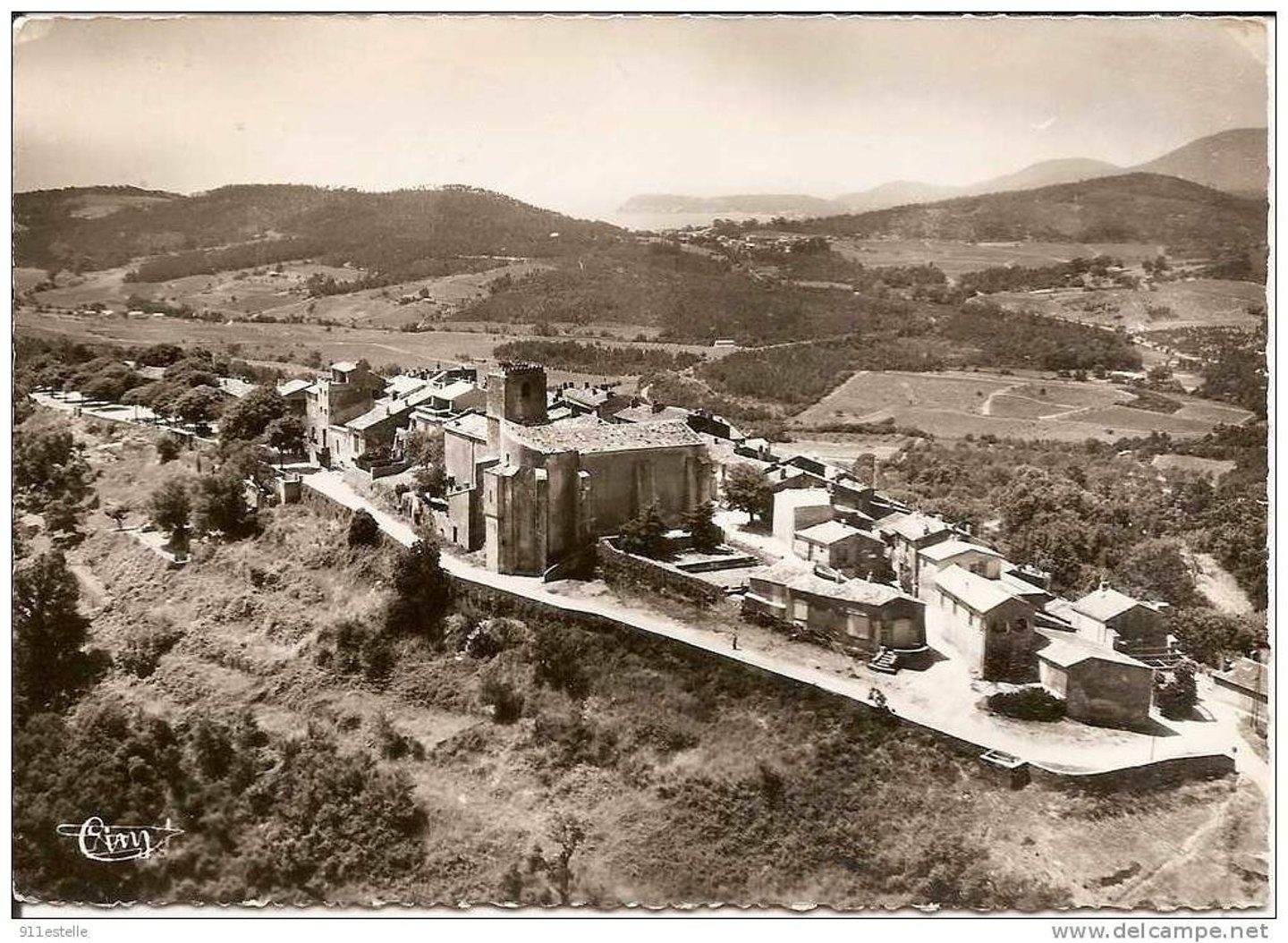
The centuries of insecurity: Saracen raids & the cost of the coast
The reason Gassin stayed perched on its rock for so long - and why the walls went up so high and so carefully - was not architectural preference. It was survival. For several centuries, Saracen pirates raided the coast of the Var with regularity. The raids were not random acts of violence; they were calculated economic operations. The pirates left behind casualties and took captives, who were transported to North Africa and either sold into slavery or held for ransom.
Local records document the human consequences of this with uncomfortable precision. Families in Gassin were separated for years while they gathered the funds required to secure the release of those taken. One documented case involves two brothers named Magnan - one of whom was held in Bône, in present-day Algeria, before eventually being reunited with his family after an extended period of captivity. The redemption of captives became, in its own grim way, a recurring feature of community life along this stretch of the Var coast.
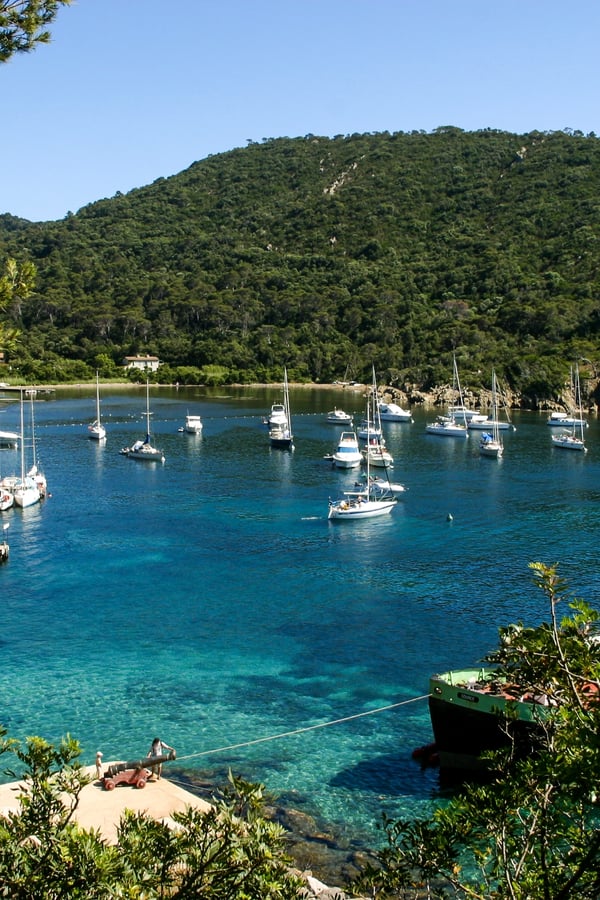
It was the sustained nature of this threat that gave Gassin its defensive logic. The village's position 200 metres above the Gulf was not chosen for the view - it was chosen because it made the community visible in time. From this height, the Gulf of Saint-Tropez and the Bay of Cavalaire as far as the Îles d'Hyères could be monitored simultaneously. This is why Gassin was long known by another name: La Vigie du Golfe - the Watchtower of the Gulf. The fortified walls, the narrow gateway of the Porte des Sarrazins, and the compact, inward-facing layout of the village all speak to a community that understood very clearly what the sea could bring.
A village takes shape: from a single street to a fortified town
By 1516, the cadastre of Gassin records a fortified settlement built around a single street - today's rue de la Tasco, the oldest in the village - incorporating the castle and a church, surrounded by a small suburban area. The medieval fort's tower survives and is built with the characteristic rough stonework of Provençal military architecture. The oldest surviving door on the main street dates from 1422.
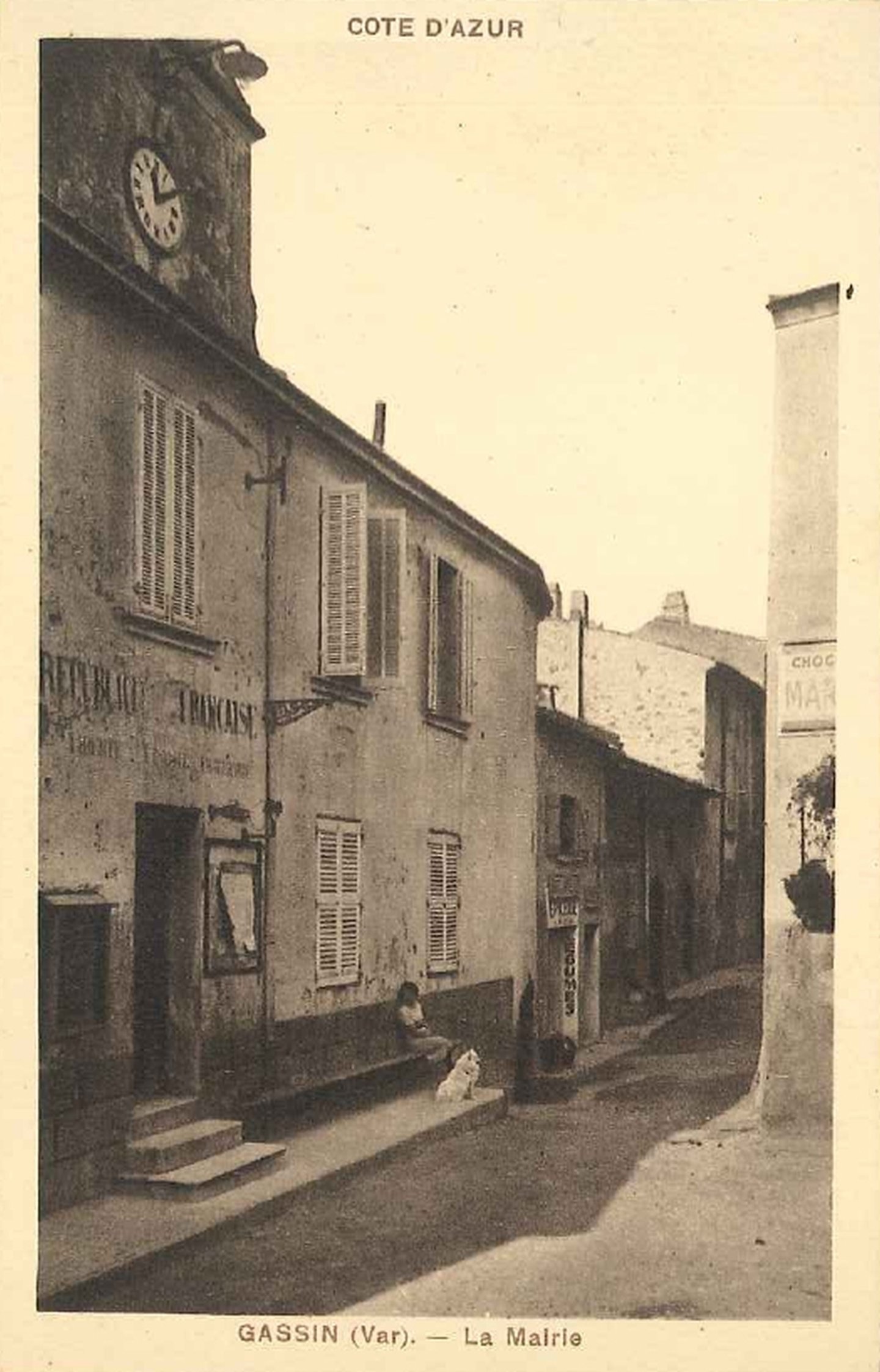
Over the following two centuries, the village expanded steadily westward. Streets accumulated: the Longue, Tubassière, Rollet de Garcin, Moulin à Huile. By 1728, the cadastre records the addition of a hospital to the north and a forge to the south. The fortified enclosure by this point had two formal entrances - the Portail Neuf to the north and the Grand Portal to the west. The church of Notre-Dame-de-l'Assomption was erected in 1558, its square bell tower - probably the oldest part of the structure - visible across the surrounding landscape. The town hall dates from 1584.
What the cadastres reveal, read across the centuries, is a community expanding with deliberate care within its walls - each new building a considered addition to a fabric that had to remain defensible while also becoming liveable. The village did not sprawl. It grew inward, densely, street by narrow street, until it reached something close to the form it retains today.


Find your holiday villa in Provence near Gassin
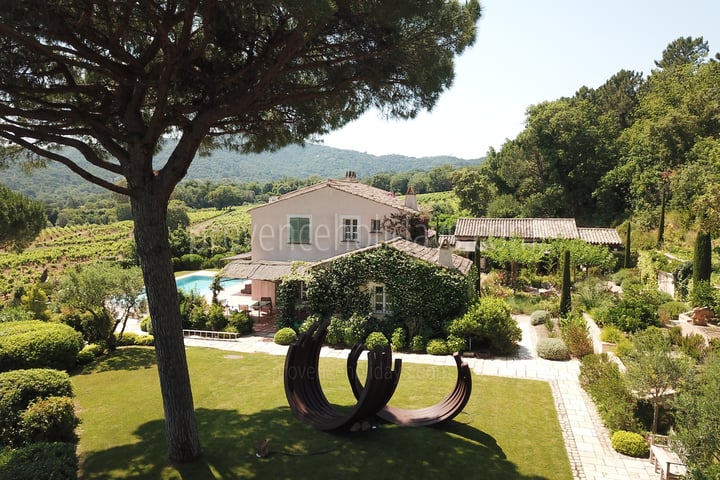
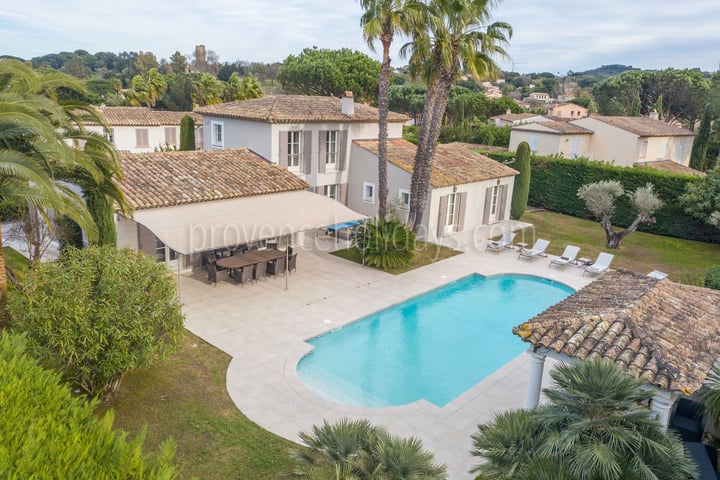
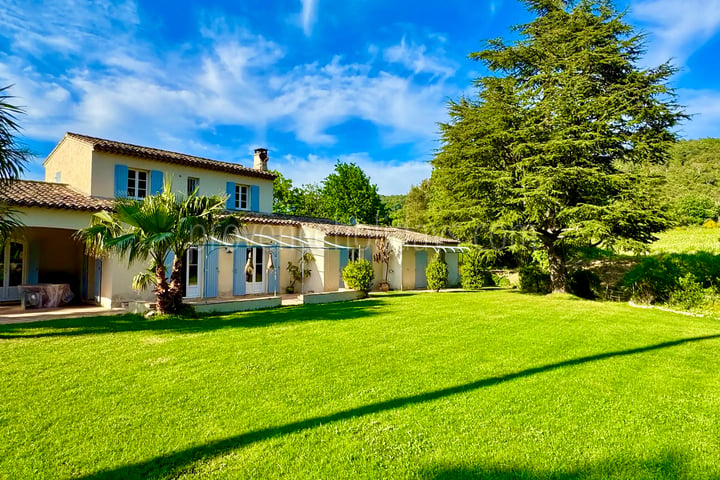
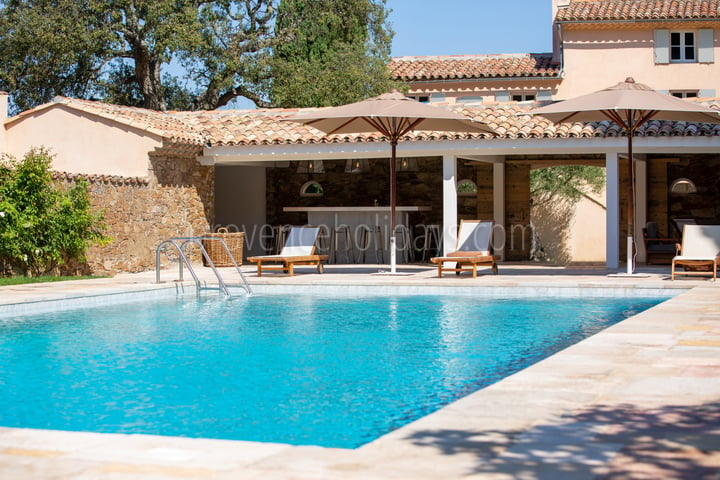
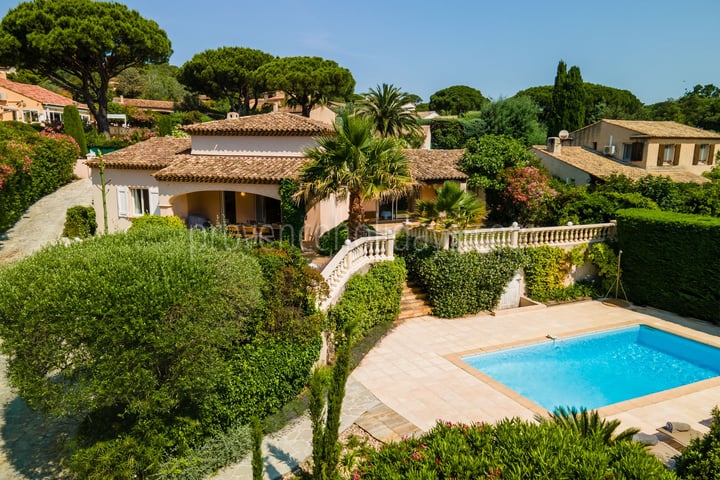
Staying near Gassin puts you at the heart of the Saint-Tropez peninsula, within easy reach of the medieval village, the Gulf coast and the celebrated vineyards of the Var. Our team at Provence Holidays knows this part of Provence with the depth that only years of local experience can provide. Browse our curated holiday villa rentals in Provence near Gassin and speak with our regional team to begin planning your stay.
The industries that sustained Gassin: cork, charcoal & silk
For most of its history, Gassin struggled economically for a reason that had nothing to do with the quality of its land or the enterprise of its people: the roads were poor to the point of being impassable for meaningful commerce. The village remained largely self-sufficient across the 15th to 18th centuries, sustained by the resources immediately available to it in the landscape of the Massif des Maures.
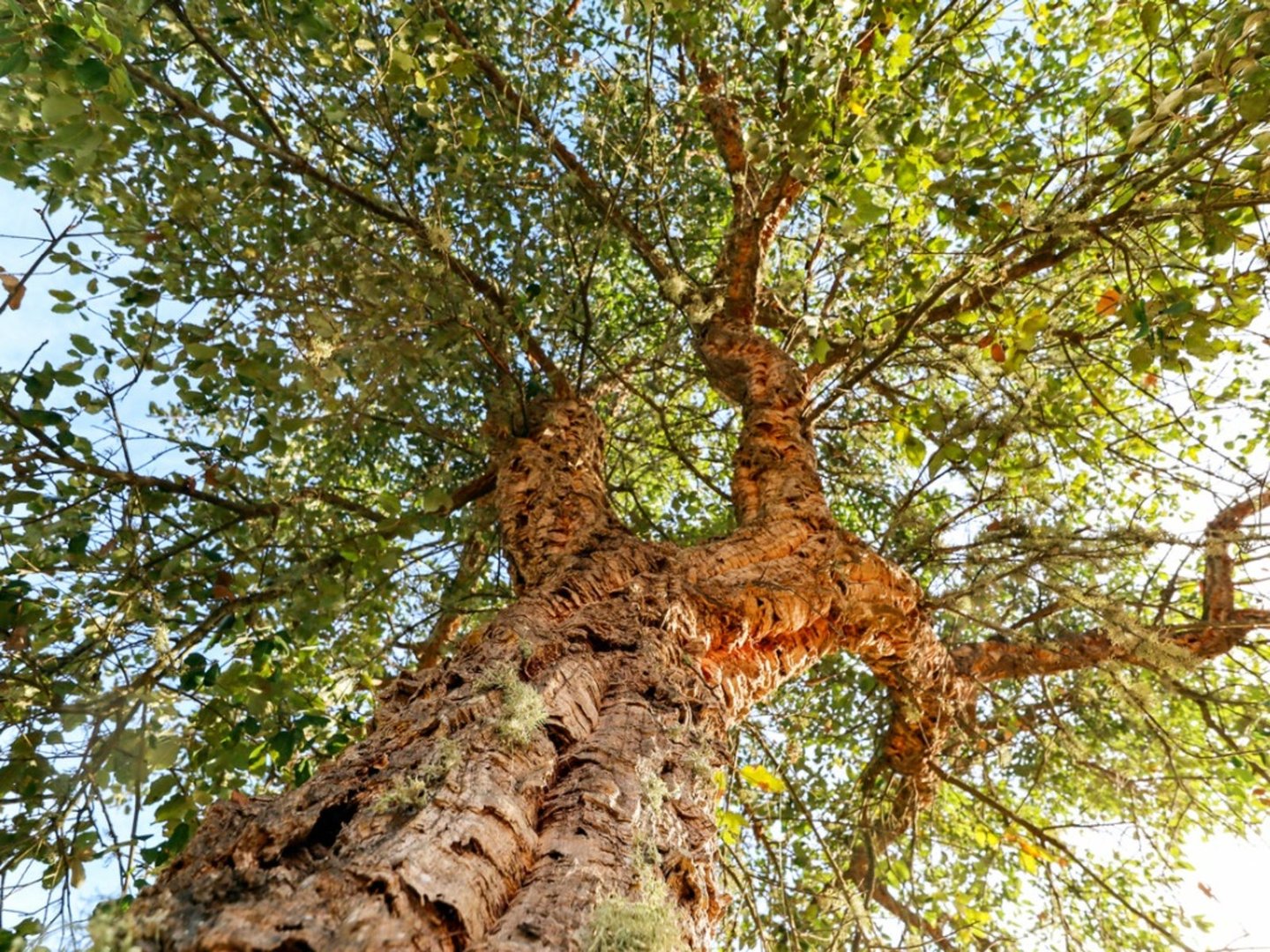
The most significant of these was cork. The cork oak forests that cover the Maures massif provided the raw material for an industry that employed much of the local population. Cork harvesting - a skilled and physically demanding process involving the careful removal of bark from living trees - fed into wider regional trade networks and gave the village a connection to the outside economy that agriculture alone could not provide. Alongside this, charcoal production was carried out by local craftsmen known as bousquetiers, who worked the woodland below the village in a trade that required as much knowledge of the forest as of the fire.
Silkworm cultivation was also practised in Gassin, the cocoons being sent to nearby Cogolin for use in weaving. The combination of cork, charcoal and silk formed the economic backbone of a community that had to find its living from the land and forest rather than from the sea or the road. Viticulture existed during this period, but on a modest scale. The vineyards that today define the landscape below the village, and that have made Gassin's name in the world of Provençal wine, were a later development - the product of better roads, better markets, and the particular determination of one wine merchant who arrived in 1936 with a vision for what the land could become.
The 19th century: roads, railways & the opening of the peninsula
The transformation of Gassin's economic fortunes in the 19th century did not come from the village itself. It came from the plain below, and from the infrastructure that finally connected this isolated corner of the Var to the wider world. The construction of passable carriageways and, in time, the arrival of the railway in the region unlocked the Saint-Tropez peninsula for commerce and, eventually, for the first visitors who would discover what the coast and the hills here had to offer.
With better roads came greater agricultural ambition. The vineyards of the Gassin plain expanded during this period as the calcareous schist soils and maritime climate proved well suited to wine production. A terrier book of 1691 had already mentioned the vines of one Joseph Minuty - the man whose name would eventually become synonymous with the most celebrated estate on the peninsula. The Germondi family, who owned what would become Château Minuty in the 19th century, were sufficiently prominent in regional viticulture to be recognised at an exhibition in Cannes in 1891.The estate was acquired in 1936 by Gabriel Farnet, replanted entirely after the Second World War, and classified as a Cru Classé of the Côtes de Provence in 1955 - one of only 23 properties in all of Provence to receive that distinction.
The development of coastal tourism from the late 19th century brought a steady stream of visitors through the region, and Gassin's elevated position - offering what is arguably one of the most remarkable viewpoints on the entire Côte d'Azur - began to be appreciated in a new way. The place that had been built for survival was discovered, gradually, to be one of the most beautiful addresses in the south of France.
Classified as one of the most beautiful villages in France - and what that actually means
Since 7 May 1994, Gassin has carried the designation of one of the Plus Beaux Villages de France. It is worth understanding what that classification involves, because it is considerably more rigorous than the name suggests. Entry to the association requires satisfying 27 precise and demanding criteria covering the quality and diversity of heritage, the condition of the built environment, the quality of the natural setting, and the rigour of ongoing conservation and welcome standards. The classification is not permanent - it is reassessed every five years and can be revoked.
Gassin is, notably, the only village in the entire Plus Beaux Villages de France association - across the full length of Mediterranean coastline from Spain to Italy - to be directly bordered by the sea. That is a distinction that reflects both the peninsula's geography and the particular tenacity with which Gassin has preserved its character in one of the most commercially pressured corners of the French Riviera.
The village has also produced people of some distinction. Inès de la Fressange - the former face of Chanel under Karl Lagerfeld, fashion designer and author - was born in Gassin, and has spoken of the influence of her Provençal origins on her aesthetic sensibility. David Ginola, who played for Paris Saint-Germain, Newcastle United, Tottenham Hotspur and Aston Villa and earned 17 caps for the French national team, was also born here in 1967. The actress Sarah Biasini, daughter of Romy Schneider, spent her early childhood in the area. The village has never made much of these connections. That restraint, too, is characteristic.
What eight centuries leave behind
Walk through Gassin today with the history in mind and the village reads differently. The Porte des Sarrazins is not a picturesque archway - it is the entrance through which a fortified community controlled who came in and out during centuries of coastal insecurity. The rue de la Tasco is not simply the oldest street - it is the spine around which an entire community organised itself when the 1516 cadastre recorded a single fortified lane as the totality of the village. The Place deï Barri is not just a terrace with a remarkable view - it is the old rampart walk, and the century-old hackberry trees that shade it are rooted in what were once defensive walls.
The view itself - the Gulf of Saint-Tropez, the Massif des Maures, the Îles d'Or, the Bay of Cavalaire, and on a clear day the snow-covered Alps - is the same view that the community used to monitor the sea for approaching danger. What was once a watchtower's strategic advantage has become, in the most considered way, one of the finest prospects in Provence. The bousquetiers are long gone, the silkworms too. But the cork oaks are still there in the Maures, the vineyards still cover the plain below, and the village on its rock is still, unmistakably, itself.
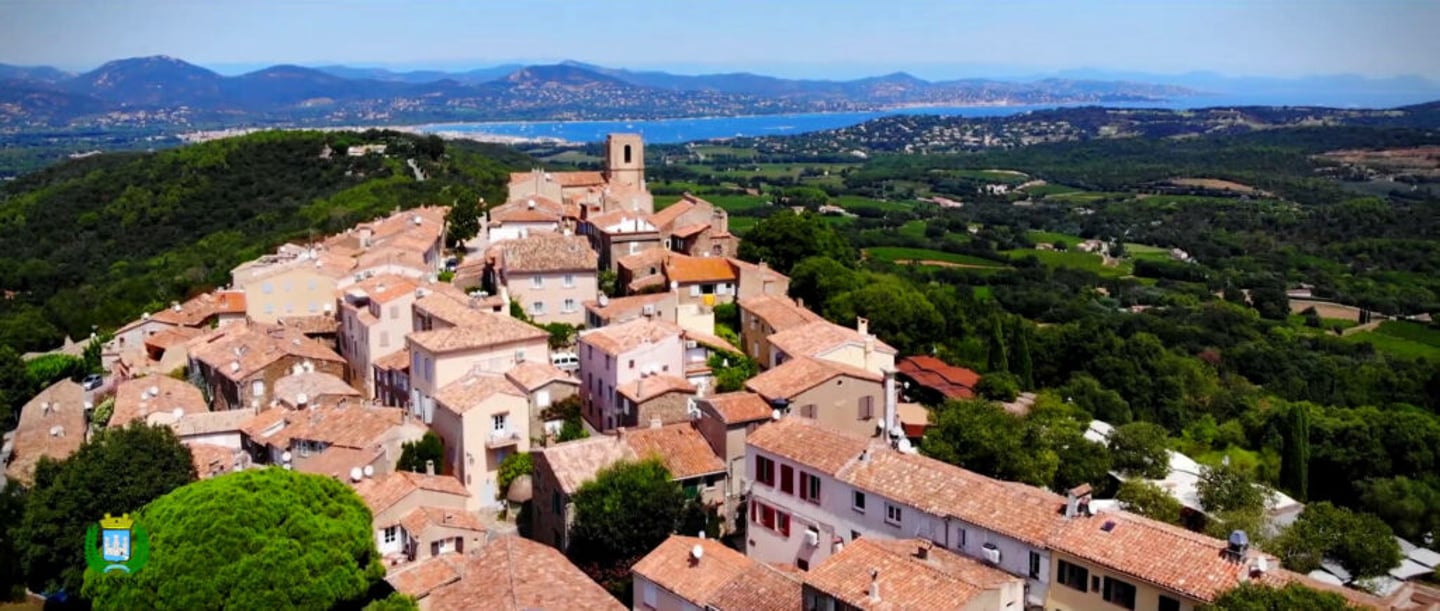
Gassin's character is not incidental. It is the direct product of everything the village has been through - the raids, the isolation, the slow accumulation of streets and buildings across five centuries of carefully managed growth, and the eventual discovery by the wider world that this hilltop had been something remarkable all along. The classification as one of the Most Beautiful Villages of France is not a decoration. It is the recognition of a place that has maintained its integrity under considerable pressure, in one of the most visited corners of France. For those planning a villa holiday in Provence near Saint-Tropez, Gassin offers a base with genuine substance - a place whose history gives every walk, every meal and every morning view a deeper resonance. Explore our curated holiday villa rentals in Provence on the Saint-Tropez peninsula, and contact our team to begin planning your escape to Gassin.
À bientôt,