The stories beneath the surface of Provence’s most extraordinary peninsula.
The Presqu’île de Giens is the kind of place that reveals itself in layers. Most visitors see the first one: the beaches, the flamingos, the ferry to Porquerolles, the double tombolo that connects an ancient island to the mainland. All of that is remarkable, and we have written about it elsewhere in detail. But there is a second layer - the one that tends to go unmentioned in the guides, unnoticed by the day-trippers and unreported even by people who have been coming here for years. A Roman shipwreck that rewrote the rules of underwater archaeology. A wildflower that grows on one sandbar in France and nowhere else. A myth about four princesses turned to stone. A Godard film shot at a fishing port that most people walk past without knowing. And an environmental crisis that could, within a generation, sever the peninsula from the mainland entirely. These are the five Giens stories we think deserve to be told properly.
One. The underwater meadow you can swim through - and why it matters more than you think
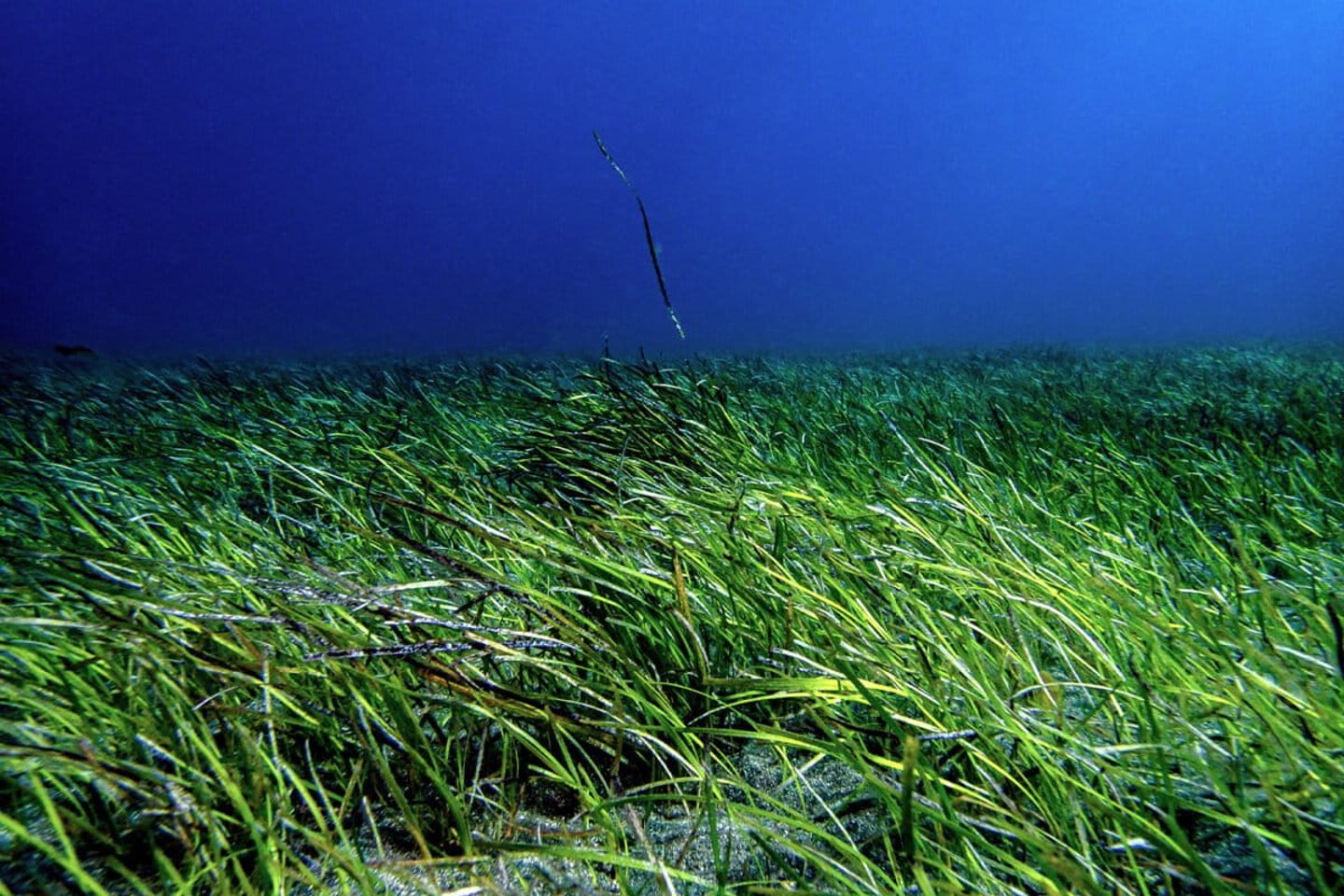
The stories of the Giens peninsula do not end at the waterline. Beneath the surface, in the shallow waters off the southern tip, lies one of the most extraordinary and least understood landscapes in the Mediterranean: a vast underwater meadow of Posidonia oceanica, the Neptune grass that is found only in this sea and nowhere else on Earth.
The Posidonia meadows in the Gulf of Giens are among the most extensive and best-preserved on the entire French Mediterranean coast. They begin in water as shallow as a metre or two and extend to depths of thirty-five metres and beyond, their bright green ribbon-like leaves growing in dense tufts that sway with the current and give the seabed the appearance of a vast underwater grassland. Beneath the living leaves, the plants anchor themselves via thick rhizomes that grow both horizontally and vertically into the sediment, building up layered structures called matte that can be several metres thick and thousands of years old. A single square metre of this meadow produces up to twenty litres of oxygen per day and absorbs significantly more carbon dioxide per unit area than an equivalent stretch of terrestrial forest.
The numbers are remarkable in themselves, but what makes the Giens Posidonia genuinely worth knowing about is that you can see it for yourself. At the Pointe du Bouvet, near the Tour Fondue ferry port at the southern tip of the peninsula, a marked underwater trail runs through the shallows at a depth of just one to four metres. Numbered buoys and underwater information panels guide snorkellers through the meadow and the marine life it supports - sea bream, wrasse, octopus, sea urchins and the hundreds of species of invertebrates and algae that depend on the Posidonia for shelter and sustenance. No scuba qualification is required. A mask, a snorkel and a calm morning are enough.
The age of what you are swimming over is worth pausing on. Posidonia oceanica grows slowly - its horizontal rhizomes advance only one to six centimetres per year - and individual colonies can be extraordinarily old. A clonal Posidonia colony discovered between Ibiza and Formentera has been estimated at between 80,000 and 200,000 years old, potentially making it one of the oldest living organisms on Earth. The meadows off Giens belong to the same species and share the same unhurried timescale. When you swim through them, you are moving through a living structure that was already ancient when the Roman wine ship sank at La Madrague.
Two. The peninsula is a princess - or so the legend says
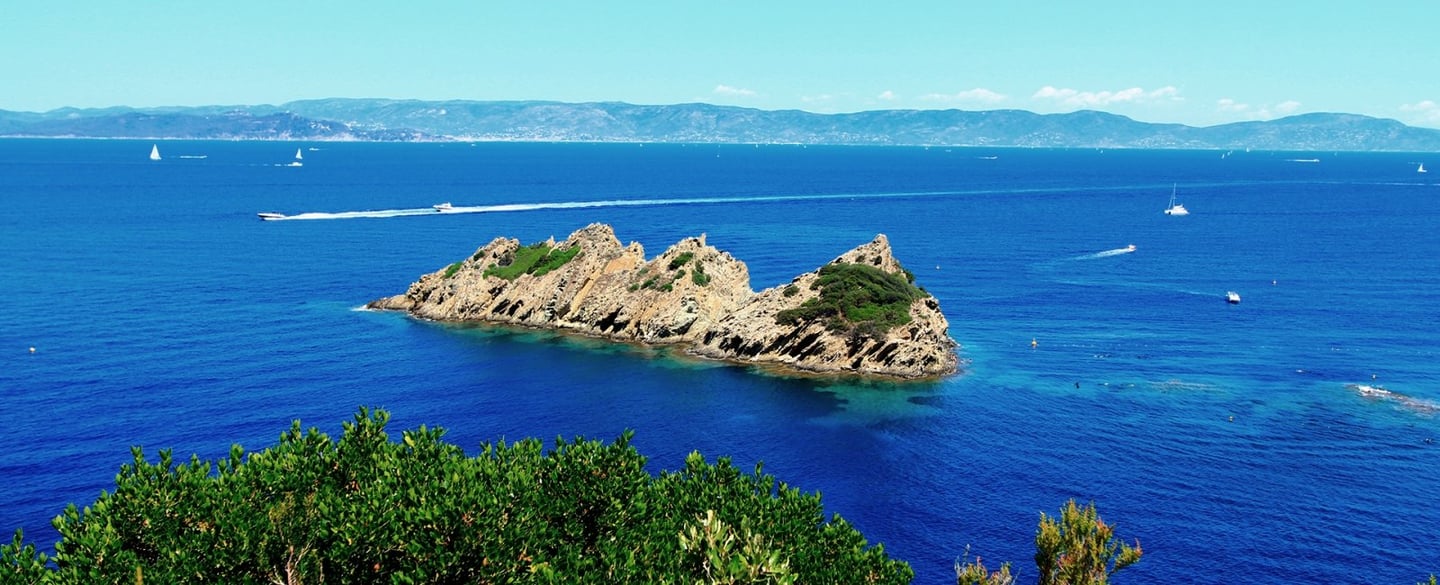
The oldest story told about the Giens peninsula is not historical. It is mythological - and it is beautiful. The legend, recorded by the Hyères writer Gustave Roux, tells of Prince Olbianus, who had four daughters of extraordinary beauty. One day, while the four princesses were swimming off the coast, pirate sails appeared on the horizon. Olbianus called to his daughters to return to shore, but they had already swum too far out. In desperation, the prince fell to his knees on the beach and begged the heavens to save them from capture. His prayer was answered - but not in the way he had hoped. A metamorphosis took hold. The daughters felt their limbs slow, stiffen, freeze and finally turn to stone. Each became an island: Porquerolles, Port-Cros, the Île du Levant. And the fourth - the one closest to the shore, still reaching her arms towards her father - became the Presqu’île de Giens. The name ‘Olbianus’ echoes Olbia, the Greek colony founded on the coast nearby in the fourth century BCE, and the connection is deliberate. The legend weaves the geological truth - that Giens was once an island, like its neighbours, before sediment slowly joined it to the mainland - into a story about grief, transformation and the particular sadness of being almost close enough to touch. It is the kind of story that changes the way you look at a landscape. Stand on the headland at the Tour Fondue at dusk, when the islands are silhouetted against the last light, and the myth feels less like folklore and more like an explanation.
Three. A wildflower that grows on one sandbar in France - and nowhere else
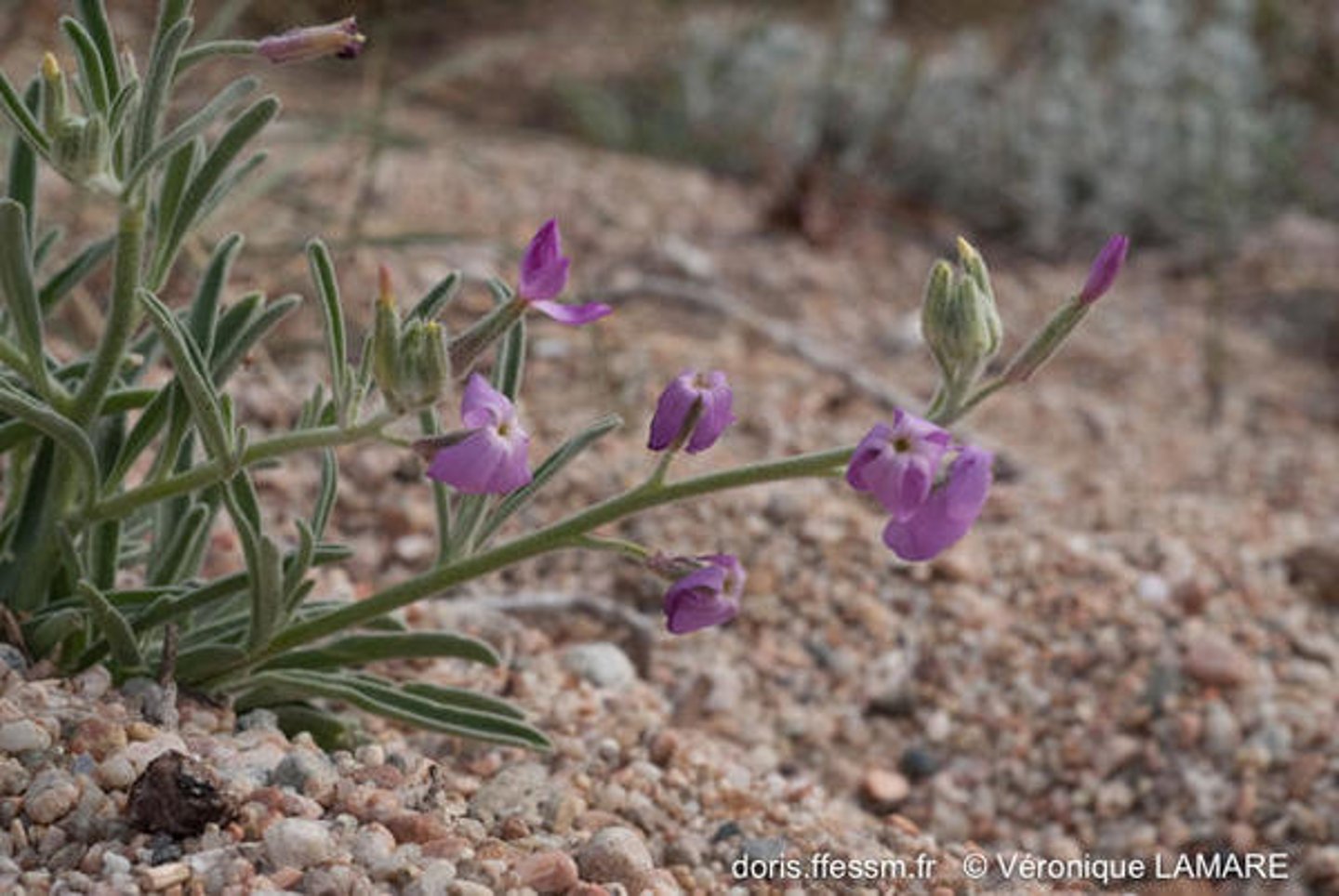
The western tombolo of the Giens peninsula - the narrow strip of sand that runs from the mainland to the rocky headland, carrying the road and the Plage de l’Almanarre along its length - is home to a plant that exists in France only here. Matthiola tricuspidata, the three-horned stock, is a small, low-growing cruciferous plant with pale purple flowers that blooms in spring on sandy coastal soils. It is found elsewhere in the Mediterranean basin - along parts of the North African coast, in Sardinia, in scattered locations around the Aegean - but in France, its entire habitat is the western tombolo of the Presqu’île de Giens. This single sandbar, five kilometres long and a few hundred metres wide, is the only place in the country where it grows.
It is not alone in its rarity. The peninsula and its immediate surroundings are home to 257 recorded plant species, including approximately thirty species of orchid and around twenty plants classified as heritage species by the Conservatoire du Littoral. Among them are Silene badaroi (Badaro’s catchfly), a Franco-Italian endemic found on the peninsula, the nearby islet of Petit Ribaud and Porquerolles; Senecio leucanthemifolius subsp. crassifolius, endemic to the Ligurian-Provençal coast; and Limonium pseudominutum, a dwarf sea-lavender found only in the Bouches-du-Rhône and the Var. What makes this concentration remarkable is that it occurs on a landscape that most people experience as a beach. The western tombolo looks, at first glance, like a straightforward stretch of sand between the sea and the lagoon. That it is also one of the most botanically significant strips of coastline in the south of France is the kind of detail that rewards paying closer attention.
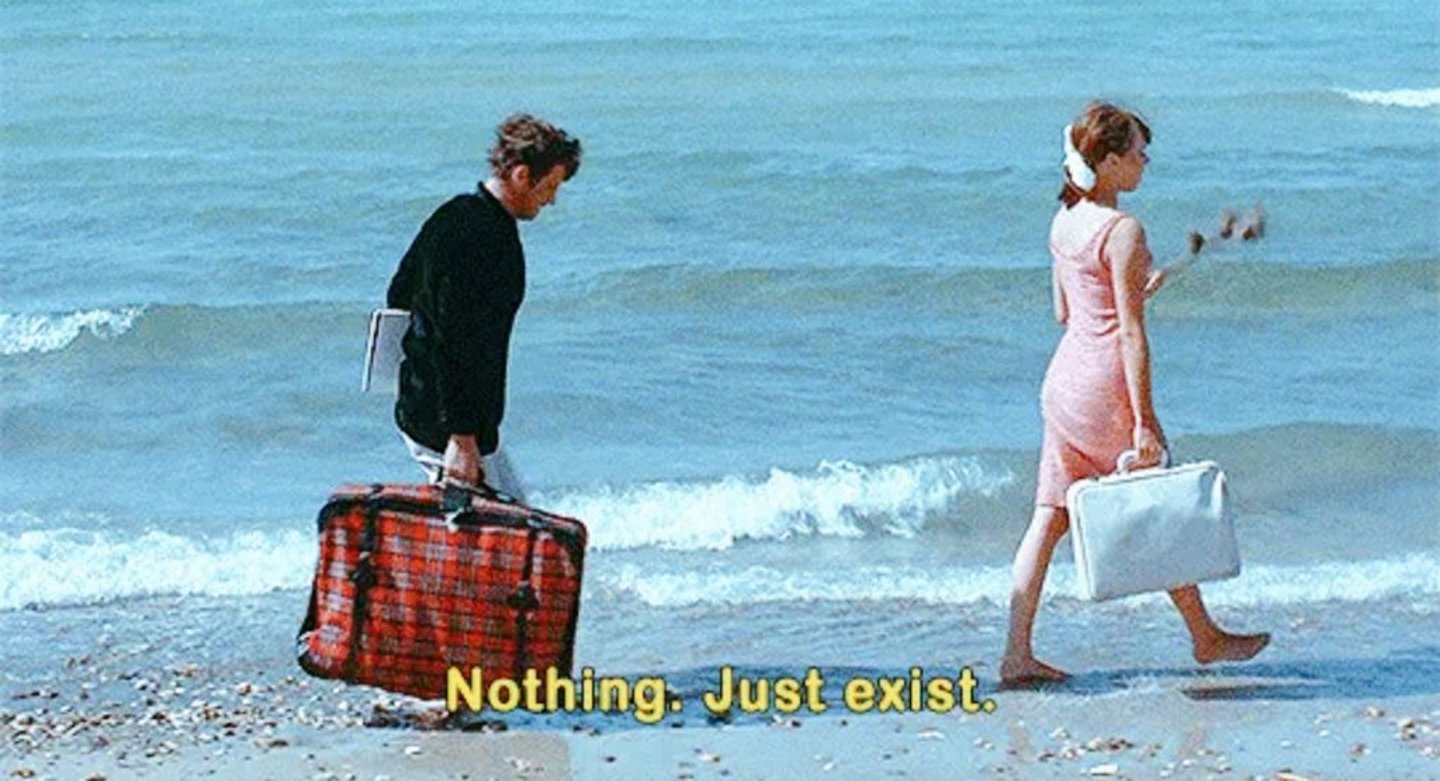
Four. Jean-Luc Godard filmed his masterpiece at Port du Niel
In the summer of 1965, Jean-Luc Godard brought a small crew, Jean-Paul Belmondo and Anna Karina to the south of France to make a film that would become one of the defining works of the French New Wave. The film was Pierrot le Fou, and key scenes were shot on the Presqu’île de Giens. The plot follows Ferdinand and Marianne as they flee Paris for the Mediterranean coast, abandoning bourgeois life for a kind of fugitive romanticism that unravels as it goes. Godard chose the Hyères area precisely because it offered the wild, unspoiled Mediterranean landscape he needed - and the peninsula delivered. Port du Niel, the small fishing crique on the southern tip of Giens, was among the locations used. The crew also filmed at the port of Ayguade and along the coast towards Porquerolles, where they spent ten days staying at the Miramar and Post Office hotels on the island.
Pierrot le Fou is now considered one of the greatest French films ever made - a film about colour, freedom, language and the Mediterranean as a state of mind. That its landscapes were drawn in significant part from the Giens peninsula and its neighbouring islands is something the peninsula does not advertise. There is no plaque at Port du Niel. No guided walk. The crique looks exactly as it did in 1965 - a handful of fishing boats, turquoise water, the Var coastline behind - and that, perhaps, is the point. If you know the film, visiting Port du Niel feels like stepping inside the frame. If you do not, it is still one of the most beautiful small harbours on the peninsula. Either way, Godard was right to choose it.
Five. The Roman shipwreck at La Madrague - and the 6,000 amphorae of bay-leaf wine destined for Gaul
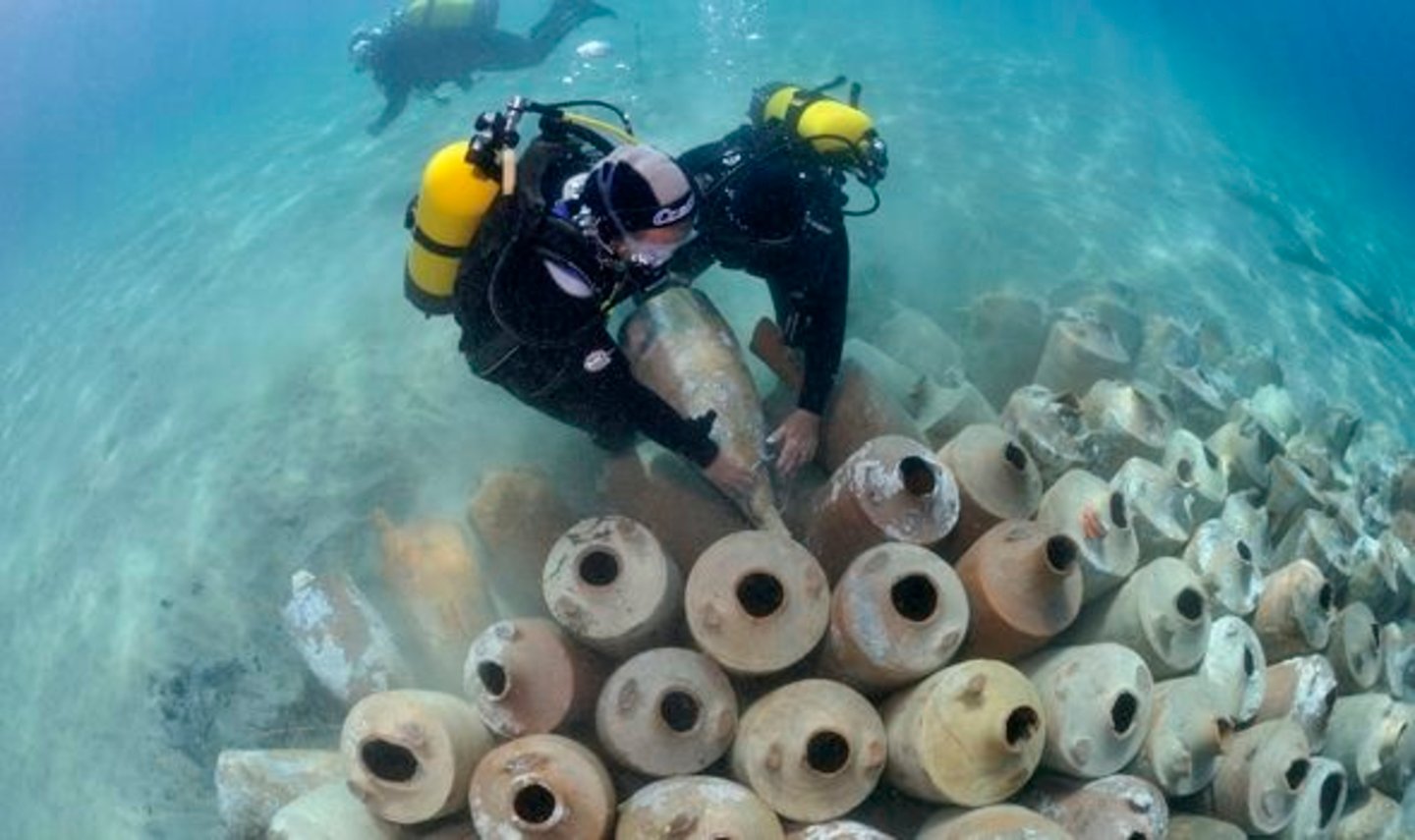
In 1967, divers from the French Navy Diving School discovered something on the seabed off the fishing port of La Madrague de Giens. Lying at a depth of eighteen to twenty metres, in the quiet waters on the southern side of the peninsula, was the wreck of a Roman merchant vessel - and it was enormous. The ship, which sank between 75 and 60 BCE, was approximately forty metres long with a deadweight of 400 tonnes. To put that in perspective, this was one of the largest Roman trading vessels ever found in the Mediterranean. Its cargo told the story: 6,000 wine amphorae of the Dressel 1B type, each standing over a metre tall, stacked three layers deep in the hold until they reached three metres above the keel. Potter’s stamps identified the amphorae as products of workshops near Terracina, on the coast of Lazio south of Rome. Analysis of the residue inside revealed red wine - flavoured with bay leaves, a seasoning added specifically to suit Gaulish tastes. This was a ship carrying Italian wine to what is now France, and a great deal of it.
What happened next made the wreck significant for a different reason entirely. The excavation, which ran for eleven seasons between 1972 and 1982 under the direction of André Tchernia and Patrice Pomey, became the first truly scientific large-scale underwater excavation conducted in France. The team pioneered techniques that are still in use today: systematic stereoscopic photographic recording of every layer, underwater chain-saws used to tunnel beneath the hull timbers, and a comprehensive numbering system that allowed the cargo and the ship’s structure to be catalogued with the same rigour applied to terrestrial digs. The Madrague de Giens wreck effectively established the modern methodology of French underwater archaeology.
One further detail is worth knowing. When the excavation reached the lower layers of the cargo, the team discovered that a significant number of amphorae were already missing. Ancient salvage divers - working in the first century BCE, without modern equipment - had already descended to the wreck and recovered nearly half the cargo. The evidence of their work was unmistakable. Two thousand years before the French Navy found the ship, someone else had found it first. After the excavation was completed, the wreck was deliberately reburied in sand on the seabed, where it remains today. You can walk the harbour at La Madrague on a still evening, look out at the water and know that directly below you, preserved in the sand, lies a Roman merchant ship with the remains of a cargo of wine that was never delivered to Gaul.
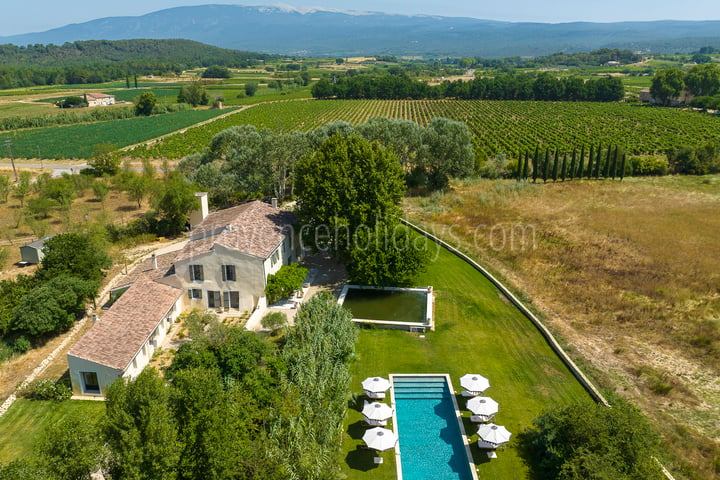
We hope you enjoyed this - something a little more informative about the gorgeous Giens. A Provence Holidays villa in the Var puts you within easy reach of the peninsula and everything around it. Browse our Var villas and speak to our experiences team about building an itinerary that goes beyond the obvious.
À bientôt,