The Alpilles range is best known for Les Baux and Saint-Remy-de-Provence. Eygalieres, at the eastern end of the hills, is quieter, less visited and in September, when the light is extraordinary and the crowds are gone, arguably more interesting than either.
A village on its own terms
Eygalieres sits on a small hill at the eastern end of the Alpilles, separated from the more visited western villages by a stretch of flat agricultural plain. It is not difficult to reach: twenty minutes from Saint-Remy, thirty from Arles. But it sees considerably fewer visitors than its neighbours, and the village has retained a quality that Les Baux and Saint-Remy have largely lost to their own popularity.
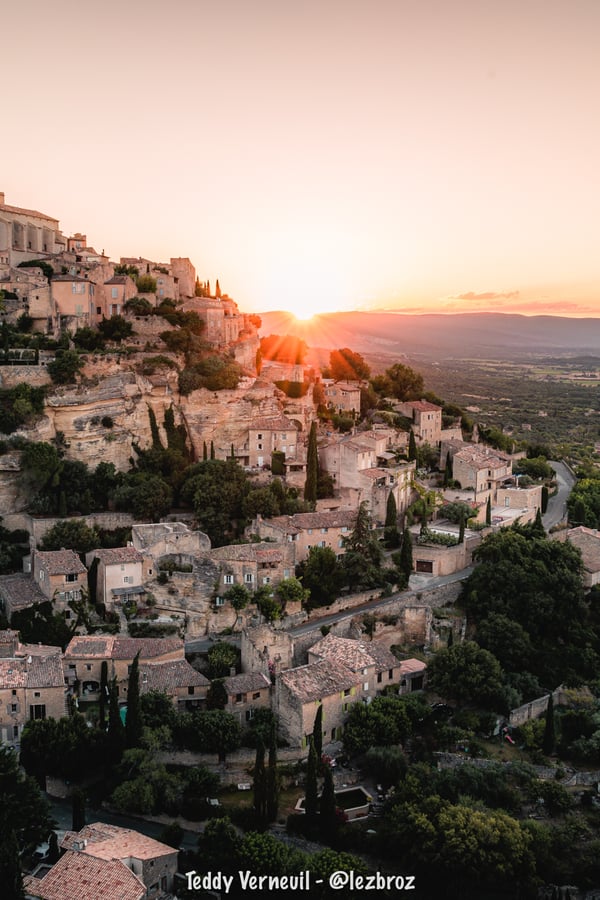
The village divides naturally into two parts: the modern village at the base of the hill, with its cafe, small grocery and post office, and the old village climbing the hill above to the ruined tower and chapel at the summit. The distinction matters. The old quarter is largely residential and has not been heavily adapted for tourism. The streets are narrow, the houses are lived in, and the overall atmosphere is closer to the working Alpilles village it has been for centuries than to the curated heritage destination that some of its neighbours have become.


The glory month in September: the light returns
September is the month when Provence stops performing for visitors and begins its own rhythm again. Eygalieres, which keeps a lower profile than its neighbours even in August, benefits from this shift more than most Alpilles villages. The crowds thin noticeably from the first week of September, the Thursday morning market on the main square regains its unhurried quality, and the village feels inhabited rather than visited.
The light in September is the defining quality of the month across Provence, and in Eygalieres it is particularly affecting. The summer haze that flattens the landscape through July and August clears as the nights cool, and the clarity that returns by mid-September gives the Alpilles limestone a sharpness and depth that photographers and painters have sought here for generations. The low angle of the September sun, especially in the hour before and after midday, throws the ridge profiles into strong relief and picks out the texture of the old stone in the village in a way that the high summer light simply does not.
The olive trees on the plain below the village begin to show colour in September: the fruit, still green in midsummer, starts to deepen toward the black-green and purple tones that precede the October and November harvest. Walking through the groves on the paths from the village gives a close view of the trees at this transitional moment, and the whole landscape of the lower Alpilles takes on a particular silvery quality in the September light.
The Thursday market in Eygalieres is one of the reasons to time a visit in September rather than August. Small and unpretentious, it covers the main square with a reliable selection of local produce: honey from the garrigue, goat's cheese, olives, seasonal vegetables and the early autumn fruit. In September the pace is gentler than the summer equivalent and the stallholders have more time to talk. For local colour without the scale of a market like Apt or Saint-Remy, this is the right choice.
The Alpilles walking trails are at their best in September. The heat has eased enough to make the ridge paths comfortable for most of the day rather than only in the early morning, and the lower paths through the olive groves and scrub are more pleasant in the softer temperature. A full morning walk from the village car park, taking in the Chapelle Saint-Sixte, the lower slopes and a loop through the olive groves, leaves plenty of time for a long lunch. The air has the dry, herbal quality of late Provencal summer: thyme, rosemary and wild lavender all contributing to a distinctly Mediterranean atmosphere.
The old quarter and the chapel
The climb through the old quarter from the car park at the base takes about ten minutes. The streets are uneven limestone and the houses are built in the traditional Alpilles style: pale stone, shuttered windows, small gardens hidden behind walls. Several of the houses at the top have been carefully restored, but without the kind of renovation that makes everything look new. The ruined tower at the summit gives a view that extends east across the Crau plain towards Salon-de-Provence and south towards the Camargue on a clear day. In September, with the air cleaner than in the August heat haze, the range of this view is at its most impressive.
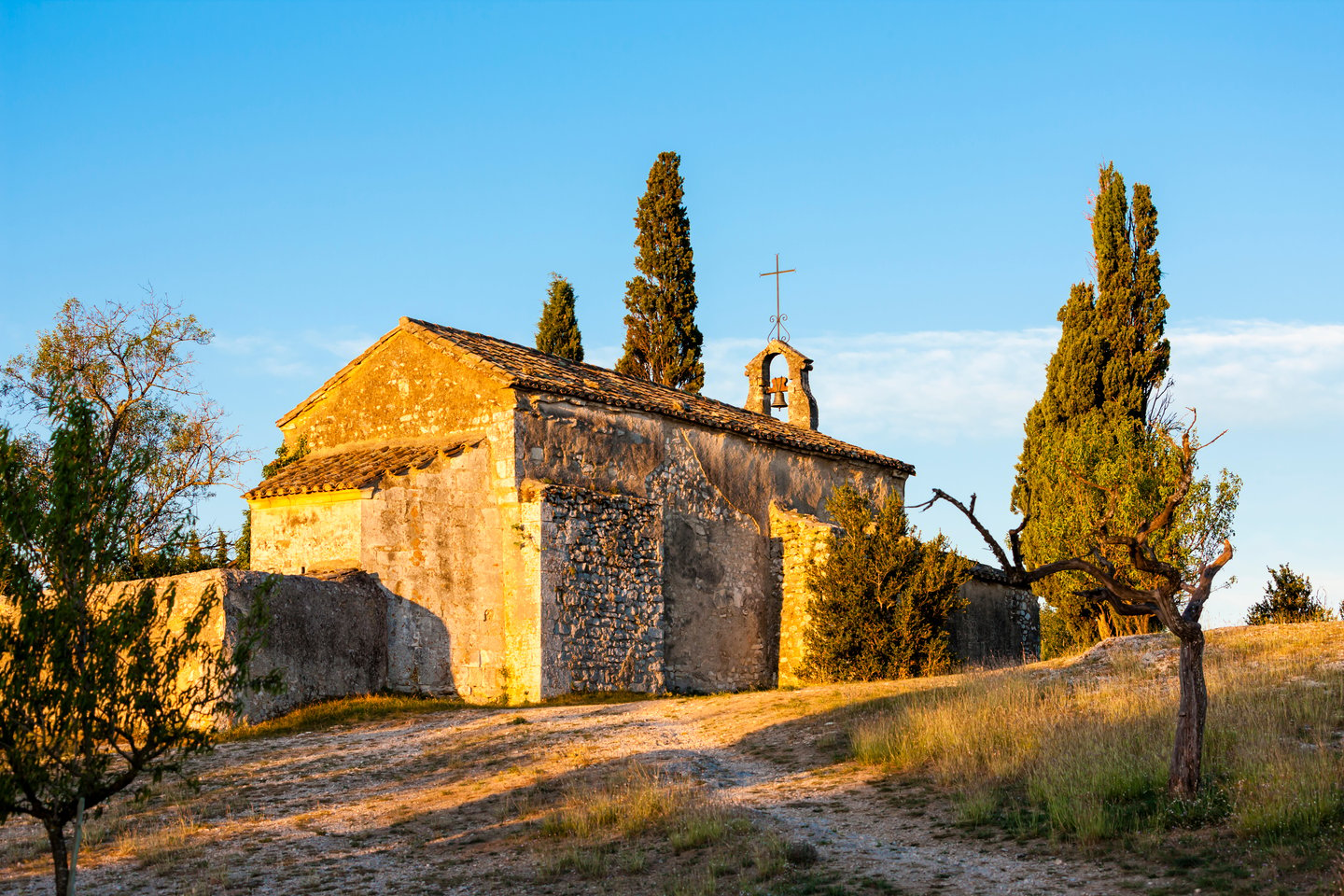
The Chapelle Saint-Sixte
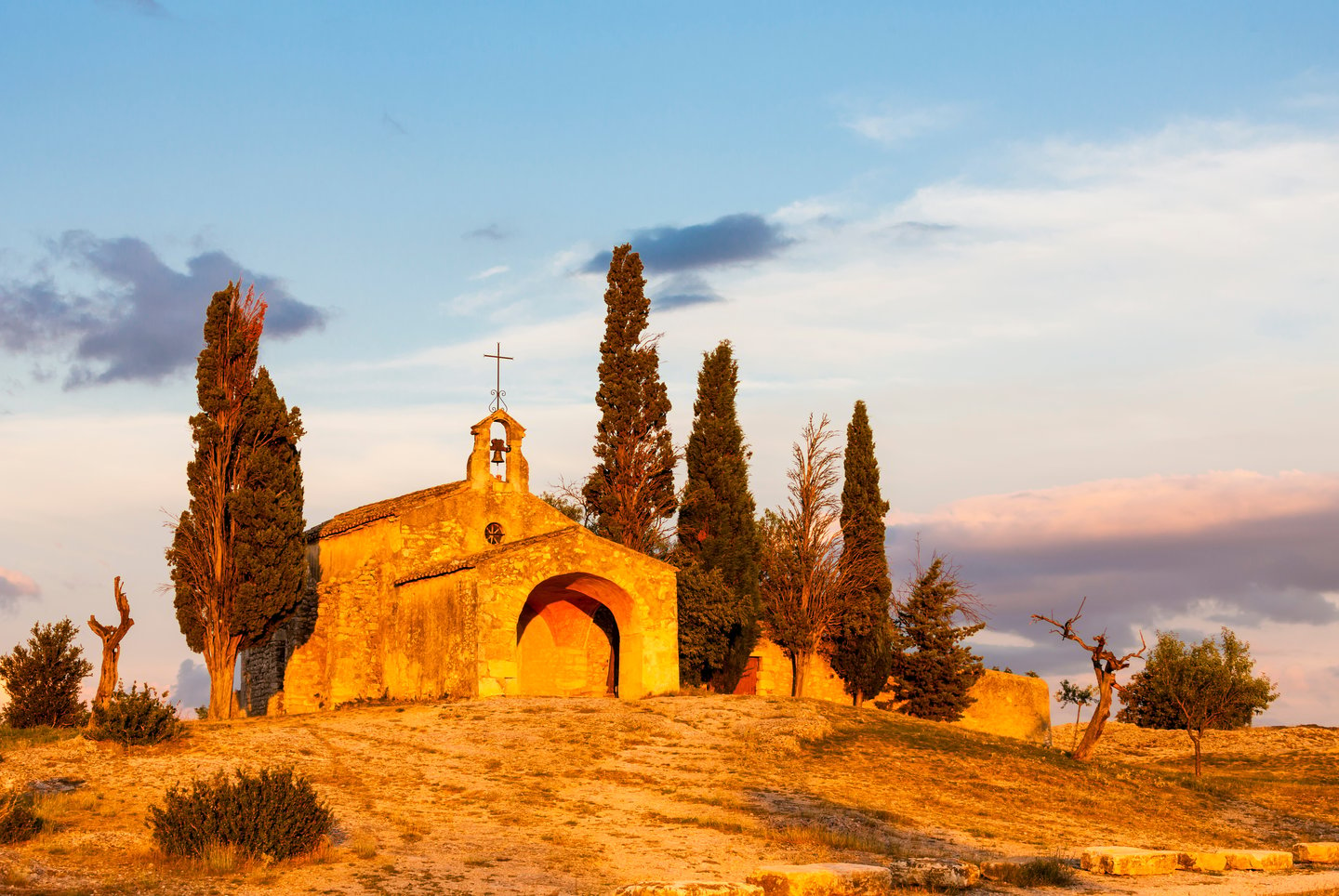
The Chapelle Saint-Sixte, which sits on a small rise just outside the village on the road towards Orgon, is one of the oldest Romanesque chapels in the Alpilles: its origins date to the eleventh or twelfth century. It is the most photographed subject in and around Eygalieres, typically depicted as a low stone building in an open field with the Alpilles ridge behind it. The chapel is kept locked outside of religious services, but the exterior and the immediate surroundings are accessible on foot from the road. In late September the chapel is at its most peaceful: the summer visitors have thinned and the surrounding fields have the muted, dry quality of the Provencal autumn.
The olive oil tradition
The plain around Eygalieres is traditional olive-growing country, and several of the local mills remain in operation. The harvest takes place from late October through December, and some mills offer visits and oil purchases during the season. The oils from the Alpilles carry the AOC designation Huile d'Olive de la Vallee des Baux-de-Provence, considered among the finest in France and produced from a blend of Aglandau, Salonenque and Grossane olives.
Moulin a Huile Castelas, near Maussane-les-Alpilles a few kilometres west, is one of the better-known mills in the area and produces a range of oils from different olive varieties that can be tasted and purchased on site. A September visit precedes the harvest, but the oil shop is open year-round and the landscape at this time of year, grey-green olive trees, limestone outcrops, dry summer grass, gives the clearest sense of why the Alpilles oil has the character it does.
Eygalieres rewards those who seek it out: a quieter corner of the Alpilles with extraordinary September light, the ancient Chapelle Saint-Sixte, olive groves in transition, and a Thursday market that feels genuinely local.
A bientôt,