For thirty short days each spring, the Luberon turns the colour of ripe cherries.
The orchards that stitch together the foothills of the Mont Ventoux and the slopes of the Monts du Vaucluse glow red, the markets fill with mountains of fruit sold by the cagette, and entire villages pause to celebrate a tradition that has shaped Provençal life since the seventeenth century. If you can time your stay between mid-May and the end of June, cherry season in the Luberon is one of the most quietly extraordinary experiences in Provence - and one of the most delicious.
When is cherry season in Provence?
Cherries are not just a crop here. They are a calendar, a craft and a cultural identity. From the bright, candied jewels of Apt to the freshly picked Burlat sold by farmers from the back of a pickup truck, the Luberon's cherry season offers a window into a way of life that has barely changed in a hundred years. Here is what you need to know about when to come, where to go, and what to taste.
The Provençal cherry harvest runs from the first days of May to mid-July, with the peak - and the richest spread of varieties - falling between mid-May and the end of June. The earliest variety, the Bigarreau Burlat, ripens from late May at lower altitudes; the latest, the Reverchon, comes off the trees only in late June and early July at higher elevations.
Vaucluse, the département the Luberon belongs to, has the largest concentration of cherry trees in France: roughly one in three French cherries comes from these slopes. If you are travelling for the fruit, late May into early June is the safest week to choose. The trees are loaded, the markets are at their most theatrical, and most of the village festivals fall within that window.
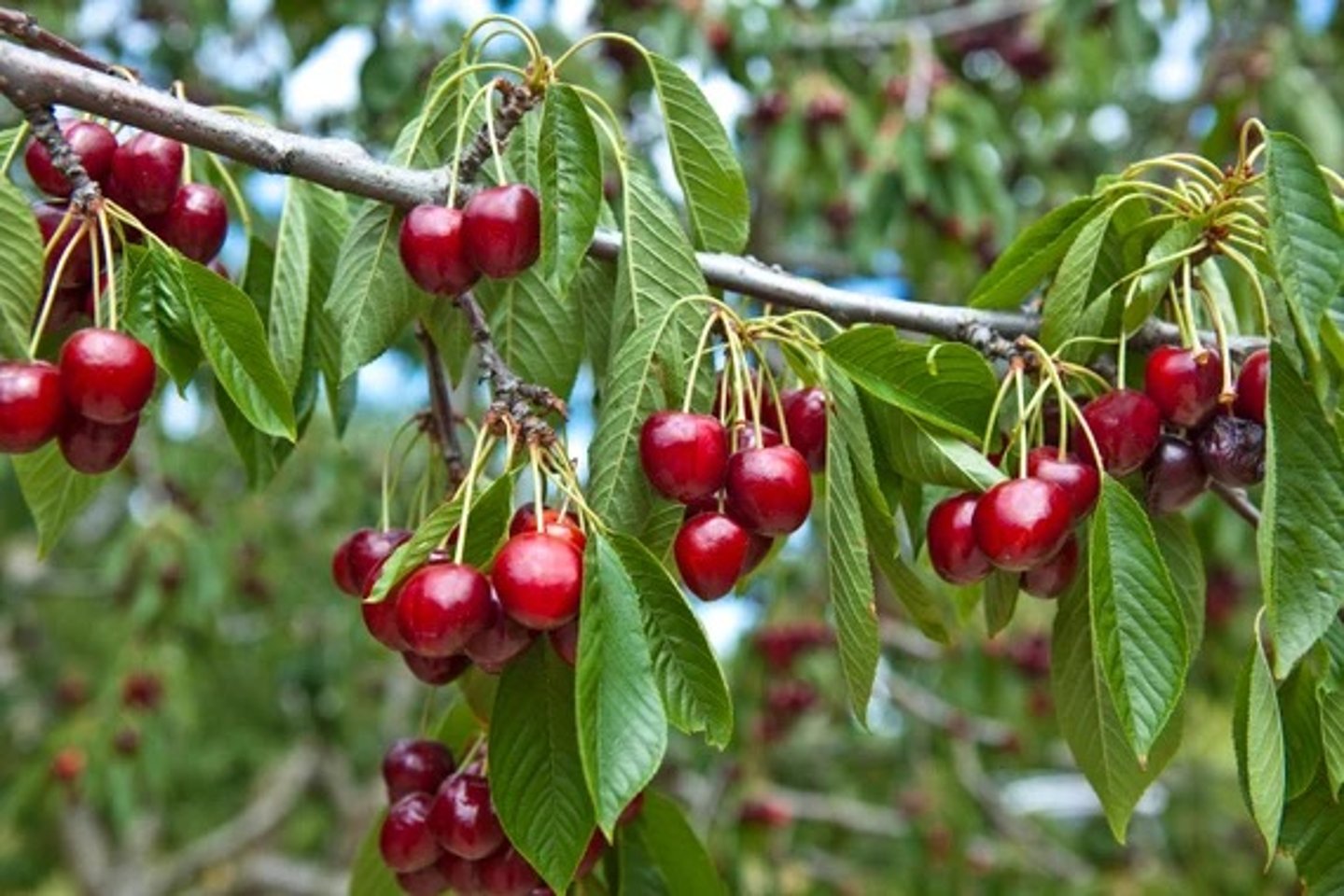
Cerise des coteaux du Ventoux | The IGP behind the fruit
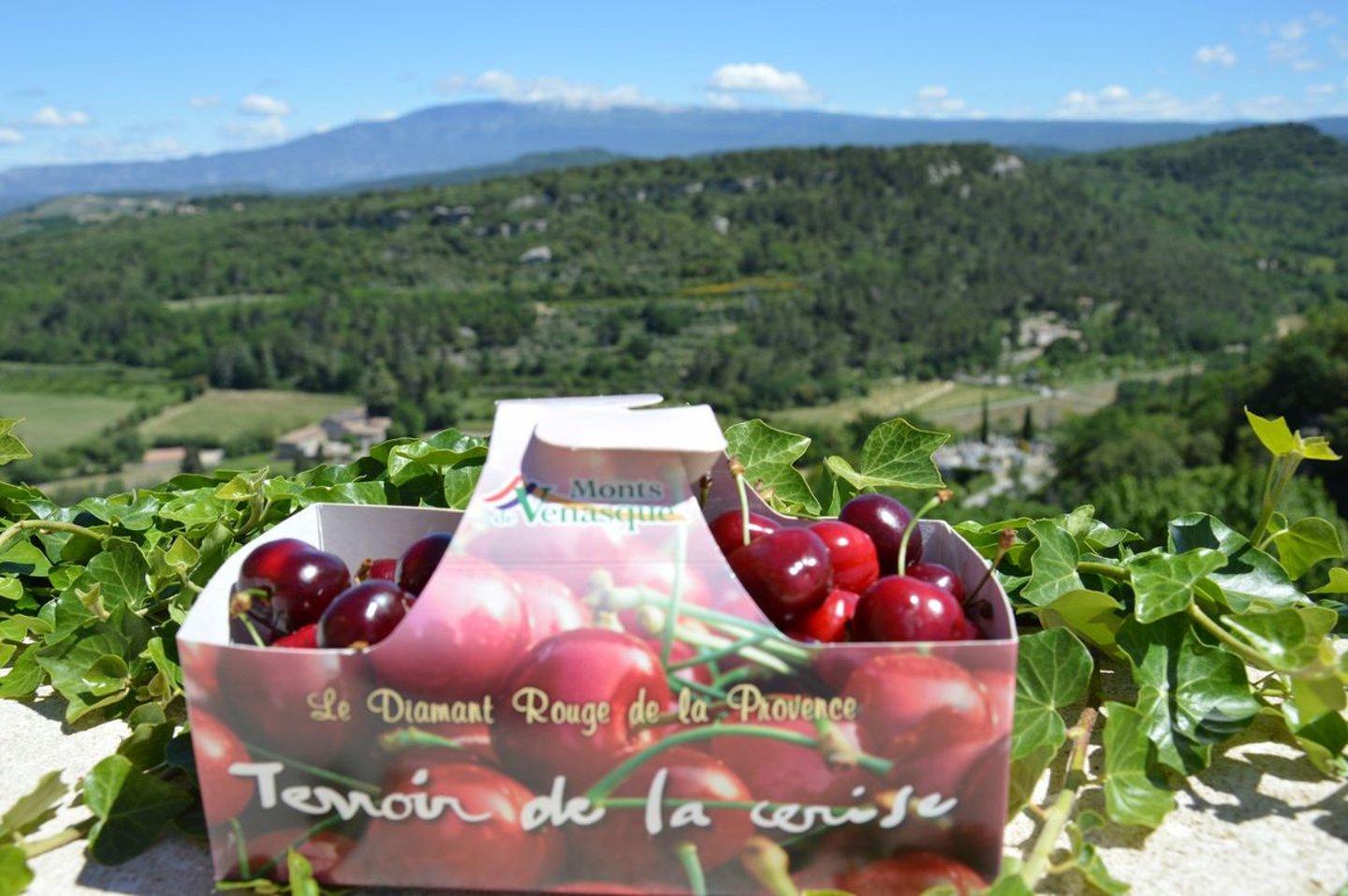
In June 2021, the Cerise des coteaux du Ventoux became the first French cherry to be awarded a Protected Geographical Indication (IGP / PGI) by the European Commission. The designation covers fruit grown on the slopes of the Mont Ventoux and the Monts du Vaucluse - including the heart of the Luberon - and recognises both the terroir and the human know-how behind the harvest.
The conditions are strict. Cherries must measure at least 24 millimetres in diameter, be picked exclusively by hand, and be grown using a low-canopy 'pedestrian orchard' technique that has evolved in the region to make pruning and picking easier. The result is a cherry that is large, firm, deeply coloured and unusually flavourful - and one of the few fruits in France whose name is now legally protected.
Where the orchards are
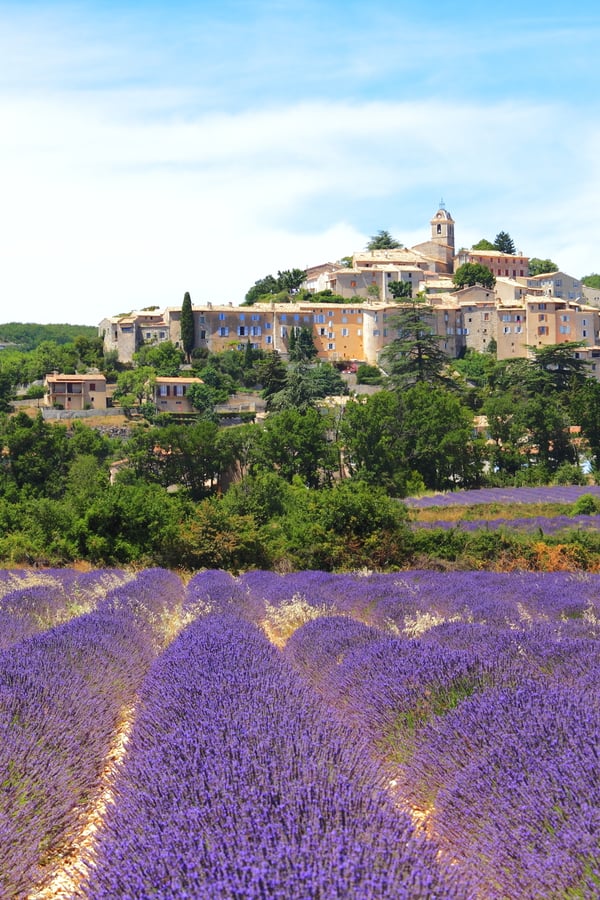
The Luberon's cherry-growing heart sits in a loose triangle between Apt, Cucuron and the foothills of the Mont Ventoux. Drive the small roads between Saint-Saturnin-lès-Apt, Villes-sur-Auzon, Mormoiron and Bédoin in May and you will pass orchard after orchard, the trees so heavily laden the lower branches almost touch the ground.
Lower down, around Pertuis and La Tour-d'Aigues, the season starts a fortnight earlier. If you arrive in early May and worry you have missed the cherries, head south - chances are the harvest has only just begun there. By contrast, on the higher land around Sault and the upper slopes of the Ventoux, the trees are still ripening through the third week of June.
The cherry varieties to look out for
The dominant cultivar in the Luberon is the Bigarreau, a family of large, firm, sweet cherries with several sub-varieties that ripen in succession and stretch the season out across two months.
Bigarreau Burlat - the early opener
The Burlat is the curtain-raiser. It ripens from late May, with juicy, dark-red flesh and a clean, honeyed sweetness. This is the cherry you want to eat warm from the bag, in the orchard, on the day it was picked.
Summit and Van - the mid-season
Summit is a large, heart-shaped cherry with a deep crimson colour and a sweetness that holds up well to travel; it is one of the best varieties to take home in a cool bag. Van, slightly firmer, is the one Provençal grandmothers traditionally favour for clafoutis.
Reverchon - the late harvest
The Reverchon ripens last, from the very end of June into early July at higher altitudes. The fruit is large (often 2.5 to 3 centimetres across), dark red and firm-fleshed - perfect for eating fresh, for confit, and for the cherry liqueurs the region is quietly famous for.
The villages that celebrate the harvest
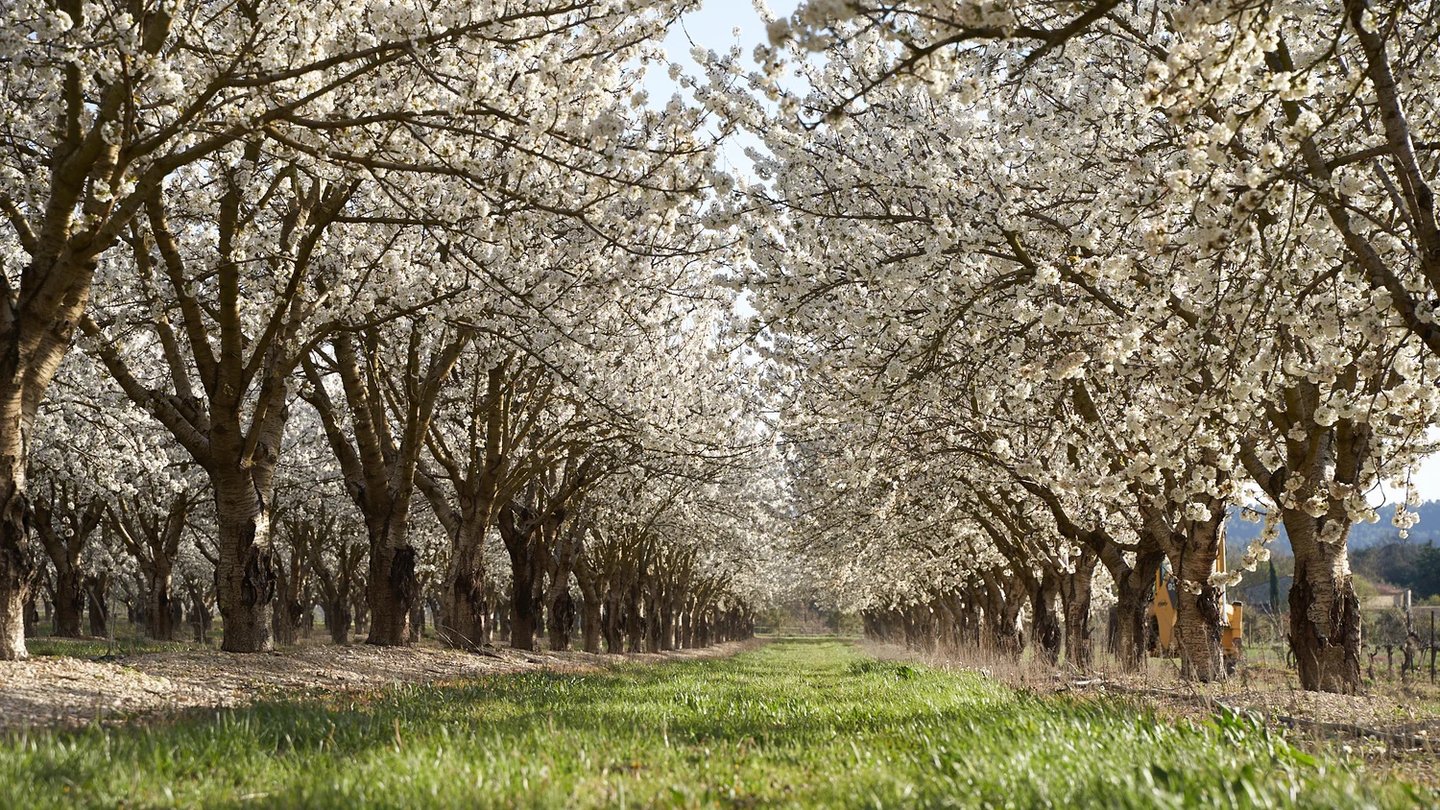
Every Provençal harvest is also a fête, and the cherry harvest is no exception. Villages all over the Luberon and the Vaucluse hold cherry festivals, tastings and producer markets through May and June. They typically include cherry-picking demonstrations, blind tastings, music, brotherhoods of growers in their robes and medals, and - crucially - vast quantities of fruit eaten straight from the cagette.
Saint-Saturnin-lès-Apt is one of the most reliable hosts. Apt itself, the largest market town of the central Luberon, makes cherries the centrepiece of its season every June. Smaller fêtes appear across the region - watch the village notice boards as you arrive, ask at the local tourist office, and check the agenda of the Pays d'Apt-Luberon community of communes for the year's confirmed dates.
Apt | the world capital of fruits confits
No conversation about cherries in the Luberon is complete without Apt. The town has been candying fruit since the fourteenth century - the popes of Avignon were among its earliest enthusiasts, ordering Apt confit by the cartload for their banqueting tables - and the craft has been inscribed in France's national register of intangible cultural heritage since 2018.
Two houses anchor the modern industry. Confiserie Marcel Richaud, founded in Apt in 1947, is the town's oldest artisanal confiserie and still cures, glazes and glace-finishes its fruits in small batches. Aptunion (now part of the Kerry group), founded in 1962 as a cooperative of local confectioners, has become the world leader in candied fruit and runs La Maison du Fruit Confit - a visitor centre, museum and shop combined - at the entrance to the town.
The candied cherry is the showstopper of the Apt range: whole, glossy, jewel-like, slowly soaked in increasingly concentrated syrup over weeks until it becomes something between a fruit and a sweet. Eat it on a cheese board, drop it into a frangipane tart, or simply take a box home for Christmas - Apt confit keeps for months.
What to taste, what to bring home
Beyond fresh fruit and confit, the Luberon's cherry season produces a small encyclopaedia of specialities worth tracking down at the markets:
- Confiture extra de cerises noires - a dark, almost wine-like cherry jam that pairs beautifully with brebis cheese
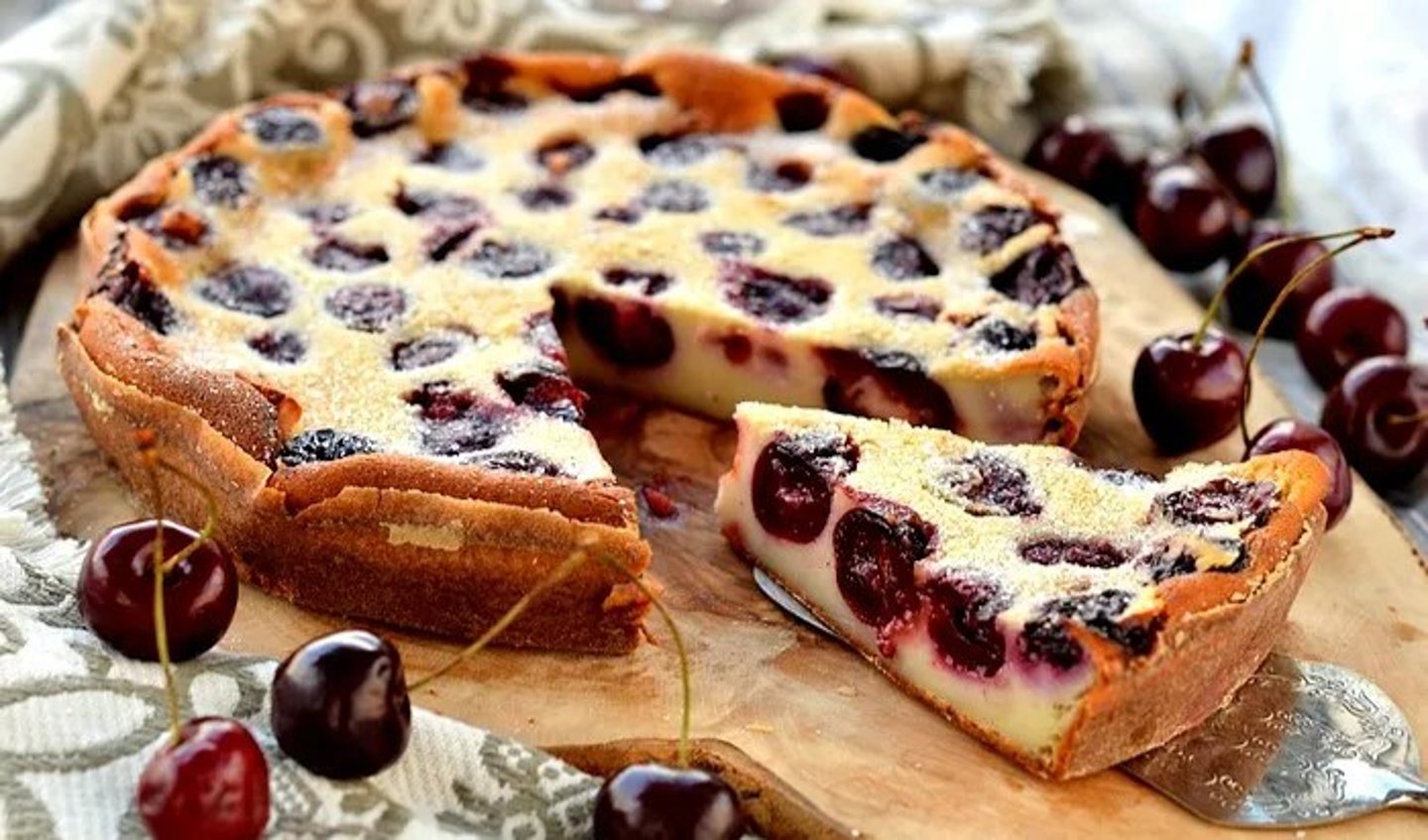
- Clafoutis - the classic French cherry pudding that every Provençal grandmother makes a little differently. Look for it at boulangeries from late May.
- Guignolet and ratafia de cerise - sweet cherry liqueurs made by a handful of small distillers around Apt and Cucuron, the kind of bottle you forget about and rediscover at Christmas with quiet delight.
- Kirsch - the dry cherry eau-de-vie used in fondues, baking and quietly impressive cocktails.
The markets to plan your week around
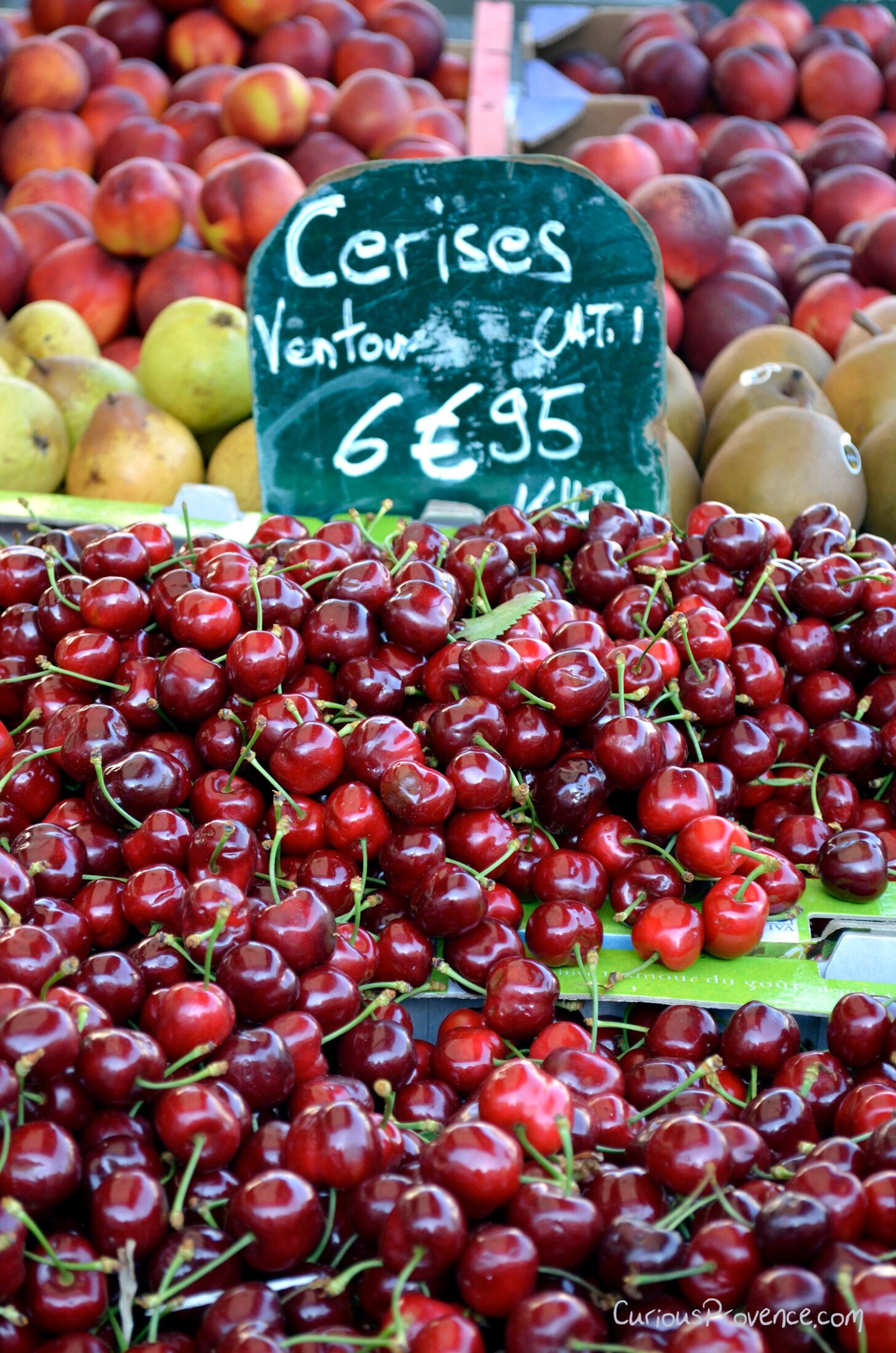
The Apt Saturday market is the largest in the Luberon at any time of year, with over three hundred stalls; in cherry season it becomes something else entirely, with growers from the surrounding hills selling fruit by the wooden cagette. The Coustellet farmers' market on Sundays - strict local-only rules - is the other essential stop. Every cherry on the table has been picked within a few kilometres.
The smaller markets at Cucuron (Tuesday), Lourmarin (Friday), Bonnieux (Friday) and Saint-Saturnin-lès-Apt (Tuesday) all carry the season too. Bring cash, bring a cool bag, and resist the urge to buy from the first stall - walk the whole market once before you choose.
How to make the most of cherry season
Stay close to the orchards. The villages of the central Luberon - Bonnieux, Lacoste, Ménerbes, Goult, Roussillon, Gordes - put you within fifteen minutes of the cherry-growing belt and the Apt Saturday market, and within easy reach of vineyards, restaurants and walking trails for the rest of your trip. Hire a car if you can: many of the smallest growers sell cherries on hand-painted signs at the roadside, and these are often the best of the lot. Plan to arrive on a Friday so you can do the Apt Saturday market the next morning. From there, build the rest of your week around the village markets - Tuesday in Gordes, Friday in Bonnieux and Lourmarin, Sunday in Coustellet - with the cherry orchards, festivals and confiseries between.
Frequently asked questions
When exactly is cherry season in the Luberon?
The harvest runs from the first days of May to mid-July, with the peak between mid-May and the end of June. The Burlat is the earliest variety; the Reverchon is the latest.
Where can I buy cherries in the Luberon?
Direct from growers at the Apt Saturday market, the Coustellet Sunday farmers' market, and the village markets at Cucuron, Lourmarin, Bonnieux and Saint-Saturnin-lès-Apt. Smaller producers also sell from roadside stalls during the harvest.
What are fruits confits, and where are they made?
Fruits confits are whole fruits - most famously cherries - slowly preserved in increasingly concentrated sugar syrup until they become a glossy, jewel-like sweet. Apt has been the centre of the craft since the fourteenth century and is the world capital of candied fruit. The technique was added to France's intangible cultural heritage register in 2018.
Is there a cherry festival in Provence?
Yes - several. Saint-Saturnin-lès-Apt, Apt and a number of smaller Luberon and Vaucluse villages hold cherry-themed fêtes, tastings and producer markets through May and June. Dates shift each year, so check the agenda of the Pays d'Apt-Luberon community of communes and the village tourist offices before you travel.
What is the Cerise des coteaux du Ventoux?
It is the first French cherry to receive a Protected Geographical Indication (IGP / PGI), awarded by the European Commission in 2021. The designation covers cherries grown on the slopes of the Mont Ventoux and the Monts du Vaucluse, including the Luberon, and guarantees a minimum size of 24 millimetres, manual harvesting and traditional orchard practices.

Provence Holidays was founded to share the richness and beauty of Provence. The company has three offerings: luxurious villa rentals, unique properties for sale, and personalised concierge services. Get in touch with our team to plan your stay in the Luberon, the Alpilles or anywhere in Provence.
A bientôt,