Aix-en-Provence is a proper city with all the energy that implies. September is the month when it settles back into itself after the summer: the terraces are still full, the markets are at their best with early autumn produce, and the streets of the Vieille Ville are walkable again.
Arriving and orienting yourself
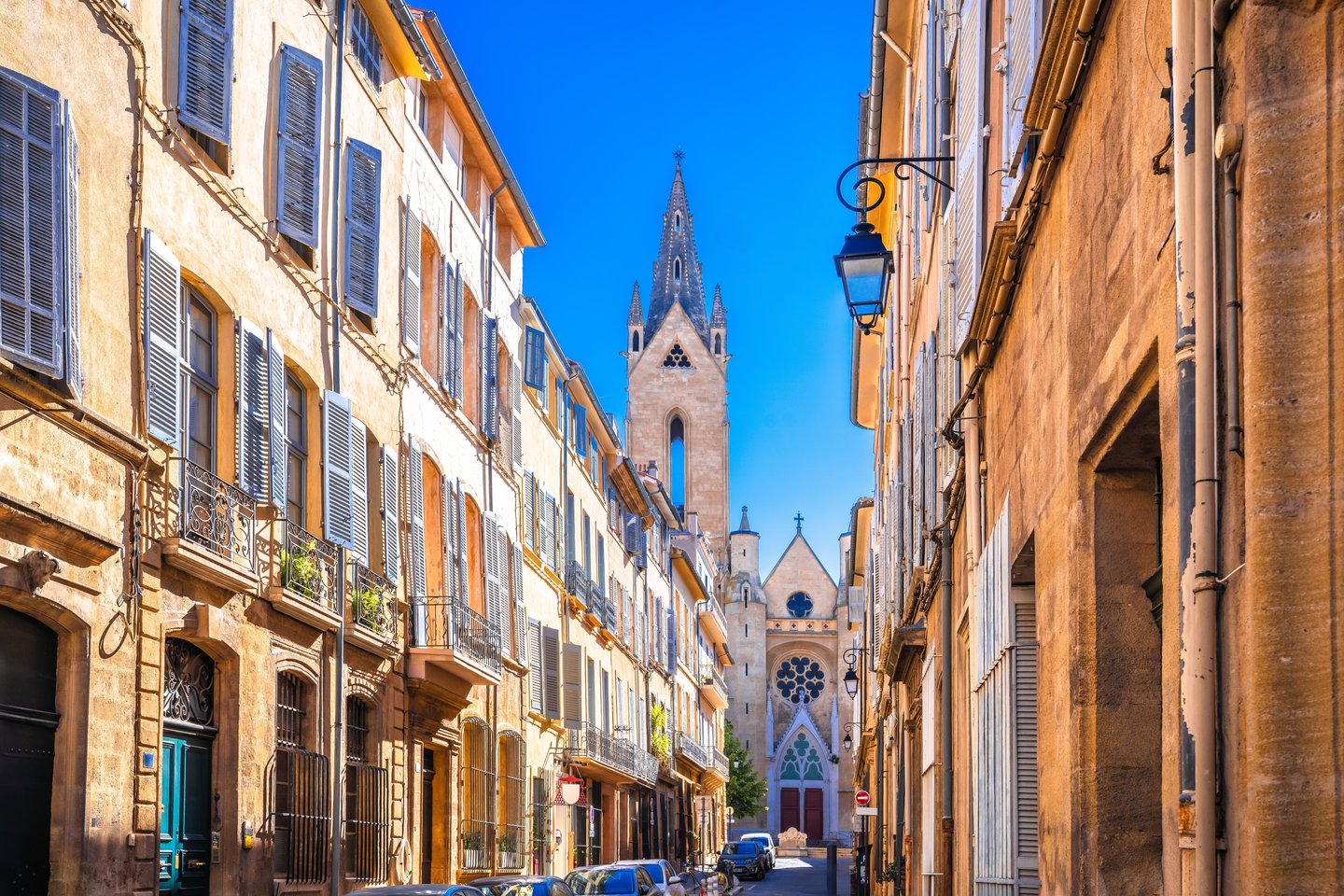
Aix-en-Provence is large enough to feel like a city but compact enough to navigate on foot once you are in the old centre. The Cours Mirabeau, the main boulevard, runs east-west and forms the southern boundary of the Vieille Ville. Everything worth seeing is within twenty minutes' walk of the central car parks on the ring road.
Parking in the centre is limited and expensive in season. The Parking Sextius on the western edge of the old town is the most convenient for most day visitors. If you are arriving by train, the TGV station at Aix-en-Provence TGV is about twelve kilometres from the centre; a shuttle bus runs every thirty minutes to the main bus station, from which the Cours Mirabeau is a ten-minute walk.
September is one of the better months to visit. The summer season officially ends after the 15th, which means the worst of the tourist-season prices and queues begin to ease. The university population returns to the city in September, which brings back the everyday energy that makes Aix feel more alive than the more purely tourist-facing towns.
Cours Mirabeau and the café tradition
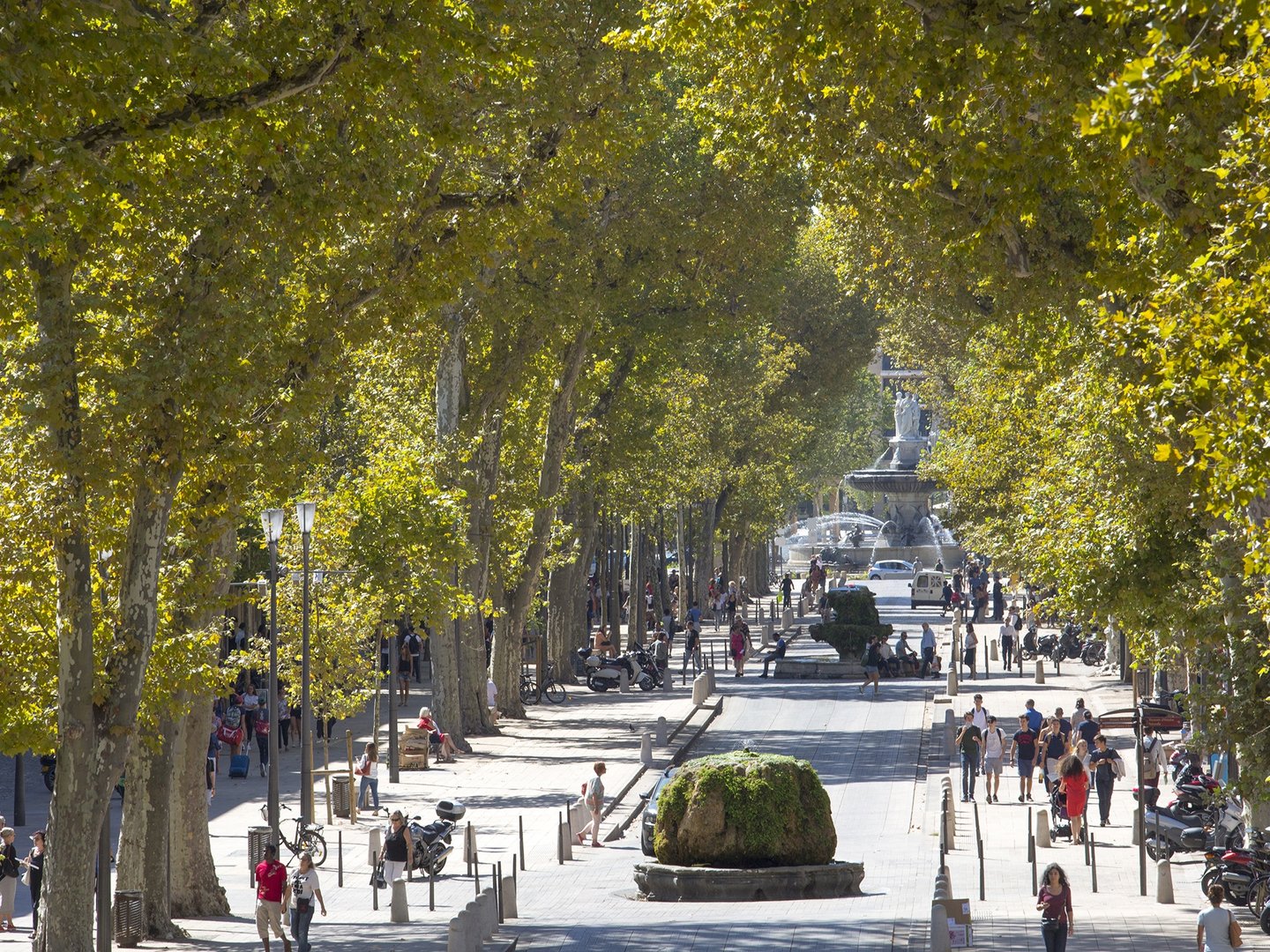
The Cours Mirabeau is the axis of the city: a wide, plane-tree-lined boulevard created in the seventeenth century that has been the focal point of Aix's social life ever since. The north side is lined with cafés and shops; the south side with hôtels particuliers, the grand private townhouses built for the lawyers and officials of the Parlement de Provence.
Les Deux Garçons, at number 53, is the most famous café on the boulevard, in operation since 1792 and known for its long zinc bar and the list of writers and artists who have sat at its tables. It is no longer the cheapest option on the street, but worth visiting for the interior and the ritual of a coffee at the bar. Order standing if you want the experience at a reasonable price.
The nine fountains along the Cours are a detail many visitors miss. They are fed by the same thermal springs that gave the city its Roman name, Aquae Sextiae: the waters of Sextius, after the Roman consul who founded the settlement in 122 BC. The Fontaine d'Eau Chaude, at the Cours's eastern end, discharges water at a constant seventeen degrees and is visibly warmer than the surrounding air on cool September mornings.
The three markets
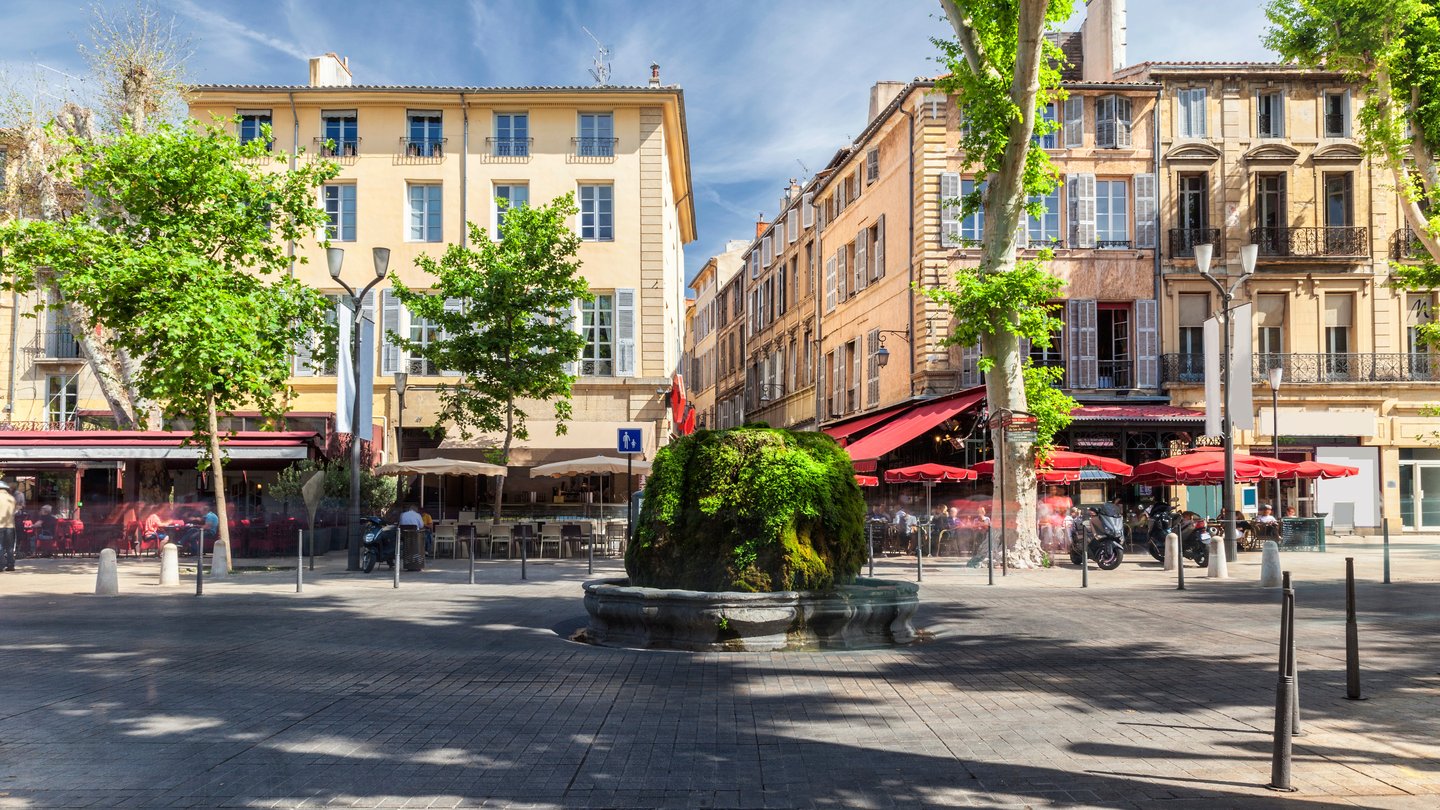
Aix runs three distinct markets across the week, each with its own character. The Saturday market is the largest, spreading across Place Richelme, Place des Prêcheurs and the surrounding streets, covering food, flowers, clothing and brocante in different sections. In September the food stalls carry the season's first wild mushrooms alongside the last summer tomatoes, peppers and aubergines: one of the most interesting weeks in the Provençal market calendar.
The daily food market on Place Richelme is more focused: mostly local produce, cheeses and prepared foods. It runs every morning and is the most convenient option for stocking a villa kitchen. The flower market on Place de l'Hôtel de Ville runs on Tuesday and Saturday mornings and is worth visiting for the square itself as much as the flowers: the restrained classical façade of the Hôtel de Ville and the clock tower are among the most elegant architectural compositions in the city.
The Tuesday and Thursday markets add a smaller version of the Saturday experience on those mornings, with a strong clothing and general goods presence alongside the food stalls. For visitors arriving mid-week, these markets give a good sense of the city's everyday life outside the summer tourist season.
Following Cézanne
Paul Cézanne was born in Aix in 1839 and spent most of his working life here, leaving to study in Paris but always returning to the landscape and light of the Aix environs. The city has preserved and marked the principal sites associated with him with more care than most French cities extend to their artists.
The Atelier Cézanne, his last studio on the Avenue Paul Cézanne north of the old town, is open to visitors and has been maintained largely as it was at the time of his death in 1906. The objects he used as models are all still present: the skull, the ginger jar, the wine flask, the fabric drape that appears in his later still-life paintings. The studio itself is modest in size, which makes the density of association feel very concentrated.
The Circuit de Cézanne is a marked walking route connecting the key sites: his birthplace on the Cours Mirabeau, the Jas de Bouffan family estate (now open to visitors) and the Bibémus Quarry east of the city, where he worked extensively in the 1890s and where the angular forms of the cut stone are clearly visible in the geometry of his later work. Guided visits to the quarry require advance booking.
The Montagne Sainte-Victoire, which appears in more than eighty of his major paintings, is visible from the eastern approaches to Aix and is accessible on foot from the village of Beaurecueil. In September, with the light lower and more angular than in summer, the mountain has the quality it has in the late Cézanne canvases: a solid, slightly austere presence above the valley.
The Quartier Mazarin
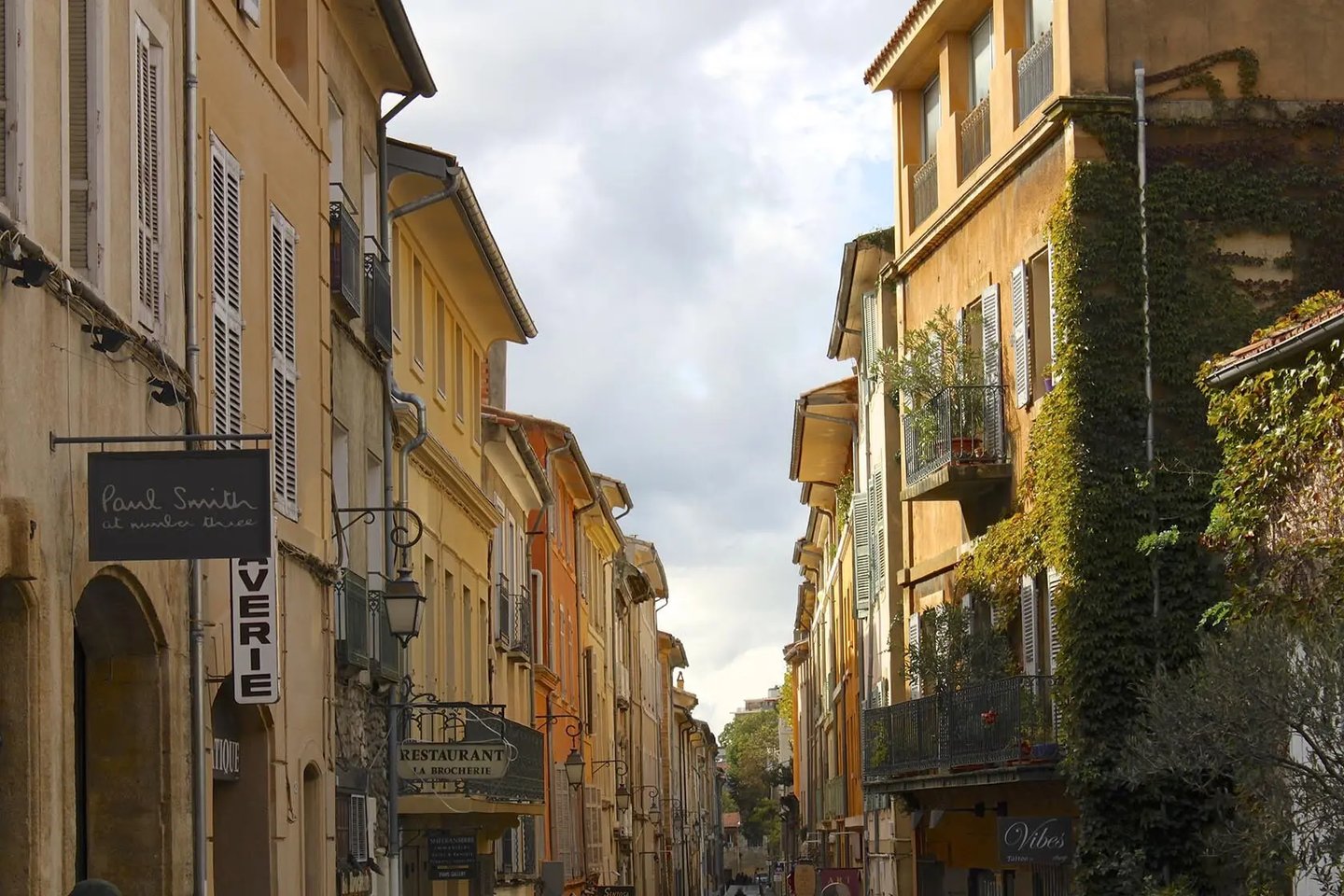
South of the Cours Mirabeau, the Quartier Mazarin was planned in the seventeenth century on a regular grid: unusual in this part of France. Its streets are quieter than the Vieille Ville and its architecture is more formally classical. This is the best part of Aix for galleries and antiques dealers, and also for simply walking without the crowds of the main tourist circuit.
The Musée Granet, at the southern edge of the quarter, holds a substantial collection of European painting and sculpture from the medieval period to the twentieth century, including eight paintings by Cézanne that he donated to the city himself. It is one of the best regional museums in France and is often overlooked in favour of the more visible attractions on the Cours. A September visit benefits from the post-summer attendance drop.
Where to eat and what to take home
Aix rewards those who move away from the Cours Mirabeau for meals. The streets between the Palais de Justice and the Cathédrale Saint-Sauveur, and the quieter quartier Mazarin to the south, hold a cluster of restaurants serving market-driven menus that change with the season: in September this means early game, autumn vegetables and the mushroom dishes that the Luberon plateau growers supply to the city's better kitchens. Lunch is the unhurried meal here, taken on a shaded terrace with a glass of cold rosé, while dinner runs later and rewards a reservation, since the best small dining rooms fill quickly outside the height of summer. Sisteron lamb, tomato tart and ratatouille turn up on most honest Provençal menus, alongside whatever came in from that morning's market.
That market is reason enough to arrive hungry. Place Richelme holds a food market every day of the year, a compact, local affair where the city's chefs do their own early shopping and where goat's cheese from the Luberon, olive oil from the Alpilles, lavender and garrigue honey, garlic and sun-ripened fruit are sold by the people who grew them. On Tuesday, Thursday and Saturday mornings it spills across Place des Prêcheurs and Place de la Madeleine, larger and louder, the stalls adding truffle products, fruit jellies, tapenade, olives and the herbes de Provence blends that make the most portable souvenirs of all. Tasting before buying is expected rather than tolerated, so it is also the easiest place to assemble a box to take home: a bottle of oil, a jar of honey, a twist of dried herbs and a wedge of cheese for the journey.
The calissons d'Aix, the oval almond-and-candied-fruit sweets finished in smooth white royal icing, are the city's signature confectionery and one of the most considered edible souvenirs in Provence. They are made from ground Mediterranean almonds, candied melon from Apt and a little orange, set on a thin wafer base, and have been tied to Aix since the fifteenth century. Local custom still has them blessed each year on the first Sunday of September at the church of Saint-Jean-de-Malte, which makes early autumn a quietly fitting time to buy them. The best-known maker is Roy René, a house now around a century old, with a boutique in the old town on rue Gaston de Saporta. Its Fabrique des Calissons on the route d'Avignon, a short drive from the centre, sits among two hectares of almond trees and offers self-guided tours of the Musée du Calisson and gardens for anyone who wants to understand how they are made.
Aix-en-Provence in September is the city at its most liveable: the summer crowds gone, the markets at their best, the Cézanne trail quiet, and the long evening light on the Cours Mirabeau still as good as it gets anywhere in Provence.
À bientôt,